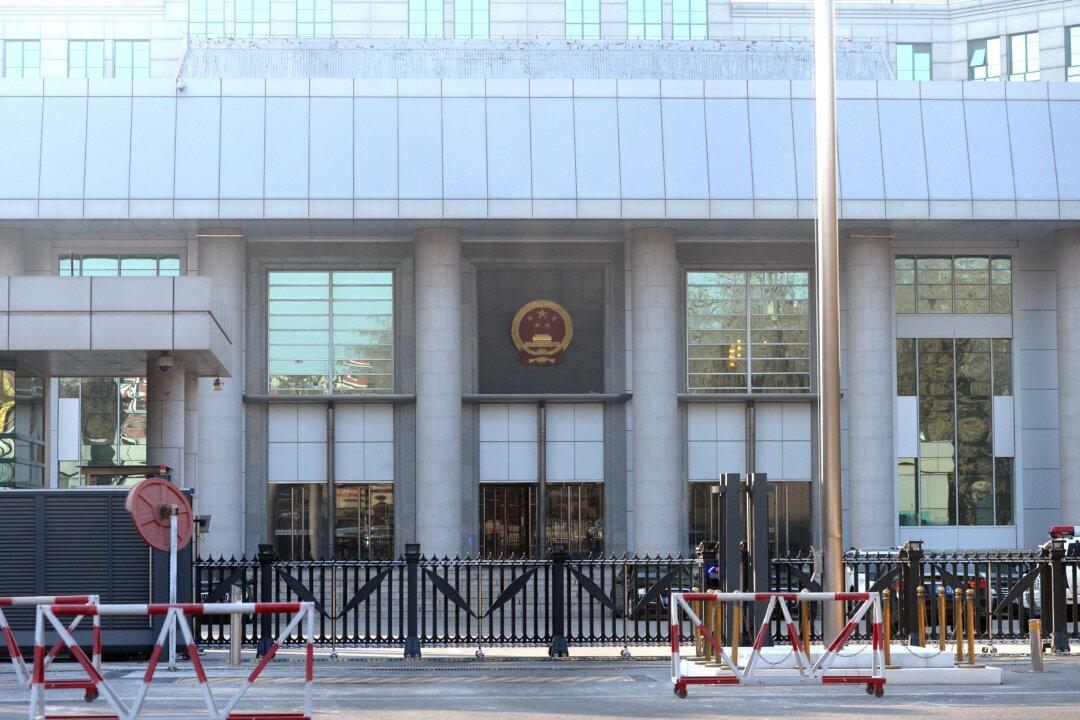
Chinese state broadcaster CCTV on Jan. 12 aired footage of Xu Xianping, a former vice minister and the ex-deputy head of the powerful National Development and Reform Commission (NDRC), delivering a remorseful statement in a Chinese Communist Party (CCP) anti-corruption documentary. Xu, who retired years ago, had not yet faced a public trial.
In the program, Xu echoed familiar slogans used in past televised confessions, warning of the dangers of “greed” and officials who “retire but do not withdraw from power.” He concluded with lines such as “The world is strange—I only understood it after retirement” and “In the end, I lost the most precious thing of all, freedom.”
‘Political Humiliation Disguised as Anti-Corruption’
A retired researcher at the Chinese Academy of Social Sciences, who spoke to The Epoch Times using the pseudonym Feng Qin because of safety reasons, said that such televised confessions have little to do with normal judicial practice.“This is not a trial, it’s a public spectacle,” Feng said. “Before any court ruling, a person is already labeled guilty in front of the entire country. That’s political humiliation disguised as anti-corruption.”
Feng said he has lived and traveled abroad extensively and has never seen anything comparable in other legal systems.
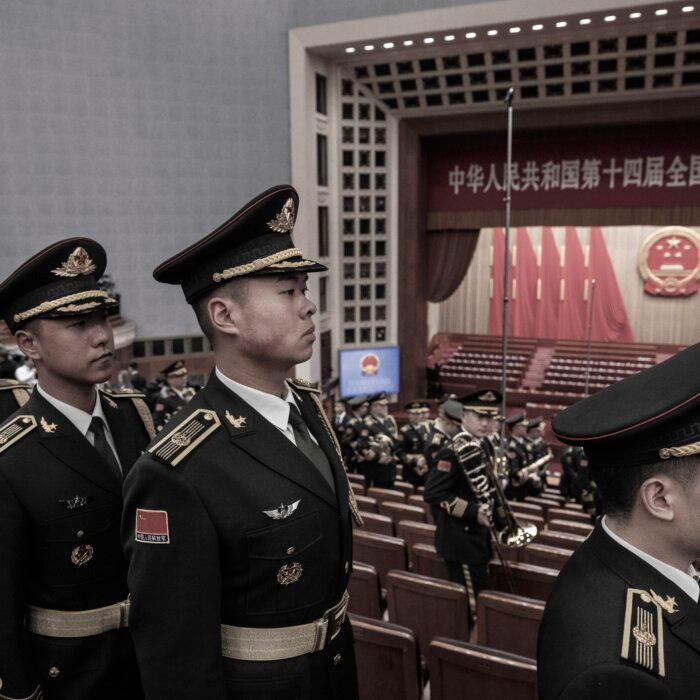
“In what era are we still doing this?” he asked. “This is regression, not progress.”
A former Chinese media professional, speaking on condition of anonymity for safety reasons, told The Epoch Times that the content of this televised confession was scripted.
Questions Over Due Process
Xu’s appearance sparked skepticism online, particularly because he retired years earlier and has yet to undergo a public trial. Chinese netizens questioned why he was presented as guilty before any judicial ruling, warning that the practice further weakens protections against abuse of power.Warning to Retired Officials
In the documentary, Xu was portrayed as a textbook example of “retiring without restraint.” The program alleged that after moving to a secondary role, he continued to profit from his former influence through intermediaries and family members—accepting high-end home renovations, utility and housekeeping services, an older Mercedes-Benz sedan, and small equity stakes held by relatives.Cai said that after leaving the NDRC, Xu served for years as a policy adviser to former Premier Li Keqiang. After Li’s political marginalization following the CCP’s 20th Congress in 2022—and his subsequent death—figures linked to his network lost protection. Xu’s corruption case was revived soon afterward, according to Cai.
Political Intimidation
A Chinese journalist from Hunan Province, who spoke to The Epoch Times using the pseudonym Zhao Xin because of safety concerns, said the impact of televised confessions often exceeds that of formal punishment.“Xu’s investigation itself is one thing,” Zhao said. “Dragging someone onto national television is another. That’s a public warning, not just to punish you, but to scare everyone else.”
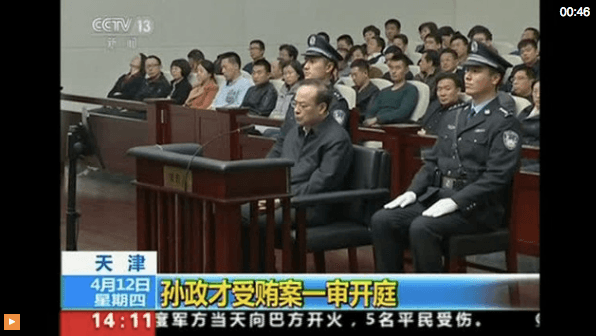
He recalled a similar episode in 2018, when former Politburo member Sun Zhengcai appeared in an anti-corruption, documentary-style broadcast confessing to being “disloyal to the Party” and “expanding political ambitions.”
A Beijing-based scholar who spoke to The Epoch Times using the pseudonym Li Yun said that televised confessions fundamentally contradict basic legal principles.
“In a normal legal system, guilt is determined by courts through public trials,” Li said. “Here, propaganda departments deliver the verdict first. That negates the presumption of innocence.
“This isn’t judicial procedure. It’s political labeling in advance.”