TAIPEI, Taiwan—China’s new ethnic unity law has sparked concern in Taiwan over its extraterritorial reach, with one scholar warning that Beijing could invoke the statute to assert authority over ethnic Chinese worldwide.
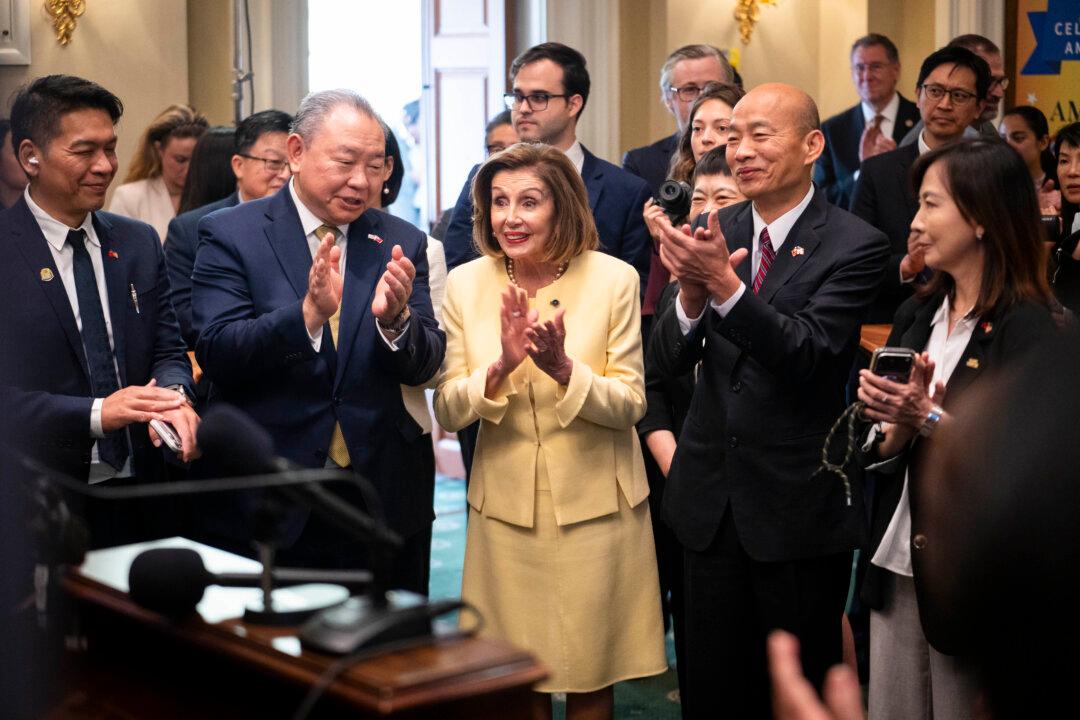
At Taiwan’s parliament on June 30, several civic organizations, led by the Taiwan Society North, held a joint press conference to discuss the legal implications and broader political ramifications of the Chinese law, which is officially called the Ethnic Unity and Progress Promotion Law, and is set to take effect on July 1.
In brief, the law provides a legal basis for advancing a Beijing-defined “shared” national identity among China’s diverse ethnic groups.
The law has faced criticism from rights groups ever since China’s rubber-stamp National People’s Congress approved it in March, with Article 63 drawing particular scrutiny.
The provision states that organizations and individuals beyond China’s borders can be held legally accountable for “undermining ethnic unity and progress” or “inciting ethnic separatism.”
“This law isn’t just targeting Chinese nationals; it’s targeting all people of Chinese descent,” Wang Guo-chen, an advisory committee member at the Taiwan Society North and an associate research fellow at the Chung-Hua Institution for Economic Research, said at the press conference.

Wang said that Beijing could use the law to target individuals by claiming they have ancestral roots in China.
“[The regime] may not dare offend white people, but it thinks it can exert control over all Chinese people,” Wang said. “It could even label any East Asian person as having ancestors from China.”
Sang Pu, a lawyer and director of the Taiwan Hong Kong Association, also warned about risks faced by those outside of China.
“Anyone who criticizes the Chinese Communist Party overseas or opposes unification while abroad could face prosecution by the Chinese communist regime under this so-called ‘unity law’ and be subject to legal action,” Sang said during the press conference.
The language of Article 63 is vague, national security expert Chen Wen-chia said at the press conference, noting that it does not clearly define what constitutes “undermining ethnic unity and progress.” Chen said such vagueness could give Chinese authorities “more room for interpretation.”
The Chinese Communist Party (CCP) considers the democratically governed Taiwan as its own territory and has not ruled out the use of force to seize and “unite” the island with the mainland. As a result, it has often labeled Taiwanese people who are outspoken about the island’s sovereignty, including Taiwan President Lai Ching-te, as “separatists.”
The Taiwanese government has repeatedly criticized the Chinese law. In March, Joseph Wu, secretary-general of Taiwan’s National Security Council, took to X to criticize Beijing for applying the law to Taiwan, saying that the island has no intention of being ruled by the “thuggish” CCP.
“What kind of regime would forge national unity by adopting a law to punish dissent?” Wu said. “Communist [China] has taken its lawfare to a medieval level.”
Cognitive Warfare and Lawfare
Another provision of the law, Article 21, mandates that the CCP work to “deepen the sense of belonging, identification, and pride of Taiwan compatriots toward the Chinese nation,” and to enhance the sense that both sides of the Taiwan Strait are “Chinese people.”
Lo Chun-hsuan, president of the Taiwan Society North, questioned why the language in Article 21 can be enforced through law. “Isn’t this brainwashing? What is this if not cognitive warfare?” Lo said at the press conference.
Through another provision, Article 41, Lo said the CCP has effectively placed its united front work within a legal framework.
The Chinese regime has been engaging in united front operations aimed at infiltrating Taiwan’s society and eroding its democratic institutions, while seeking to influence public opinion, sway voters, and bolster pro-Beijing politicians and policies that align with its agenda.
Together, Articles 21, 41, and 63 show that the law “has gone beyond the spirit and values that domestic law should normally uphold,” Lo said.
The CCP passed the “anti-secession law” in 2005, and it updated it in 2024 to authorize the death penalty for “diehard” supporters of Taiwan’s independence.
Tai Chia-hsu, a lawyer and a coordinator for legal and economic affairs at the Taiwan Society North, said at the press conference that the Chinese regime is escalating its lawfare against Taiwan with the new law.
“Under the Anti-Secession Law, as long as you didn’t support Taiwanese independence, you were OK,” Tai said. “But under the new Ethnic Unity and Progress Promotion Law, you have to actively promote unification before you’re considered compliant with the law.”
He noted that “as long as you don’t actively promote unification—even if you simply remain silent—you can be labeled as violating the values of the national community, as not aligned with the spirit of the Chinese Communist Party nor with the spirit of the Chinese people, and as not deserving to be Chinese.”
Recently, a bipartisan group of U.S. senators introduced a resolution condemning the Chinese law, saying it “institutionalizes and expands coercive assimilation and cultural erasure policies directed toward Tibetans, Uyghurs, Mongolians, Christians, and other groups. ”
Washington has taken action to address human rights abuses in China’s far-western region of Xinjiang, including the Uyghur Human Rights Policy Act.
Pointing to these U.S. measures, Wang said, “In other words, this law may further intensify U.S.–China trade and economic tensions in the future.”