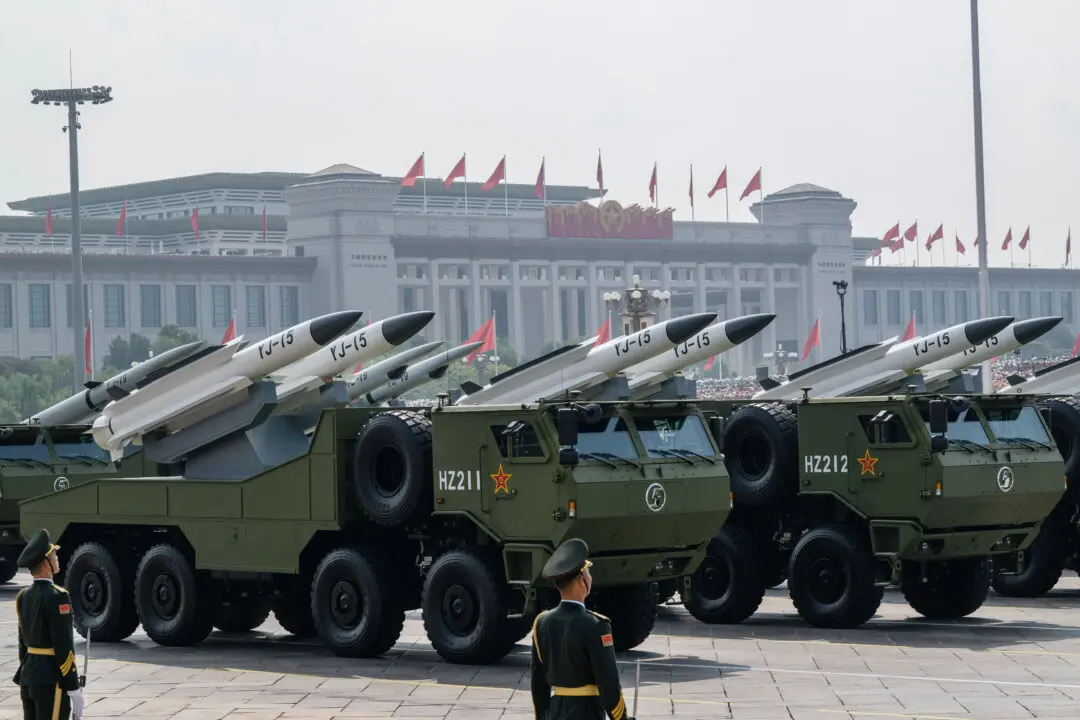
China’s push to secure its economic interests in Burma (also known as Myanmar) is enabling the military junta’s atrocities against its own people, a high-stakes strategy that experts say is now fueling a backlash that threatens Beijing’s own investments.
BRI projects in Burma have faced major setbacks as the deepening post-coup conflict disrupts transport routes and stalls development, prompting Beijing to urge the junta to protect its investments and personnel, according to the news outlet.
Exploiting the Crisis
Jason Tower, senior expert at the Global Initiative Against Transnational Organized Crime, said the committee was likely formed in response to sustained pressure from Beijing, with both China and the military junta frustrated by the slow progress on key projects—a move that also helps the junta secure Beijing’s political and military aid amid the civil war.“I think the Myanmar military did this primarily to signal to Beijing that it’s prioritizing this and not dragging its feet. Basically, the Myanmar military has placed a very high level of priority on China’s economic interests and on advancing those interests as quickly as possible,” Tower told The Epoch Times.
Htwe Htwe Thein, an associate professor at Australia’s Curtin University who has been studying Burma’s business and economic development for two decades, said Beijing views the post-coup period as a strategic window to reinforce its economic presence and is pressing the junta to act due to concerns over the security of its investments while international competition is low.
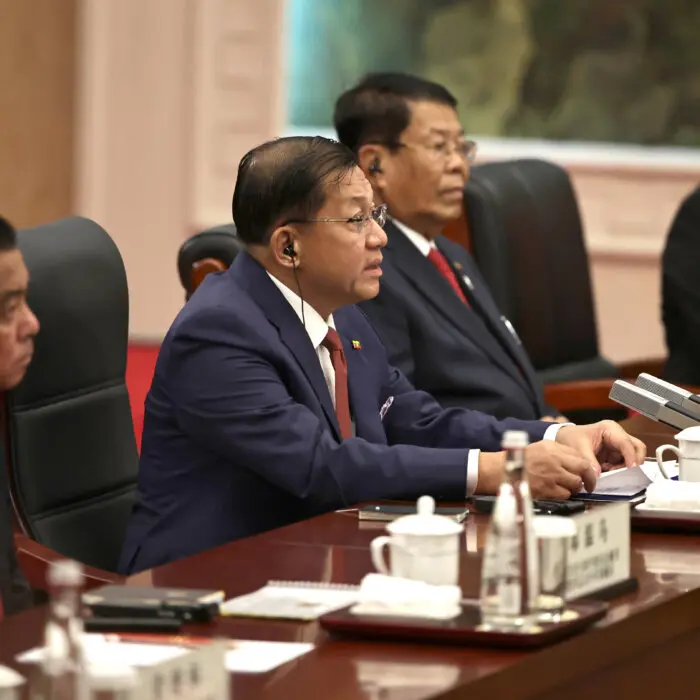
“With most countries reluctant to invest in Myanmar’s conflict zones, China effectively has a free hand to advance its projects without significant competition or international oversight,” Thein said to The Epoch Times.
Sun Kuo-hsiang, a professor at the department of international affairs and business at Nanhua University in Taiwan who monitors Burma’s civil war closely, said that this push is driven by Beijing’s urgent need to secure its high-stakes strategic assets as the conflict escalates.
Advancing China’s Economic Interests
While China has made a pledge of non-interference in Burma’s internal affairs, its brokering of cease-fires in Shan State earlier this year effectively allowed the junta to regroup and retake key territories, culminating in the capture of a major district capital in October.Starkly contrasting with the Association of Southeast Asian Nations’ approach of engaging all sides, this intervention is driven largely by Beijing’s self-interest, with Tower explaining that China is using its leverage to create stability purely for advancing its economic interests.
“China’s not really thinking about longer-term peace here. What Beijing is looking for here is for these groups more or less to lump it politically and then just to focus on working between China and the Myanmar military to advance different forms of business,” Tower said.
Sun also highlighted the disconnect between China’s public claims as a mediator and its actual policy, which he said is a self-interested strategy aimed purely at ensuring the junta’s survival to protect Beijing’s own interests.
“Beijing is acting as a geopolitical realist, prioritizing its own interests and stability to prevent the regime’s total collapse. While this pragmatic tendency is not a value-driven endorsement of the junta, the result is the same, as it effectively tilts in the military’s favor,” Sun said.
However, this unilateral focus on economic stabilization, according to Thein, has a dangerous consequence, as it indirectly enables the junta’s violent campaign against its own citizens.
Beijing’s Risky Bet May Backfire
Although backing the junta may offer immediate economic advantages, Sun warned that this strategy carries significant future blowback by fueling widespread public hostility.“Anti-China sentiment in Myanmar has been surging since 2021, and supporting the military government will only intensify public dissatisfaction, driving up social resistance and security costs for the BRI,” Sun said.
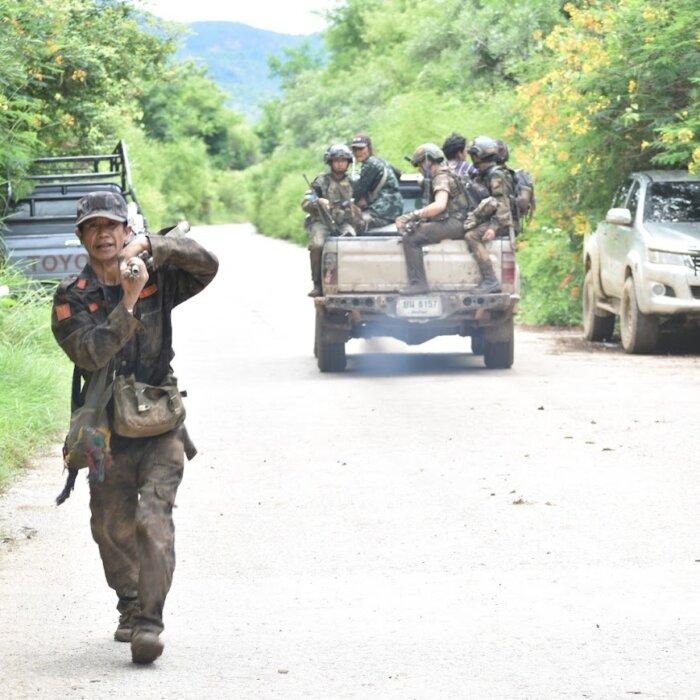
Tower also cautioned that China’s demands for ethnic groups to cut ties with the People’s Defense Forces (PDF), which formed after the coup to fight for the return of democracy, are fueling high levels of frustration among the country’s youth population that will likely grow as Chinese economic projects break ground.
“As these projects move forward under a military regime engaging in mass oppression and human rights violations, you’re also going to see anti-China sentiment really surge in the country,” Tower said.
He added that China is making “a very risky bet,” because if resistance actors like the PDF control large swathes of territory, they could eventually be driven to confront China to protect their people.
“If the resistance sees that China is becoming increasingly hostile and equipping the Myanmar military with the tools it needs to perpetrate atrocities, the PDF may start targeting Chinese projects because they see that they simply have nothing to benefit. That is the key risk for China,” Tower said.