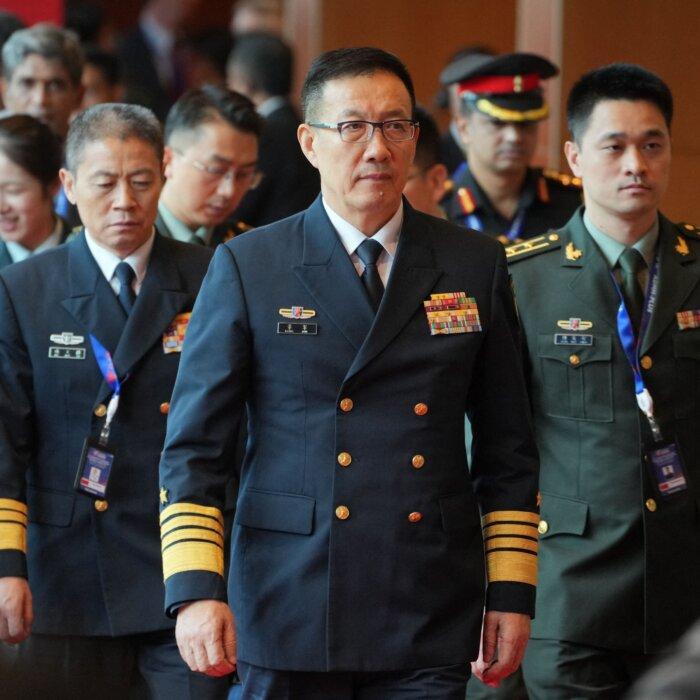
Chinese Defense Minister Dong Jun has maintained a prominent public profile in recent months despite speculation about his political future and ongoing upheaval within the upper ranks of the People’s Liberation Army (PLA).
As a result, Dong is arguably the lowest-ranking defense minister since the CCP took power in China in 1949.
Questions Over Influence and Trust
Dong is also allegedly supported by a network associated with China’s first lady, Peng Liyuan. Speculation intensified after a photo circulated on Chinese social media in 2024 showing Peng, wearing military attire, visiting a military academy. The accompanying description identified her as a full-time member of the CMC’s cadre evaluation committee, a body responsible for assessing and promoting senior military officers.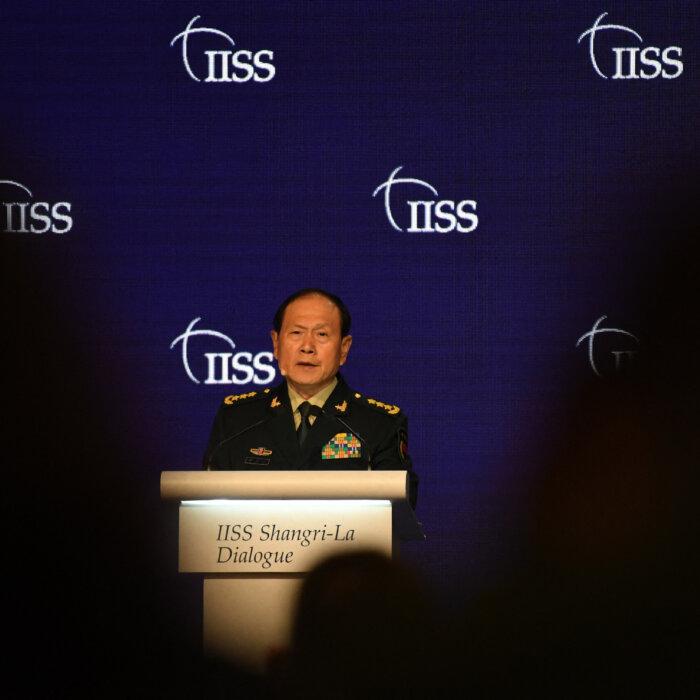
However, veteran China analyst and Epoch Times columnist Heng He dismissed the notion that Peng exercises significant influence over the PLA’s internal power structure. He argued that military loyalty under the CCP is built through long-standing personal relationships and chains of command, not through formal titles or family connections.
According to Heng, military factions are typically formed through years of service together and, in some cases, shared operational experience. Such networks are difficult to replace or control from outside the institution.
He noted that Xi himself has spent years attempting to consolidate control over the military partly because he lacked a deeply rooted personal network within the PLA when he came to power. Against that backdrop, it is unlikely that Peng—who has never served in the military command structure—could wield decisive influence across the armed forces.
Chen Wen-chia, a professor of international business and vice president of Kainan University in Taiwan, said he believes that the more important question is not whether Dong enjoys special protection, but why he has survived when so many others have fallen.
He told The Epoch Times that Dong’s position reflects a paradox—he holds a high-profile title but possesses relatively little political power.
Useful Diplomat, Not Power Broker
According to Chen, Dong’s continued service may stem from his practical value rather than his political standing. A former naval commander, Dong remains a useful representative for China’s military diplomacy, regularly meeting foreign counterparts and attending international security events.Heng offered a similar assessment, arguing that Dong’s limited power may actually enhance his political security. Since he lacks an independent power base within the military and does not sit on the CMC, he poses little threat to the leadership.
“If he had a strong faction behind him, he might not have survived,” Heng said. “But someone with limited authority and little institutional backing can be retained without much concern.”
The result is a highly unusual arrangement—a defense minister who remains visible on the international stage while occupying a diminished position at home.
Chen said Dong’s situation illustrates the broader transformation underway inside China’s military establishment. He has neither fallen from power nor attained the status traditionally associated with his office. Instead, he occupies a position that appears increasingly symbolic, reflecting a restructuring of authority within the PLA.
As Beijing continues reshaping the military leadership under Xi, Dong’s career may offer a revealing window into how loyalty, trust, and power are being recalibrated at the highest levels of China’s armed forces.