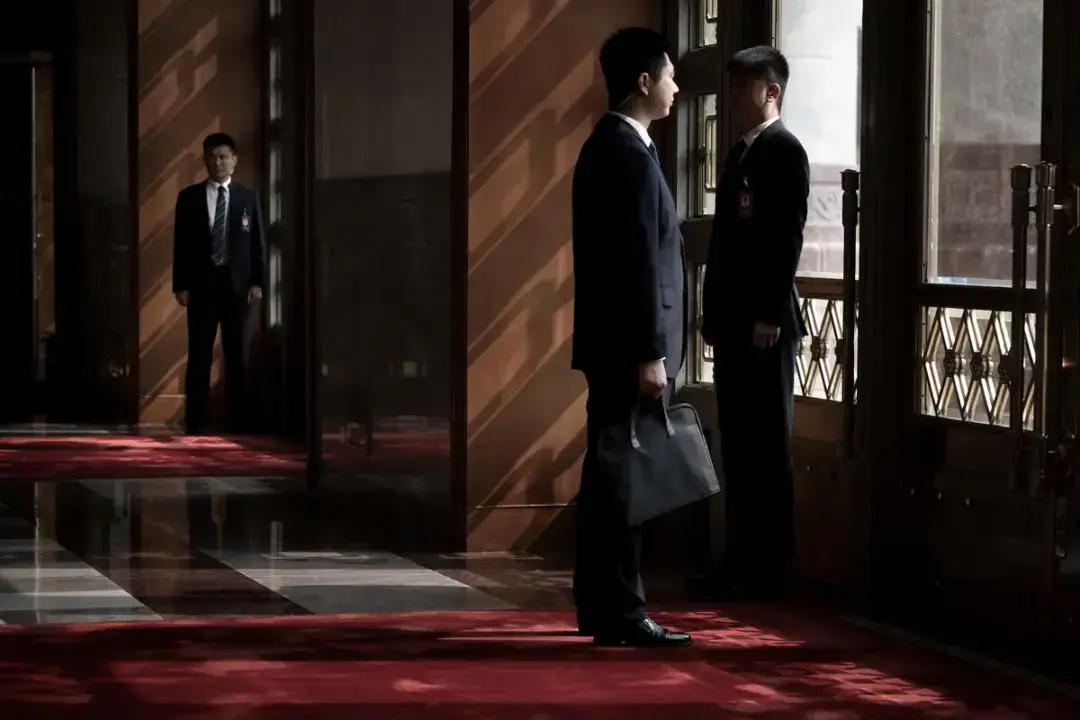
Eight Chinese officials from a range of government and state-owned sectors were placed under investigation on July 13, including senior officials overseeing local political and legal affairs, state-owned energy company executives, and a mining safety regulator chief.
The simultaneous announcements have drawn attention among observers of China’s internal political system, with regime insiders revealing that the investigations are part of a broader disciplinary drive targeting officials deemed insufficiently loyal to the Chinese Communist Party (CCP).
The insiders spoke to The Epoch Times on condition of anonymity out of fear of reprisal.
The CCP typically announces such investigations using the phrase “suspected of serious violations of discipline and law,” without providing details about the allegations or the circumstances that triggered the probes.
According to reports from Chinese state media Xinhua News Agency, the officials investigated on July 13 included Bai Pinghe, a member of the Standing Committee of the Jining Municipal Committee in eastern China’s Shandong Province, who also served as the city’s political and legal affairs chief and head of its United Front Work Department.
Bai’s dual roles placed him in charge of two sensitive areas of CCP governance—the political and legal system, which oversees local police, courts, and prosecutors, and the United Front, which manages relations with non-CCP groups and other political organizations.
Also investigated that day were Wu Liyuan, general manager of Fujian Energy Petrochemical Group; Hu Haijun, director of the Shanxi bureau of the National Mine Safety Administration; Yang Wu, director of Gansu Province’s ethnic affairs commission; Han Mai, Party secretary of Daqing Medical College; Ding Zhixue, former chairman of the Guizhou Provincial People’s Congress Finance and Economics Committee; Lyu Jiancheng, former deputy general manager of SINOPEC Zhanjiang Dongxing Petrochemical Co.; and Tian Lin, deputy director of the Zhoukou Municipal People’s Congress Standing Committee in Henan Province.
Chinese media Souther Daily summarized the announcements as “eight people investigated on the same day,” noting that most were investigated while still holding office.
Investigations Precede Leadership Gathering
The timing of the announcements, shortly before the CCP’s annual summer leadership gathering in Beidaihe, has fueled speculation among China watchers about the broader political context.
A source from within the CCP’s administrative state told The Epoch Times that the investigations were linked to preparations for personnel arrangements ahead of the CCP’s 21st National Congress, expected to take place in 2027.
“High-level personnel decisions will be made next year. Who will be promoted and who will remain in place cannot be revealed too early,” He said. “The focus now is on officials at the middle and lower levels. It creates a strong warning effect without directly shaking the top leadership.”
The insider revealed that a plan targeting senior officials was finalized in January and that disciplinary actions had accelerated in the second half of the year.
“There are too many corrupt officials, and there are also too many officials considered disloyal,” he said. “Disloyalty can mean complaining privately or making jokes about senior leaders.”
The CCP has repeatedly emphasized political loyalty as a requirement for officials, and Chinese leader Xi Jinping has made anti-corruption campaigns a major feature of his administration since taking power in 2012.
Officials Removed While in Office
Of the eight officials announced in the investigation notices, six were still serving in their positions at the time.
Bai Pinghe, for example, remained Jining’s top official overseeing political and legal affairs and United Front work when he was investigated. Tian Lin was also still serving as a member of the Zhoukou People’s Congress Standing Committee leadership.
A Chinese scholar familiar with the CCP’s governance told The Epoch Times that officials investigated in such campaigns often have connections to powerful figures within the regime’s bureaucracy.
He said some officials targeted in recent investigations had ties to former political networks whose influence had declined following previous anti-corruption campaigns.
“People often say that when one person is pulled out, the dirt attached to them comes out as well,” the scholar said, referring to a Chinese expression describing how investigations can expand through political networks.
He said that officials now face greater risks if others attempt to intervene on their behalf.
“If someone tries to provide a guarantee for another’s innocence, that person may also be investigated,” he said.
The scholar also said that corruption allegations often existed before an official’s downfall but were not always acted upon until political circumstances changed.
“Many of these officials were not corrupt only recently,” he said. “Each promotion may have involved building networks of their own.”
Energy Sector Remains Under Scrutiny
Two of the eight officials investigated had backgrounds in the energy and petrochemical sectors, which are state-owned under the CCP.
Wu Liyuan was investigated while serving as Party deputy secretary and general manager of Fujian Energy Petrochemical Group. Lyu Jiancheng previously served as deputy general manager of SINOPEC Zhanjiang Dongxing Petrochemical Co.
The Chinese regime has not indicated whether the two cases are connected.
A retired employee of China National Petroleum Corporation, surnamed Wang, told The Epoch Times that China’s energy sector has long been vulnerable to corruption because state-owned enterprises control major resources and projects.
He said officials and executives in the oil and gas sector have historically exerted influence over areas such as project approvals, equipment procurement, engineering contracts, and land use.
Since Xi came to power, numerous executives in the oil, electricity, and coal industries have been investigated, according to Wang.
He said the latest investigations again highlighted concerns over oversight within state-owned enterprises.