In the days leading up to International Human Rights Day on Dec. 10, new crackdowns across China have drawn renewed scrutiny from international organizations.
Activists Denied Due Process
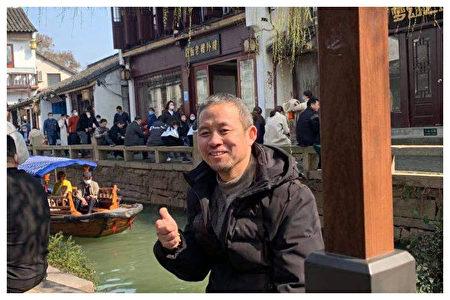
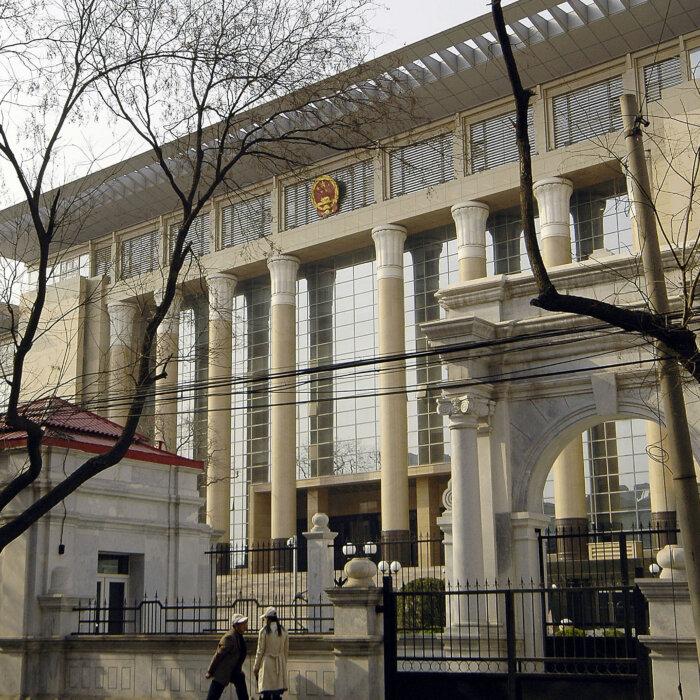
Human rights advocates say China’s overall rights climate has tightened significantly in recent years. Earlier this month, a court in Xinyang, Henan Province, upheld a three-year sentence for labor-rights advocate Xing Wangli, who was convicted of “picking quarrels and provoking trouble” and transferred to prison shortly after the verdict. The charge is routinely used to target dissidents.His son, Xing Jian, who is currently based in New Zealand, told The Epoch Times that his father was held incommunicado throughout his detention. Xing has long been targeted for his activism and has now been imprisoned five times, serving a combined 12 years, 8 months—not including periods of extrajudicial detention, surveillance, or administrative detention.
“This shows a clear pattern of targeting,” Xing Jian said, adding that the pressure extends across borders.
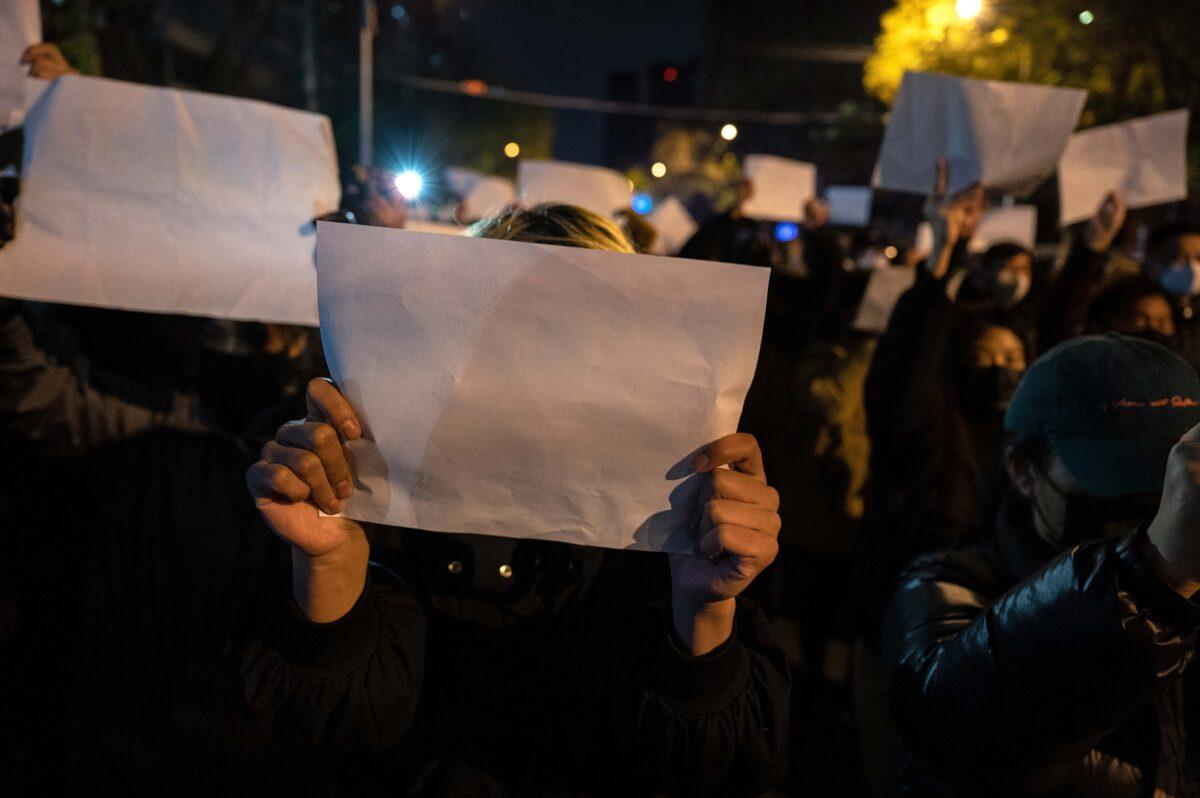
At the same time, participants in China’s 2022 “White Paper” protests—the nationwide demonstrations against COVID-19 restrictions—continue to face legal consequences. Many young protesters were reportedly charged or tried behind closed doors in 2024 and 2025.
White Paper Protesters Still Missing
One of the most troubling developments is the long-term disappearance of some participants. A young man from Nanjing, identified only as the pseudonym “Xiao Fang,” told The Epoch Times that Li Kangmeng, a student at Nanjing Communication College who held up a blank sheet of paper during the protests, has been missing for years.
“We’ve been trying to find out where Li Kangmeng is, and we even went to the college, but we still haven’t been able to locate him,” he said.
Human Rights Lawyers Report Growing Pressure
International concern has also mounted over the treatment of China’s human rights lawyers. Human Rights Watch documented the ongoing disappearance of prominent rights attorney Gao Zhisheng, missing for more than eight years with no public information about his whereabouts or health. Another lawyer, Xia Lin, has been almost entirely cut off from the outside world since receiving a 12-year sentence in 2016 for handling politically sensitive cases.Meanwhile, prominent lawyer Yu Wensheng is serving a three-year sentence for “inciting subversion.” He was permitted to meet briefly with his wife, Xu Yan, and their son earlier this year—their first family visit in two years.
A lawyer in Shandong familiar with the annual licensing process told The Epoch Times that many attorneys are no longer willing to take politically sensitive cases.
“Shanghai lawyers have long been barred from handling sensitive cases without approval,” he said. “Beijing, Shandong, and Henan also use annual license reviews as a form of pressure.”
He added that taking cases involving political speech, underground churches, Falun Gong practitioners, and other rights issues all require prior approval from the authorities.
“If lawyers refuse police requests, they risk losing their license the following year, and their law firms may face official pressure,” he said.

Religious Groups Face Raids, Arrests, and Secret Trials
Religious communities—including underground Christian groups and Falun Gong practitioners—have also faced escalating pressure over the past year.A house-church pastor in Anyang, China, told The Epoch Times his congregation has been questioned multiple times this year and told to limit attendance and seek approval for religious activities.
“Only family members can join house gatherings—outsiders are not allowed,” he said. “State security officers told us to attend state-sanctioned ‘Three-Self churches.’ They said unregistered gatherings are illegal.”
A petitioner in Jilin Province familiar with Falun Gong cases told The Epoch Times: “Police and courts treat Falun Gong cases with extreme secrecy. Trials and verdicts are often held behind closed doors. We can’t even ask questions.”
Falun Gong, also known as Falun Dafa, is a spiritual discipline based on the principles of truthfulness, compassion, and tolerance. First introduced to the public in China in 1992, the practice quickly spread by word of mouth to reach an estimated 70 million to 100 million practitioners by 1999.
Online Speech Restrictions Intensify
Human Rights Watch and the State Department’s human rights reports all document rising restrictions on speech under the CCP. Numerous Chinese internet users were detained in 2024 and 2025 for posts about public issues, according to China Digital Times. Families say police routinely order detainees to delete their accounts afterward.One user, identified only by his surname Lyu, told The Epoch Times that his WeChat and Weibo accounts have been shut down repeatedly. These are Chinese social media platforms with oversight from the Chinese censors.
A Continued Tightening
Li Li, a scholar specializing in China’s legal system, told The Epoch Times that 2025 has brought a continued tightening of human rights conditions, with opaque legal procedures becoming a major point of contention.“Public incidents are increasingly routed into judicial processes,” he said. “We will need to monitor how the space for public expression and the legal system evolves in the coming year.”