The ruling Chinese Communist Party (CCP) has released consumption data for the Chinese New Year holiday, with state media boasting that the domestic consumer market is “hot.”
However, finance experts rebuke the claim, pointing out that the slumping Chinese economy is entering a situation akin to the Great Depression (1929–39).
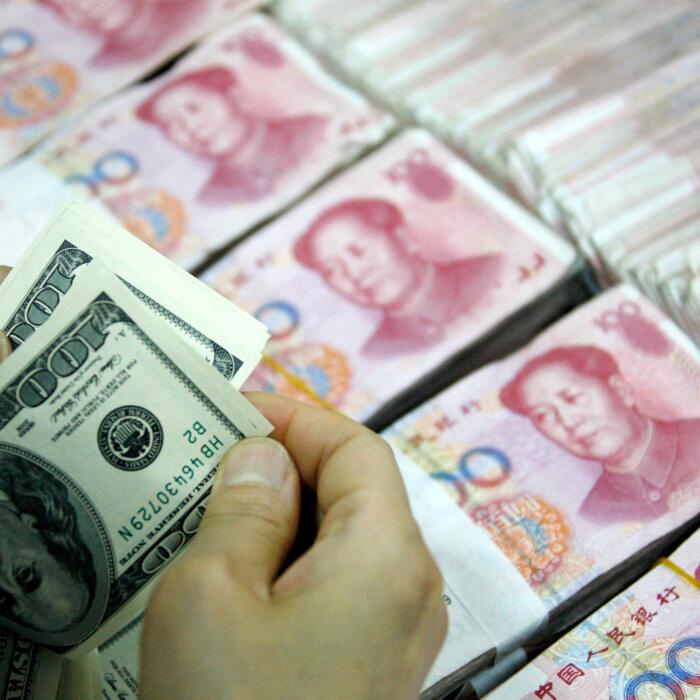
The Data Center of the CCP’s Ministry of Culture and Tourism in recent days released information stating that there were 474 million domestic tourism trips during the Chinese New Year holiday from Feb. 9 to Feb. 17, and domestic tourists spent a total of 632.68 billion yuan (about $87.9 billion) on travel. The sales of key retail and catering companies across the country increased by 8.5 percent year-on-year on a comparable basis.
The CCP’s official media claimed that China’s economy had a “good start” in the Chinese New Year based on holiday consumption data on tourism, catering, retail, transportation, and movies, among others.
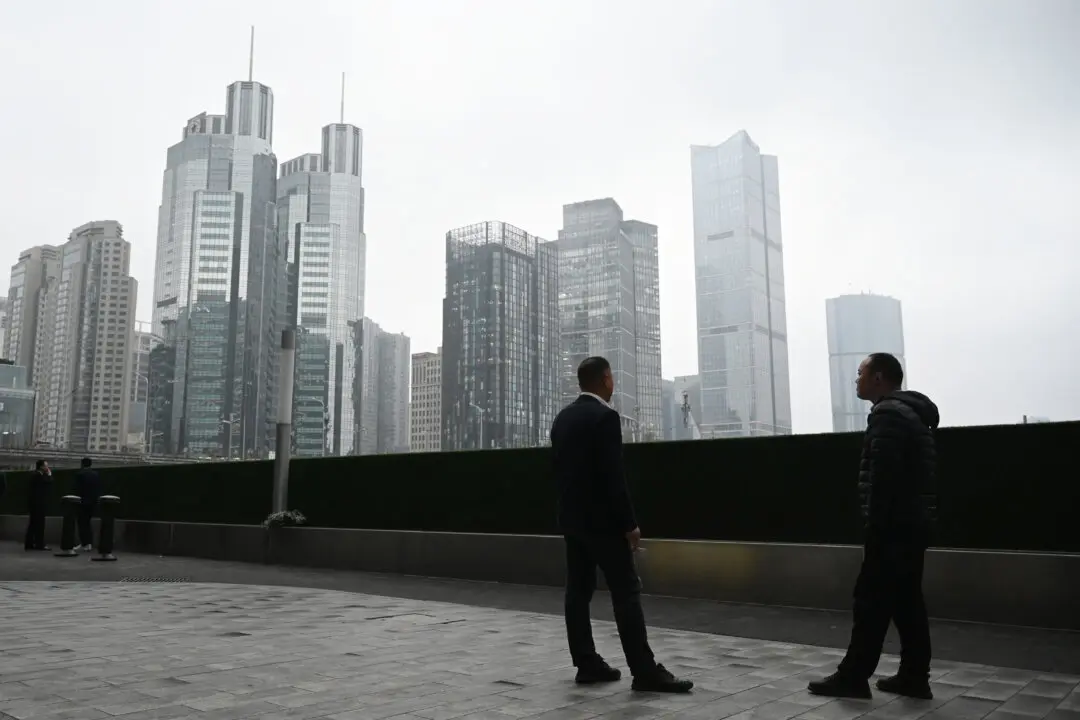
The Chinese economy continued slumping in 2023 after the CCP abandoned its restrictive “zero-COVID” policy control measures, which put the economy under lockdown for three years. All economic sectors have experienced a downturn characterized by a decline in exports, stagnant domestic demand growth, significant decreases in manufacturing production and sales, a collapse in real estate, and slowdowns across most service industries.
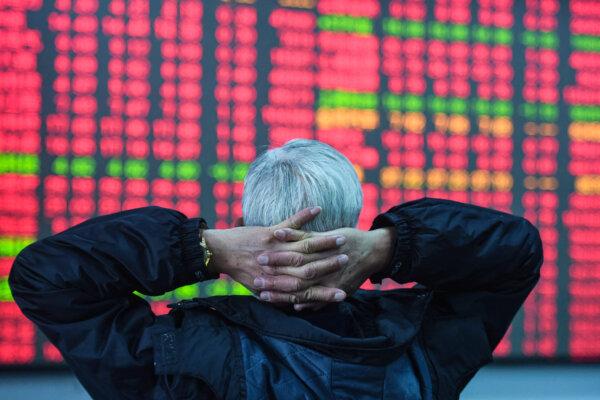
China’s stock market crashed in late January and early February, reaching the lowest index in years, with thousands of stocks hitting the limit down.
A Chinese financial commentator known as “Da Liu Shuoshuo,” who has 3.84 million followers on Chinese social media, posted a video online stating that although consumption during the Chinese New Year has rebounded, it exhibits the traits of false prosperity. “Behind the hundreds of billions of consumption is the contraction of trillions of consumption. It’s a ‘lipstick economy,’” the commentator said.
‘Great Depression Is Coming’
The Chinese edition of Voice of America published an article by Shanghai political scientist Jiang Feng (pen name) earlier this month, titled “The Great Depression is Coming: The Historic Moment of ‘Shanghaiization.'”The article noted that the atmosphere on the eve of Chinese New Year was peculiar. “The Chinese people are helplessly watching the onset of the Great Depression,” Mr. Jiang wrote.
The article pointed out that this year, more businesses and factories closed early before the holiday compared to previous years. Every industry is in depression, and the occurrence of “bosses running away [without notice or paying salary or debts]” has almost become the new norm, according to Mr. Jiang.
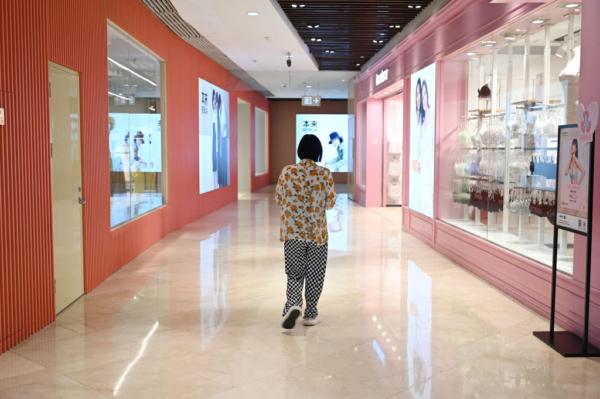
On multiple social media platforms, many Chinese complain about the downturn they have witnessed in various industries, such as store and business closures, plummeting real estate prices, unemployment, and huge losses in stock trading.
After the Chinese New Year, upon returning to work, many people across the country posted on Chinese social media that the companies or factories they worked for had closed permanently after the holiday.
The VOA article pointed out that China’s economic model is increasingly characterized by an internal circular economy that operates against the principles of a free market and is dominated by political powers. This shift has resulted in the erosion of both the Chinese economy and its political landscape. The article suggests that this phenomenon, characterized by empty promises made by Chinese officials, is the root cause of an inevitable “Great Depression” in China.
Chinese financial influencer “Magical Blue” recently said in a post that the biggest problem faced by the Chinese people now is the excess of three major capitals caused by a crisis of confidence.
“The first is the excess of industrial capital. China’s manufacturing industry has a significant surplus. The overall operating rate of many industries is less than 50 percent or even only 20 percent. Demand is insufficient, people have no money, and the products manufactured cannot be sold, resulting in overcapacity,” the influencer said.
“The second is the excess of financial capital. Many banks have more deposits than loans. Enterprises are not investing, and consumers are not buying. This money does not flow to the real economy but is idle in the financial system. If banks cannot lend money and still have to pay interest to people, this is an excess of financial capital,” Magic Blue continued.
“The third is the excess of commercial capital. Now, the streets are full of shopping malls, pharmacies, hotels, and milk tea shops. There were 420,000 pharmacies in 2012, and by the end of 2022, there were 620,000 pharmacies; there are four to five pharmacies on one street.”
The international community has also observed that China’s economy is beset by numerous issues resembling the underlying causes of the Great Depression in the United States, particularly the decline in bank lending and the lack of confidence.