U.S. Treasury Secretary Scott Bessent has urged China to intensify its diplomatic efforts to persuade Iran to open the Strait of Hormuz to international shipping ahead of U.S. President Donald Trump’s meeting with Chinese leader Xi Jinping next week.
“China, let’s see them step up with some diplomacy and get the Iranians to open the strait,” Bessent said on Fox News’ “America’s Newsroom” program on May 4.
Bessent urged China to join the United States in the global operation to open the strait. His comments came as the U.S. and Iranian militaries clashed in the Persian Gulf.
U.S. Adm. Brad Cooper, head of U.S. Central Command (CENTCOM), said on May 4 that the U.S. military had destroyed six Iranian small boats and intercepted cruise missiles and drones launched by Tehran, as Washington carries out an operation aimed at opening the strait to shipping.
In a post on X on May 4, CENTCOM said several Navy guided-missile destroyers were operating inside the Persian Gulf in support of the mission and that two U.S.-flagged merchant vessels had crossed the strait and were “safely headed on their journey.”
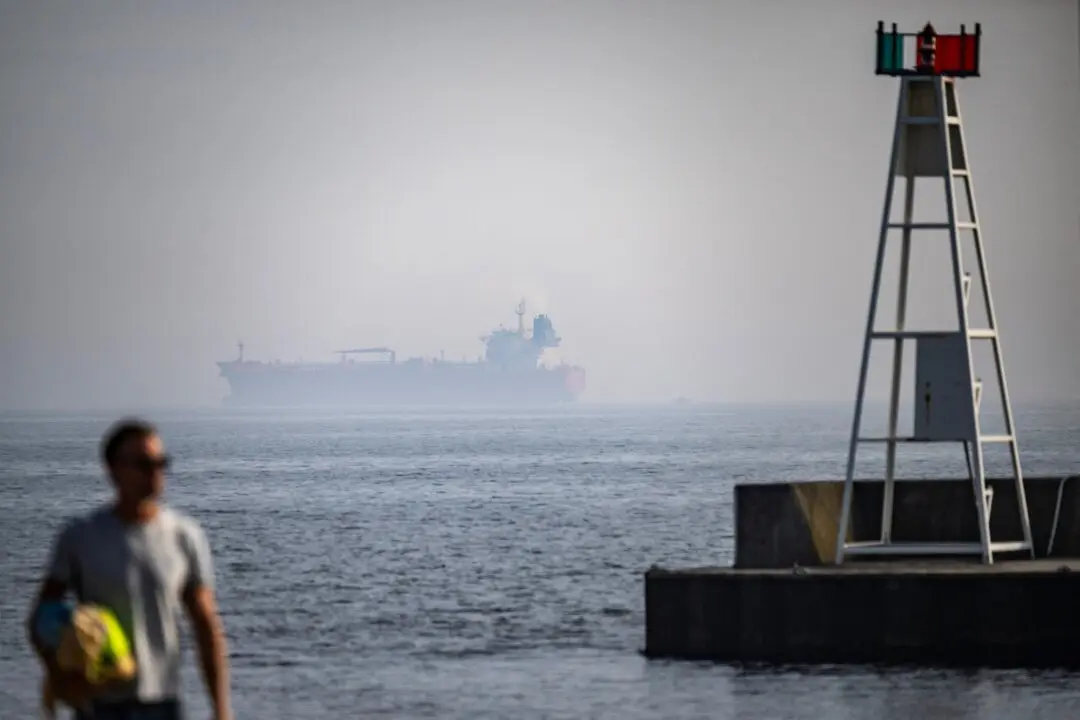
More than two months after the United States and Israel launched an air campaign against Iran on Feb. 28, Tehran says it has shut the Strait of Hormuz to most foreign shipping.
“The Iranians are starting to believe their own propaganda,” Bessent told Fox News. “Their navy is not a navy anymore, it’s a band of pirates.”
Since last month, Washington has imposed a blockade on ships entering or leaving Iranian ports.
Beijing is a strong economic ally of Tehran, and buys more than 80 percent of Iranian oil exports.
Bessent said that by buying Iranian oil and gas, China has been “funding the largest state sponsor of terrorism.”
Bessent said Trump and Xi would discuss Iran during their two-day summit in Beijing, which is due to start on May 14.
“We’ve had great stability in the relationship, and again, that comes from the two leaders having great respect for each other,” said Bessent, who will join Trump in China.
He said China and Russia should stop blocking resolutions at the United Nations.
Bessent said the United States was now fully in control of the Strait of Hormuz, and that the “temporary aberration” in gas prices at the pumps would end in a matter of “weeks or months.”
Average gas prices in the United States have gone up almost 40 percent since March 1.
“We are cognizant that this short-term blip up in prices is affecting the American people, but I am also confident on the other side of this, prices are going to come down very quickly,” Bessent said, pointing to big increases recently in oil production.
On May 2, China’s Ministry of Commerce ordered companies not to comply with U.S. measures against five independent oil refiners, including Hengli Petrochemical (Dalian) Refinery Co. Ltd., which was sanctioned on April 24.
In a statement on April 24, the U.S. Treasury said: “China-based independent teapot refineries continue to play a vital role in sustaining Iran’s oil economy, and Hengli is one of Iran’s largest customers for crude oil and other petroleum products, having purchased billions of dollars’ worth of Iranian petroleum.”
In the statement, the Treasury said Hengli had played an “outsized role” in purchasing crude oil from the Iranian armed forces.
The Treasury said Hengli had received several Iranian crude oil shipments since 2023 from Sepehr Energy Jahan Nama Pars Company, which it said was controlled by the Iranian Armed Forces General Staff. It said this generated hundreds of millions of dollars in revenue for the Iranian military.
In November 2023, the U.S. Treasury Department sanctioned Sepehr Energy and several individuals associated with the company.
“Sepehr Energy uses companies in Hong Kong and the United Arab Emirates to sell billions of dollars’ worth of commodities to customers in Europe and East Asia,” the Treasury said in a statement at the time.
Reuters contributed to this report.