A high-profile, state-backed Chinese movie depicting the Qing dynasty’s 17th-century conquest of Taiwan has been pulled again from cinemas just days before its scheduled July 25 premiere.
The primary reason for pulling the plug on the movie is the ruling Chinese Communist Party’s (CCP) concern over its impact on diplomacy with the United States, and other political calculations, according to an insider who has connections within the upper echelon of the CCP who spoke with The Epoch Times.
The movie, “The Belief,” also known as “The Battle of Penghu” in its Chinese title, was scheduled for release on July 25. However, as of July 24, the film had not secured a public screening license, and ticket pre-sales remained unavailable on booking platforms in China.
The trailer for the film was released in October 2025, on the 80th anniversary of the end of Japanese colonial rule of Taiwan after Japan’s surrender in World War II.
The narration of the trailer declares: “Lead the fleet, take Penghu, and capture Taiwan.” It ended with a slogan superimposed on screen: “Unification of Taiwan cannot be stopped.”
The movie was originally scheduled for release in February. However, it was quietly withdrawn from the Lunar New Year release, when the focus of Beijing’s Taiwan work had shifted to the so-called “maintaining peace and stability across the Taiwan Strait” instead of “unification by force,” according to the CCP’s official rhetoric published in February.
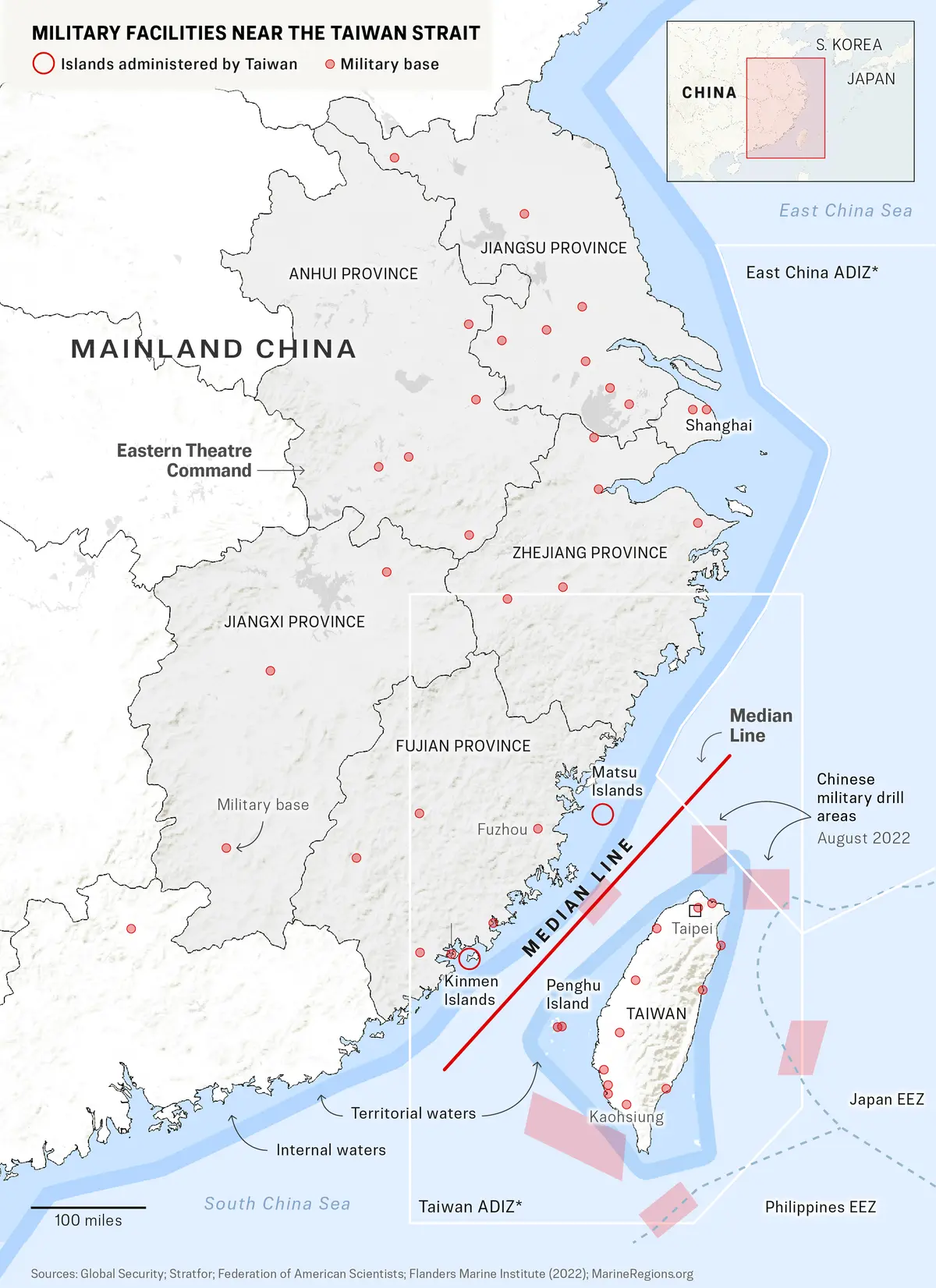
The Penghu archipelago, also called the Pescadores, belongs to Taiwan (the Republic of China). It is an island group in the Taiwan Strait.
The movie is set against the backdrop of the historical event in 1683 when Qing Admiral Shi Lang led the Fujian navy to attack Penghu to take it from a Ming general’s control. The Qing forces ultimately triumphed in the battle.
Zheng Keshuang (the Prince of Yanping) led the surrender to the Qing, marking the collapse of the Zheng-Ming regime—the last remaining power loyal to Ming after Qing forces took over mainland China—and ending the Zheng family’s 22-year rule over Taiwan.
The film is directed by Hong Kong director Soi Cheang, with mainland Chinese actors Wang Xueqi and Jackson Yee (Yi Yangqianxi) starring as Admiral Shi Lang and the Kangxi Emperor of the Qing Dynasty, respectively.
Political Considerations
Regarding Beijing pulling the plug on the Taiwan invasion movie again now, Yuan Hongbing, a well-connected Chinese legal scholar living in exile in Australia, told The Epoch Times that according to information he received recently, Li Shulei, head of the Chinese regime’s Publicity Department, conveyed a directive to the broadcasting and film authorities to temporarily shelve “The Battle of Penghu.”
It’s per a specific instruction from CCP leader Xi Jinping, who noted that the film had sparked controversy within society and academic circles and therefore ordered a delay in its release, Yuan said.
The primary reason for holding the film’s release is that Xi will meet again with Trump this September, Yuan said.
“Xi intends to leverage this ‘head-of-state diplomacy’ with Trump to shore up his authority within the CCP, which has been steadily eroding by the successive waves of purges he has carried out in the CCP’s officialdom.”
Yuan said that within the CCP establishment, word is circulating that all these disgraced officials were personally promoted by Xi, and that he must therefore bear personal responsibility for them.
“This collapse of Xi’s personal authority has left him feeling acutely endangered and facing a personal crisis,” Yuan said.
“Consequently, he seeks to consolidate his position within the party through meeting with Trump, hoping that Trump might praise him as a ‘great leader.’
“He now fears that the screening of ‘The Battle of Penghu’ could trigger a backlash from the United States, thereby causing major complications for this ‘head-of-state diplomacy’ with Trump,” he said.
The United States has condemned Beijing’s threat to take Taiwan by force, the self-ruled island nation formally known as the Republic of China, which is the last territory of the republic that ruled China from 1911 to 1949 before the communist takeover of mainland China.
It enables arms sales, military financing, and strategic cooperation to ensure Taiwan maintains a strong self-defense capability to safeguard its sovereignty.
Potential Blowback
Another reason for the Chinese authorities to suspend the release of the movie is the controversy in Chinese society and academia surrounding its association of Ming loyalist Zheng Keshuang—a descendant of Zheng Chenggong who successfully expelled the colonial Dutch East India Company from Taiwan in 1662 and is considered a Han Chinese hero who fought against Manchu Qing conquest of China—with today’s Republic of China in Taiwan, Yuan said.
By contrast, the Republic of China in Taiwan is the legitimate republic of the Chinese people, Yuan noted. In that sense, the movie’s propaganda effect may backfire, he said.
In addition, the Chinese regime is concerned that Shi Lang, the Qing general who attacked Taiwan and took Penghu, was a defector from the Ming loyalist forces, Yuan said.
“It wouldn’t look good on the Chinese regime that the ‘great cause of reunification of China’ is achieved by a turncoat.”