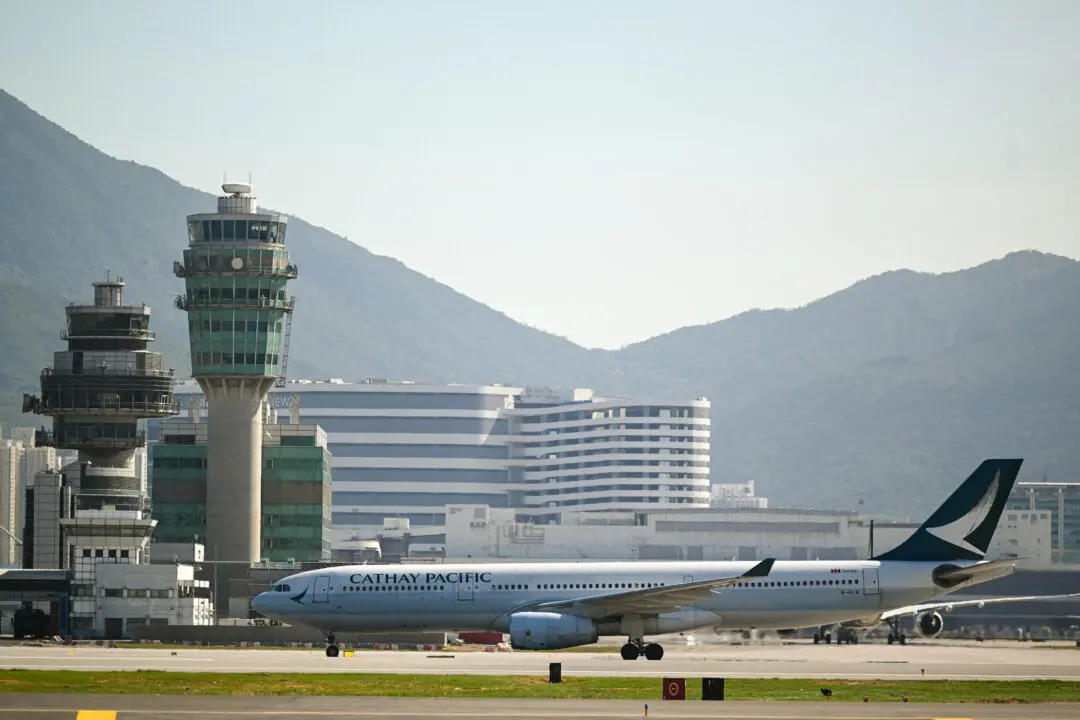
After Deutsche Bank announced on Aug. 10 it was authorized by the People’s Bank of China—China’s central bank—to be an RMB clearing bank in Frankfurt, making it the first in Europe, analysts warned this could give the Chinese communist regime a way into the European-U.S. financial system, raising questions for the global financial system.
Other major European banks could also follow for economic reasons despite the European Union’s de-risking policy from China, as the communist regime pushes for the yuan to go global.
Germany’s largest bank, Deutsche Bank, is the world’s largest euro clearing bank and classified as a Global Systemically Important Bank by the Financial Stability Board.
“Deutsche Bank will facilitate direct end-to-end processing, clearing, and settlement services for cross-border RMB [renminbi] transactions for European financial institutions and businesses, acting as a local bridge to China’s payment systems,” the bank said.
“It strengthens China-Europe financial connectivity,” Deutsche Bank board member Alexander von zur Muehlen said.
Chinese state-owned media Shanghai Securities News reported that this move further links the Chinese, European, and global markets, enhancing cross-border RMB service capabilities.

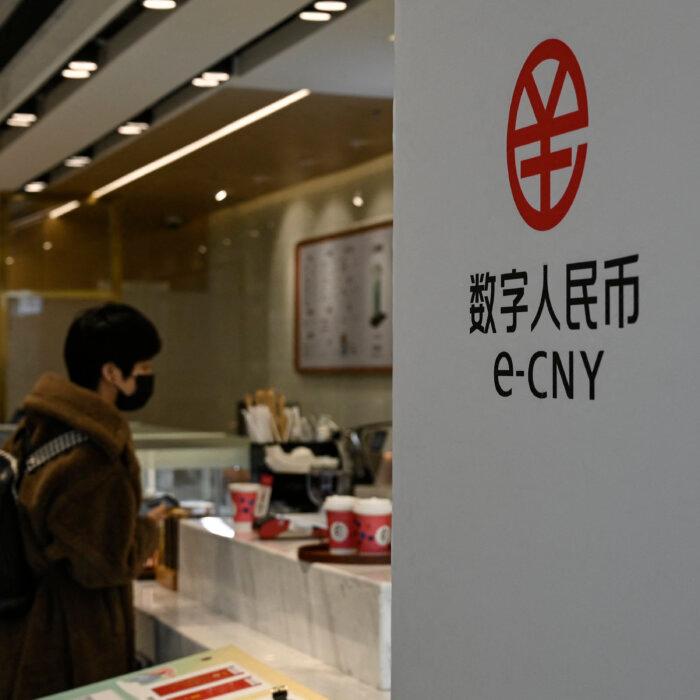
Davy J. Wong, a U.S.-based independent political economist, told The Epoch Times that Deutsche Bank becoming the first RMB clearing European bank indicates a significant shift in the internationalization of the RMB.
“The internationalization of the yuan is transitioning from a phase of “China actively promoting it abroad” to one where “foreign banks voluntarily become part of the RMB system,” he said.
In the past, the process was driven primarily by Chinese banks—such as the Bank of China and the Industrial and Commercial Bank of China—expanding abroad to establish overseas RMB clearing networks, he noted. “Now, a major European bank—Deutsche Bank—is directly participating, which effectively means the RMB is integrating into Europe’s own financial infrastructure.”
It’s a symbolic breakthrough for Beijing’s RMB internationalization strategy, because Deutsche Bank is the first European domestic bank to receive this status, Sun Kuo-hsiang, a professor of international affairs and business at Nanhua University in Taiwan, told The Epoch Times.
“It shows that China is trying to embed RMB infrastructure inside Europe’s core financial system,” Sun said.
This does not mean the RMB is approaching the international status of the U.S. dollar, Wong said.
“The biggest issues facing the RMB at present remain not a shortage of clearing banks, but rather the lack of fully free capital flows and currency convertibility, as well as the limited transparency and predictability of China’s financial markets,” he said.
Attempt to Replace Dollar System
China’s central bank stated earlier this week that part of its five-year plan is to keep the yuan exchange rate stable and expand the use of the currency in international trade and investment.
China has been expanding its RMB clearing system in an attempt to replace the U.S. dollar based international clearing system.
Also in June, Standard Bank and Industrial and Commercial Bank of China were named jointly as the “Renminbi Clearing Bank of Africa,” with capacity to clear RMB in 19 African countries.
However, given the limits of the Chinese communist regime controlled yuan, it’s unlikely it has the capacity to challenge the U.S. dollar and the SWIFT system based on it, according to analysts.
“The dollar’s dominance rests on deep U.S. capital markets, global liquidity, legal trust, reserve-currency status, and powerful network effects,” Sun said. Deutsche Bank gives the RMB a stronger foothold in Europe and may make RMB settlement more convenient for trade with China, “but it is still more of a complementary or backup channel than a substitute for the dollar,” he said.
This move is not a real replacement for the dollar system, Sun said. “It is better understood as China building parallel and backup channels to reduce dependence on dollar-based clearing where possible.”
If Chinese and German companies switch from settling transactions in U.S. dollars to using the RMB directly, “China reduces its reliance on the U.S. dollar system by one layer,” Wong said.
If an increasing number of banks in Germany, France, the Middle East, and Southeast Asia establish renminbi clearing capabilities, the cumulative effect will be the formation of an alternative settlement network, he cautioned.

The truly difficult part of yuan becoming an international currency is the following stages, Wong said. “Namely, getting foreign central banks, pension funds, insurance companies, banks, and investment funds willing to hold RMB-denominated bonds, stocks, and other assets on a long-term basis.”
If China truly wishes for the RMB to become a global asset currency, according to Wong, it must gradually increase:
1. Capital account openness
2. Freedom of RMB convertibility
3. Exchange rate flexibility
4. Interest rate liberalization
5. Freedom of cross-border capital flows
All of these factors would weaken the government’s ability to exercise control, Wong said. “The more the RMB becomes internationalized, the less control the Chinese regime actually has over its value. The greatest obstacle for the yuan to go global is not the United States, but rather China’s own choice of its political-economic system.”
Although China has the world’s second-largest GDP, its financial influence and participation in the international arena remain very limited, noted Wang He, a U.S.-based senior China analyst.
China is the world’s largest holder of a trade surplus, which is why the RMB does not flow outward and it’s unlikely to be an international currency, Wang told The Epoch times.
Given the ruling Chinese Communist Party’s (CCP) policy inclination and ideology of extreme, all-encompassing control, “the CCP will never allow the RMB to become freely convertible,” he said.
Impact on US-EU Relations
There are actually two simultaneous objectives behind the internationalization of the RMB, according to Wong.
“First, an economic objective: to reduce transaction costs,” he said. “Second, a strategic objective: to diminish the U.S.’s ability to impose financial sanctions through the U.S. dollar system.”
Wong said Deutsche Bank becoming the first RMB clearing bank in Europe carries significant strategic implications.
Germany is one of Europe’s largest economies and a key European ally of the United States, he noted. “The fact that one of Germany’s largest banks has become a clearing hub for RMB marks a symbolic breakthrough for the currency’s internationalization within the core Western financial system.”
“What truly concerns the U.S. is not just Deutsche Bank itself, but the possibility that a second or third bank might follow suit,” he said.
The United States hopes to keep the internationalization of the RMB largely confined to areas outside its alliance network, whereas Beijing aims precisely to break through this limitation, Wong said.
Sun said that Washington will watch this development closely because any expansion of non-dollar clearing can, over time, weaken the reach of U.S. financial sanctions and reduce dependence on dollar payment rails.
“The U.S. response is likely to be monitoring, regulatory pressure, and stronger coordination with European partners on sanctions compliance, anti-money-laundering rules, and China-related financial risks, rather than direct confrontation with Deutsche Bank,” he said.
The Deutsche Bank’s move could create some friction in U.S.-EU relations if Washington sees Europe as helping Beijing build financial autonomy from the dollar system, Sun said of the impact.
“But it is unlikely to seriously damage transatlantic relations by itself. The larger issue is whether Europe treats China mainly as an economic partner or as a systemic strategic risk,” he said. “This case reflects Europe’s balancing act: maintaining business ties with China while still claiming to pursue “de-risking” rather than full decoupling.”
According to Wang, the United States has other options to counter this move by targeting the financial cooperation between Deutsche Bank and the CCP.
“It could, for example, leverage U.S. anti-money laundering laws or statutes related to economic sanctions against Russia and Iran to prevent Deutsche Bank—after securing RMB clearing bank status—from facilitating financial transactions for Russia or Iran in a roundabout way. In such a scenario, the United States could impose secondary sanctions on the bank,” he said.
Germany-EU Rebalancing
China remains one of Germany’s largest trading partners, and approximately 5,000 German companies operate there.
Wong noted that Germany is likely one of the European countries Beijing most hopes to make a breakthrough with first.
“Consequently, the relationship between Germany and China goes beyond ordinary trade,” he said. “A deep level of industrial integration has developed between them.”
This latest development reflects a very pragmatic policy logic that Germany has consistently maintained: “political security is one thing, while corporate profitability is quite another,” Wong said.
“It is, in fact, a continuation of Germany’s long-standing policy toward China: guarding against China in terms of security while being unwilling to decouple economically.”
He pointed out that Beijing’s strategy is clear: “If Germany can be kept onside, it becomes difficult to form a fully united Western economic front against China.”
“Viewed from this perspective, Deutsche Bank becoming a clearing bank for the RMB is not an isolated financial event,” Wong said.
What warrants attention is not this particular bank, but rather, whether Deutsche Bank marks the beginning of a trend, he said.
“If more German and European banks join the RMB clearing system in the future, the internationalization of the RMB will cease to be merely a Chinese financial initiative and will begin to truly penetrate the financial systems of Europe and the United States,” Wong warned.
“At that point, the United States will inevitably become increasingly anxious,” he said.
Sun said Berlin wants to reduce strategic dependence on China while avoiding a full economic break. “Deutsche Bank’s RMB-clearing role therefore reflects business pragmatism more than a full political realignment toward Beijing.”
For the EU economy, the move may strengthen Frankfurt’s financial role, make RMB settlement easier for European firms, and support trade, financing, and investment links with China, he said.
“But politically it complicates EU China policy: while Brussels talks about economic security, supply-chain risk, and strategic dependence, a major European bank is helping build RMB financial infrastructure inside Europe,” Sun said. “It may deepen the tension between European commercial interests and the EU’s harder strategic view of China.”
Wong said that a process of continuous rebalancing will unfold between the United States and Europe.
“The United States wants Europe to align more closely with it in the areas of finance, security, and technology,” he said. “Europe, meanwhile, seeks to maintain its strategic autonomy and does not want all economic policies regarding China to be dictated by Washington.”
Germany is also observing, making choices, and seeking a balance, Wang said. “It is a balance between politics and economics, a balance between the EU as a whole and the CCP, and a balance between the U.S.-Europe alliance and the CCP,” he said.
“So, to some extent, Germany currently finds itself at a crossroads.”