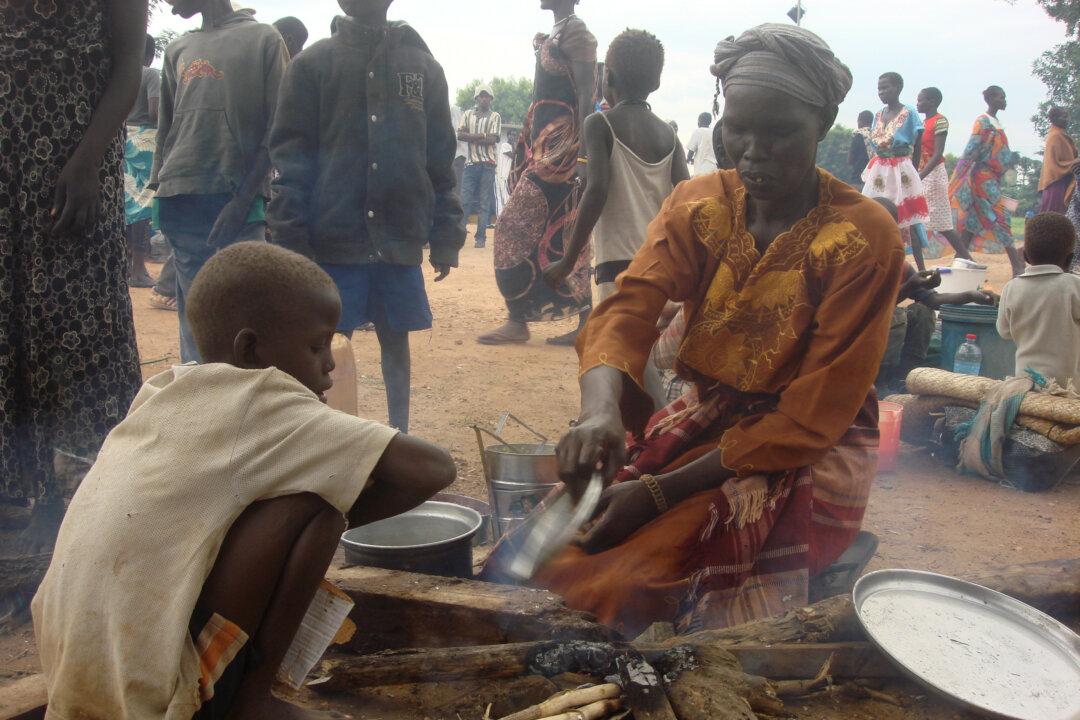
NEW YORK—Their names are Chandrika, Hamida, Amod, Madhuri, Maria, or Jenny. And as varied as these children’s names are their nationalities: Indian, Bangladeshi, Nepalese, Nicaraguan, or North American.
What unites them is that they have been made to work as prostitutes and, in the process, have endangered their lives and well-being and seriously compromised their futures.
It is estimated that 4 million women and girls worldwide are bought and sold each year either into marriage, prostitution, or slavery. Approximately 1 million children enter the sex trade every year. (Although most are girls, boys are also involved.)
As many as 50,000 women and children from Asia, Latin America, and Eastern Europe are brought to the United States and forced to work as prostitutes or servants. In the United States during the past two years, the government has prosecuted cases involving hundreds of victims. In other countries where this problem is frequent, the prosecution rate is even lower.
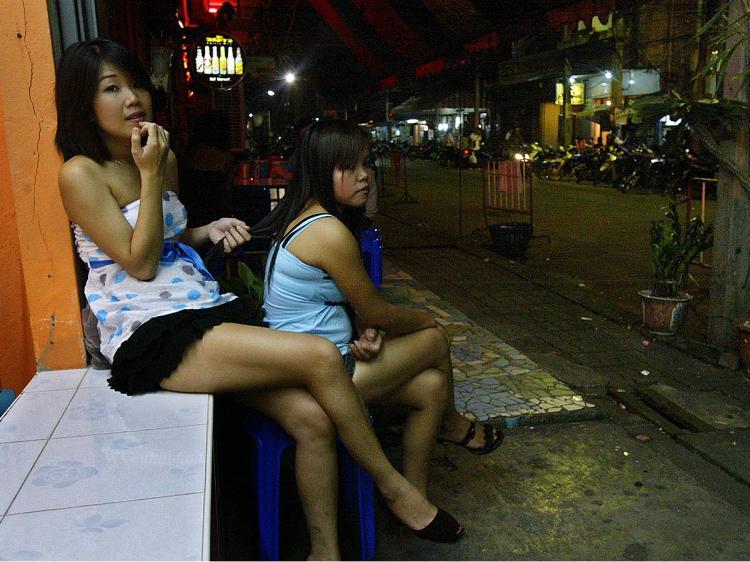
According to UNICEF, 10,000 girls annually enter Thailand from neighboring countries and end up as sex workers. Thailand’s Health System Research Institute reports that children in prostitution make up 40 percent of prostitutes in Thailand.
And between 5,000 and 7,000 Nepali girls are transported across the border to India each year and end up in commercial sex work in Mumbai, Bombay, or New Delhi.
Although the greatest number of children working as prostitutes are in Asia, Eastern European children from Eastern European countries, such as Russia, Poland, Romania, Hungary, and the Czech Republic, are increasingly vulnerable.
Worldwide Increase
As a social pathological phenomenon, prostitution involving children does not show signs of abating. In many cases, organized groups kidnap children and sell them into prostitution, with border officials and police serving as accomplices.
The U.N. Special Rapporteur on Violence Against Women has called attention to the levels of state participation and complicity in the trafficking of women and children across borders.