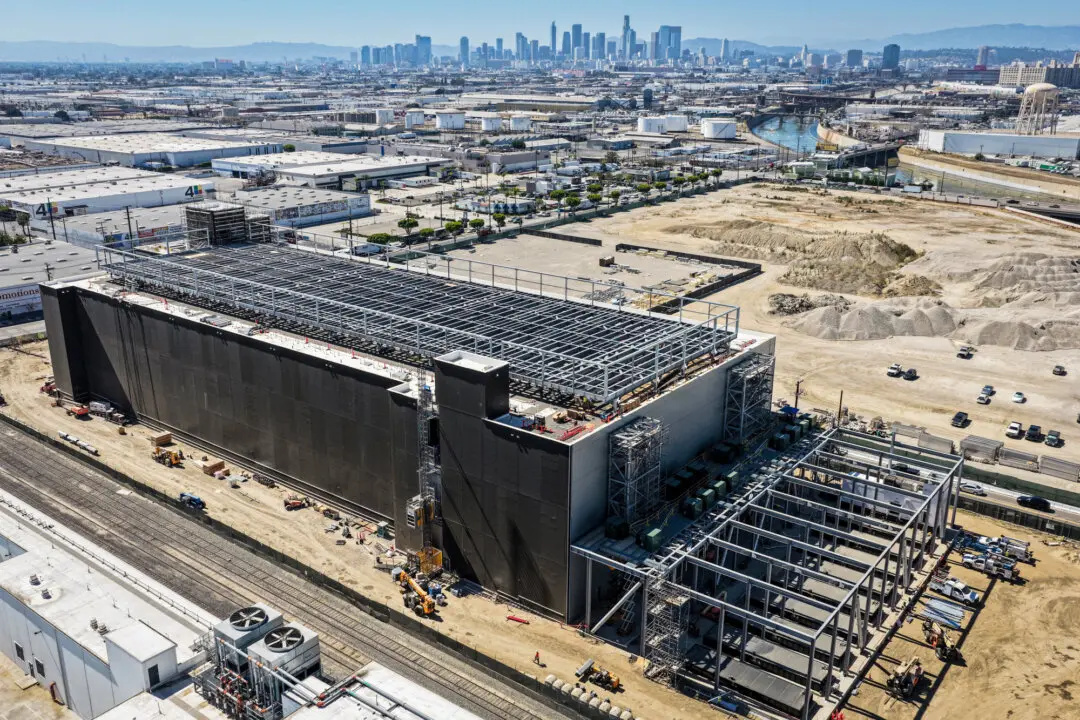
The goal is to “accelerate the path to commercial fusion power,” according to Energy Department Under Secretary for Science Darío Gil.
One firm pursuing that vision is SHINE Technologies, based in Janesville, Wisconsin.
“The whole approach of our company is commercialized fusion today,” SHINE Technologies CEO Greg Piefer told The Epoch Times.
And while SHINE’s ultimate goal is to make fusion a viable energy source, “in the meantime, we’re using forms of fusion, simpler confinement systems, that can address real market needs today,” he said.

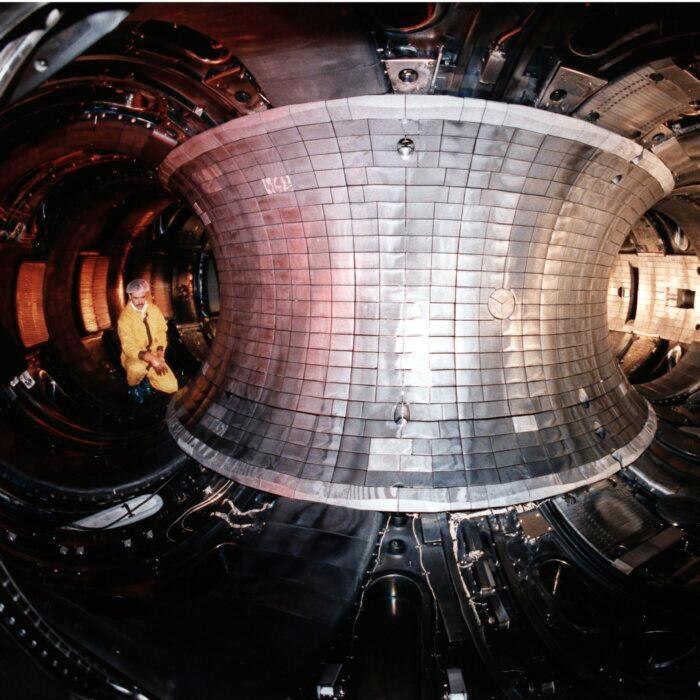
Fusion energy passed a major milestone toward becoming a viable energy source in 2022. That’s when researchers at Lawrence Livermore National Laboratory’s National Ignition Facility were able to generate more energy from reactions than the energy input from the fuel that produced the reaction.
“There’s a lot of excitement about scientific break-even,” Piefer said.
Finding Markets for Neutrons
So how does a company survive until the technology catches up?“When we looked at it, we said, ‘Where are there industries where you’ve seen that type of improvement in cost profile?’” Piefer said. “And the one obvious one that just hit us smack in the face was semiconductors.”
“But Moore’s law was not funded by a moonshot. It was fueled by products and making things better and better and always targeting the customers who would pay the most for those products,” Piefer said.
His team looked at similar industries, such as batteries, solar panels, and electric cars, and asked, “Is there a way we can do that with fusion, that we could provide value to people today, get paid a lot more per reaction, and use it to practice and bring the cost down?”

Following this path, SHINE, established in 2010, found that the solution was “being customer focused instead of focused on the end state,” Piefer said. While the quest for cost-competitive fusion electricity centers on generating heat, SHINE focused on another byproduct of fusion reactions—neutrons.
“Instead of capturing the heat, you capture the neutrons and use them,” Piefer said. “There are customers who will pay up to $200,000 for that kilowatt hour instead of five cents.”
Instead of developing large-scale fusion energy reactors—employing superconducting magnets and highly complex “blanket” structures to contain and sustain reactions—SHINE uses particle beams to generate fusion in low-temperature tritium plasma.
“We don’t need superconducting systems with breeder blankets and insane materials that don’t exist yet,” Piefer said. “We can focus just on maximizing neutrons, maximizing uptime, maximizing what the customer needs.”
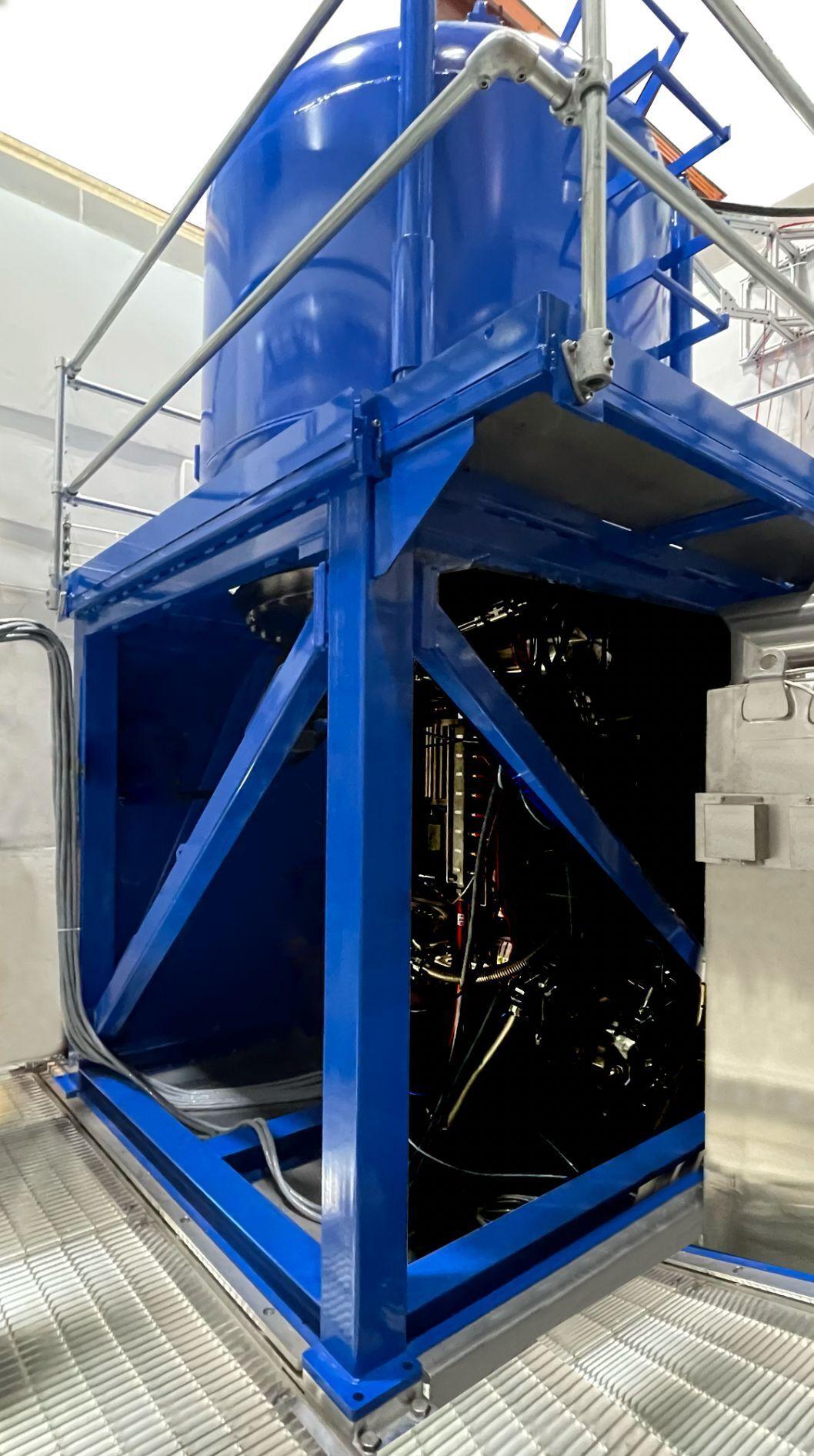
While X-rays penetrate light material such as skin and muscle but get absorbed by heavy materials, producing interior images of bone structures, neutrons work the opposite way. They pass through heavy materials such as metals and produce images of the interior spaces.
“It just so happens that making neutrons is far more difficult than making X-rays, and historically nuclear reactors have been needed to do this until we came along,” Piefer said.
Today, it is cheaper to produce neutrons from fusion than from fission, Piefer said. And, pursuing these markets has an added benefit: SHINE learned from experience how to progressively cut the cost of fusion production at every step of the way. This has allowed the company to achieve an operating profit and expand into new markets.
Fusion for Cancer Treatment
Medical radioisotopes became the next market for SHINE. These isotopes are sold to pharmaceutical companies or cancer therapy centers to detect and treat the disease.“We can use fusion neutrons to turn uranium, which is worth $6 a gram, into a medical product called molybdenum 99, which is worth about $150 million a gram, and we can produce lutetium 177, which is used to fight cancers,” Piefer said. “So these are insanely valuable things that we can do at a small scale and have a growing business, all while we’re practicing building fusion systems more cost effectively.”
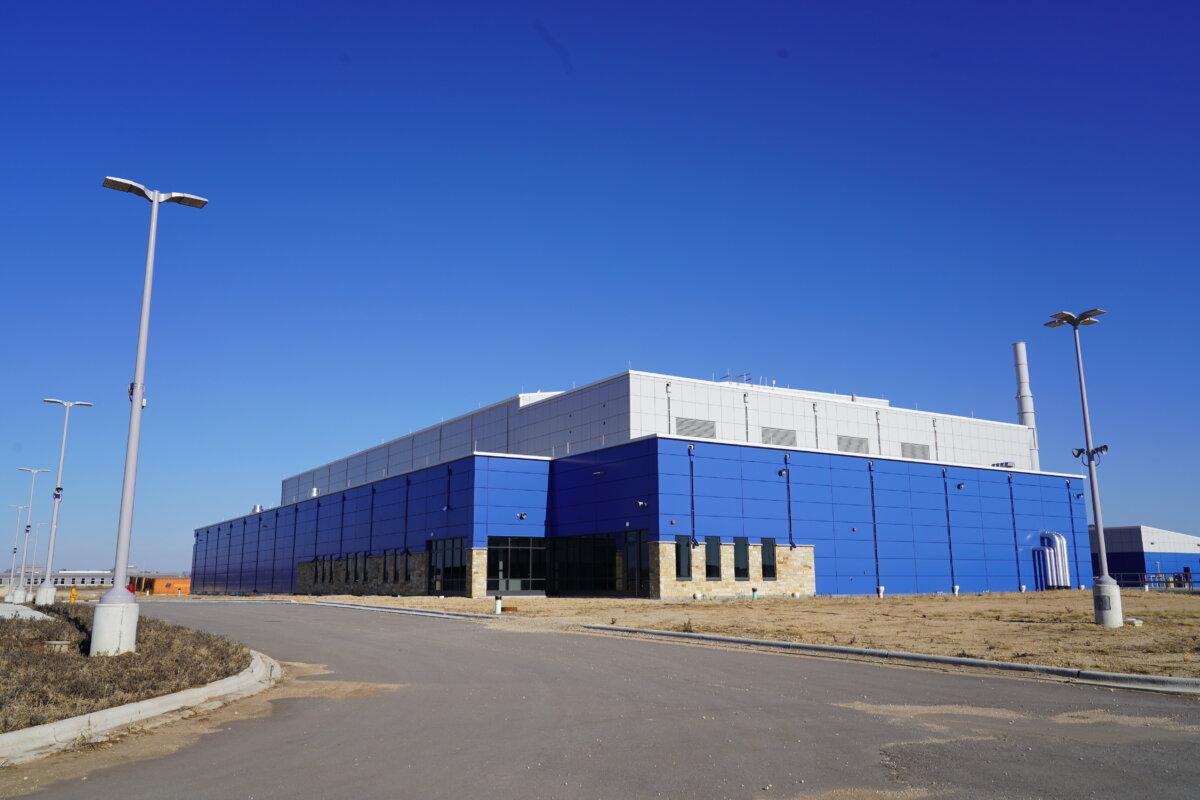
SHINE initially developed this business relying on companies like GE that produce nuclear fission reactors. But they are in the process of bringing that segment of the supply chain in-house, constructing what Piefer said will be the largest medical isotope production facility in the world, using fusion technology.
A privately held company, SHINE has raised about $800 million in contributions from the Department of Energy and debt financing to fund its capital expenditures, in collaboration with fund managers such as Koch Disruptive Technologies, Fidelity Management & Research Co., Oaktree Capital Management, and Baillie Gifford, a UK investment firm.
Eyes on the Prize
Each subsequent venture has required generating fusion reactions at progressively higher temperatures, requiring ever more sophisticated technology to produce and contain the reactions.“As we go through these phases and we get better and better at building fusion systems, we also layer in increasingly complex confinement systems,” Piefer said.
That moves the company ever closer to the reason SHINE was founded in the first place—to mass produce affordable and abundant energy.
“There may be others who can get to energy break-even before us, but my belief is that they’re not going to be able to achieve the cost profile they want without building lots and lots of machines, and that’s a difficult way to scale a business,” he said.