The emergence of cloud computing in the early 2000s and generative artificial technology in the 2020s has exponentially increased the U.S. technology industry’s demand for electricity.
In the coming decades, the massive data centers that power new technology will need far more energy than they currently consume.
Data Center Demand
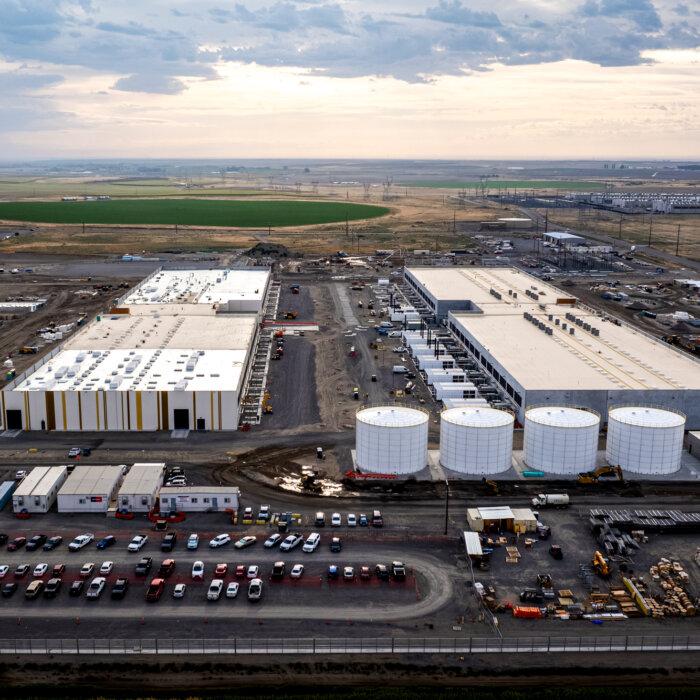
Since the launch of Amazon Web Services in 2006, cloud computing and storage solutions have revolutionized the way the world works, learns, and plays. But the rapid growth of the data centers that run the services is creating an incredible demand for electricity.“Nuclear energy presents a potential solution for meeting some of the growing electricity demands of data centers, with its reliable and clean energy profile,” Hardin and her co-authors wrote.

Currently, the Deloitte report states, nuclear is already punching above its weight in terms of electricity generation. Nuclear sites in the United States provided more than 19 percent of U.S. electricity in 2024 while representing less than 8 percent of overall generating capacity.
Amazon is investing heavily in nuclear energy. In a statement published in May, it called nuclear “a safe, carbon-free energy source that can be brought online at scale.”
Representatives of the leading cloud service providers Amazon, Microsoft, and Google either declined or did not respond to a request for comment from The Epoch Times.
In a statement, Hollis said the move was part of the company’s commitment to becoming a “carbon negative company.”
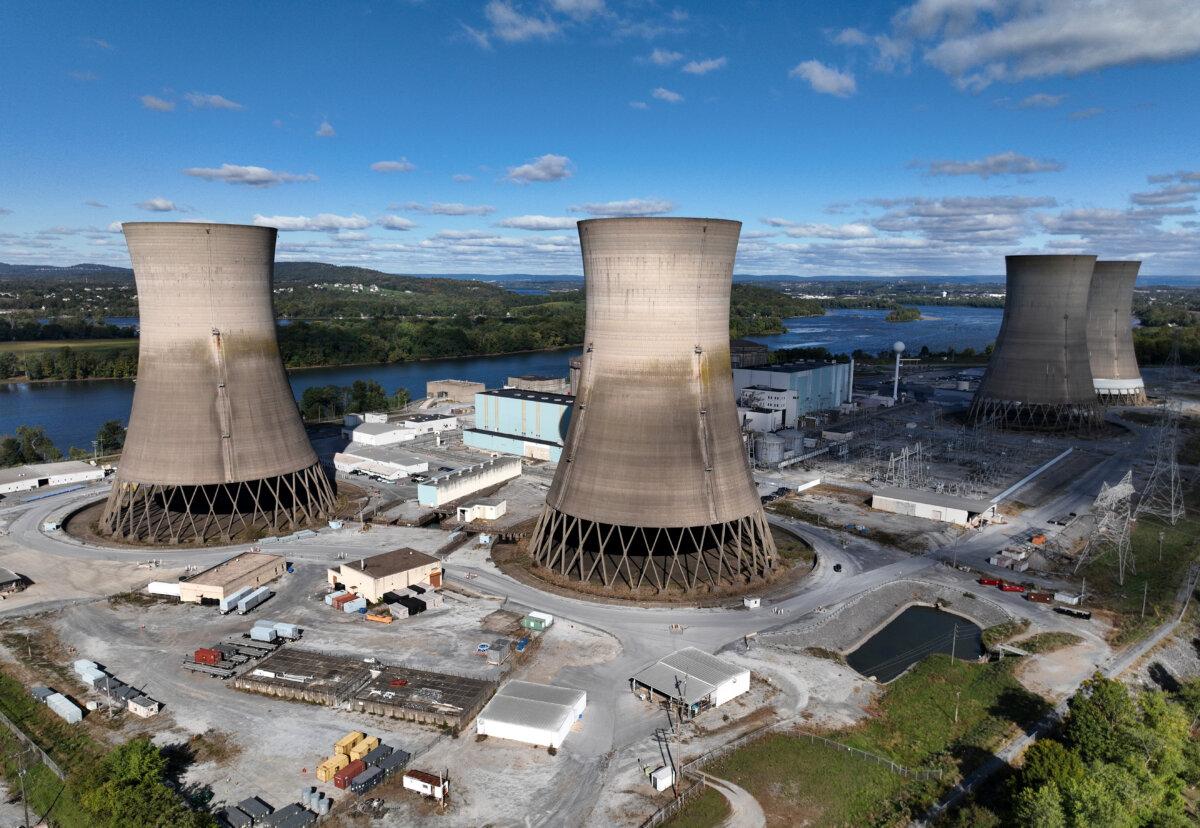
On March 28, 1979, the Unit 2 reactor at Three Mile Island suffered a partial nuclear meltdown. While nobody died in the incident, it is regarded as the worst accident in U.S. commercial nuclear power plant history.
Despite optimism from the leading cloud service providers, nuclear is currently the smallest component of the U.S. energy mix.
Right now, there are 94 nuclear reactors operating in the country, according to the Deloitte report. These reactors are, on average, about 40 years old.
Given the current pace of maintenance and expansion, Deloitte estimated that nuclear power will provide about 10 percent of the overall projected electrical demand to data centers in the United States by 2025.
Political Will
On May 23, Trump signed four executive orders that the White House stated would “usher in a nuclear renaissance.”The orders call for aggressively expanding nuclear energy production in the United States and set a goal of quadrupling nuclear energy generating capacity by 2040.
They call for 10 new large reactors to be online by 2030, as well as for accelerated development of nuclear reactor technologies, use of nuclear power for artificial intelligence infrastructure and military installations, and expedited construction and testing of advanced nuclear reactors.
One of the orders also overhauls the Nuclear Regulatory Commission, calling it a failure. The reforms are aimed at speeding up regulatory approvals and updating the commission’s safety models. The commission was established by Congress in 1978 to ensure the safe use of radioactive materials. The order states that since it was created, only two new reactors have come online.
In an interview with The Epoch Times, a senior official at the DOE’s Office of Nuclear Energy said the executive orders are already paying dividends.
Currently, the DOE has $800 million set aside to help fund the initial deployment of small modular reactors. These smaller versions of nuclear fission reactors are designed to be built off-site and rapidly deployed in power plants.
Given the president’s requirement to test at least three new reactors by July 2026, the senior official said that it is “definitely very feasible” that at least one of the novel reactors tested at the Idaho National Laboratory will be deployed by 2030.
Apart from the Idaho National Laboratory, interest in testing novel reactor technologies remains high. So far, the DOE is receiving far more applications to begin trials than it was initially expecting before the executive orders were signed.
Lingering Doubts
Because of incidents such as the Three Mile Island partial meltdown in 1979, the Chernobyl meltdown in 1986, and the more recent Fukushima Daiichi disaster in 2011, some environmental activists oppose nuclear energy.Representatives of leading activist groups such as the Sierra Club, Friends of the Earth, and the Bulletin of the Atomic Scientists did not respond to requests for comment from The Epoch Times.
In a July 22 appearance before the House Oversight Committee’s Subcommittee on Economic Growth, Energy Policy, and Regulatory Affairs, former Nuclear Regulatory Commission Chair Stephen Burns was highly critical of the Trump administration’s reforms, which he said undermine the independence of the agency and could put safety at risk.
“Great care must be taken in streamlining licensing and regulatory processes to preclude erosion of nuclear safety standards,” Burns said. “Nuclear safety, not regulatory acceleration, must be the bedrock of this effort.”
The senior official acknowledged that getting new power online will be difficult, but echoed the comments of Energy Secretary Chris Wright.
“Is it going to be a challenge? Do a lot of things have to change to get this ball rolling again? Yes. But can we do it? Yes, we can, and yes, we will.”