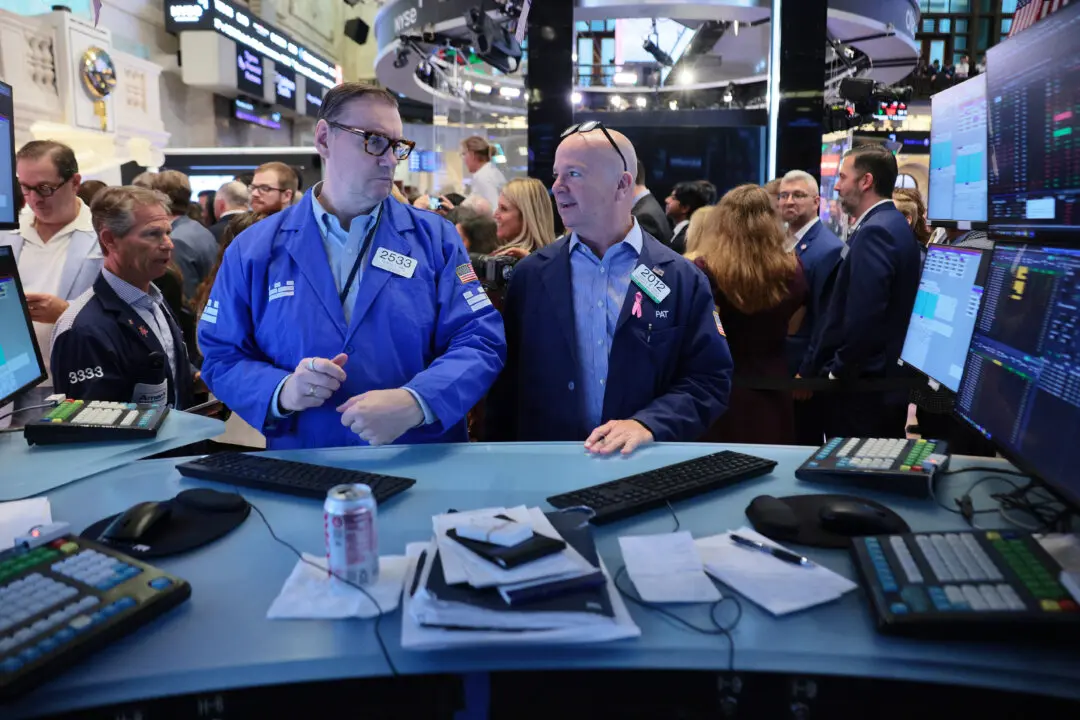
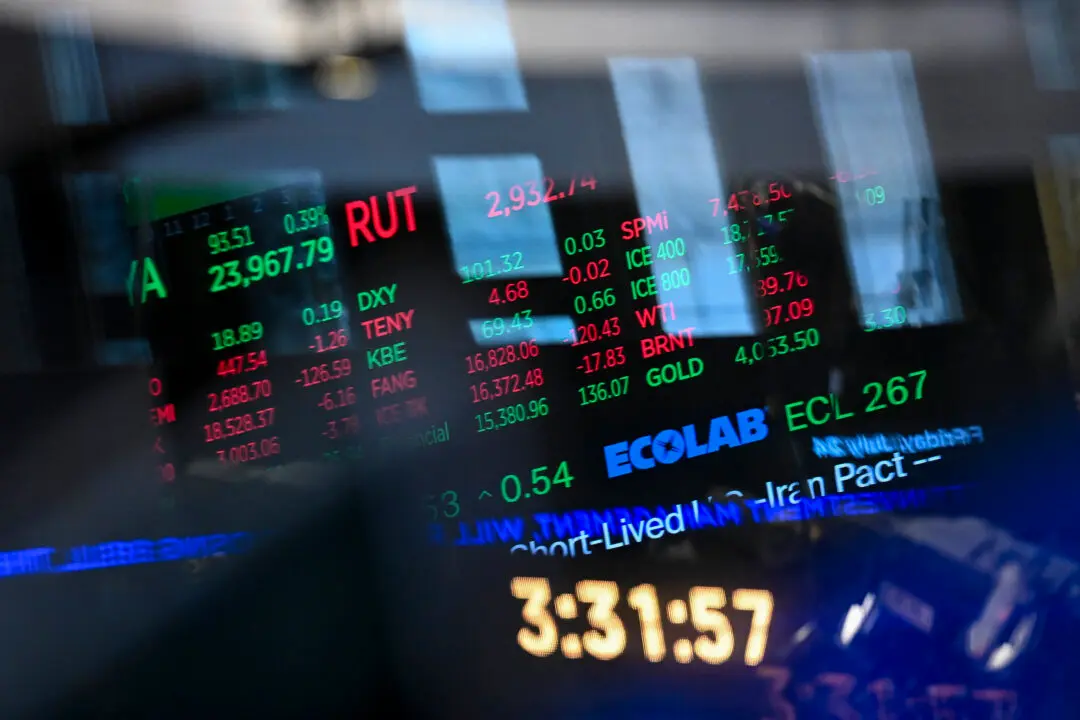
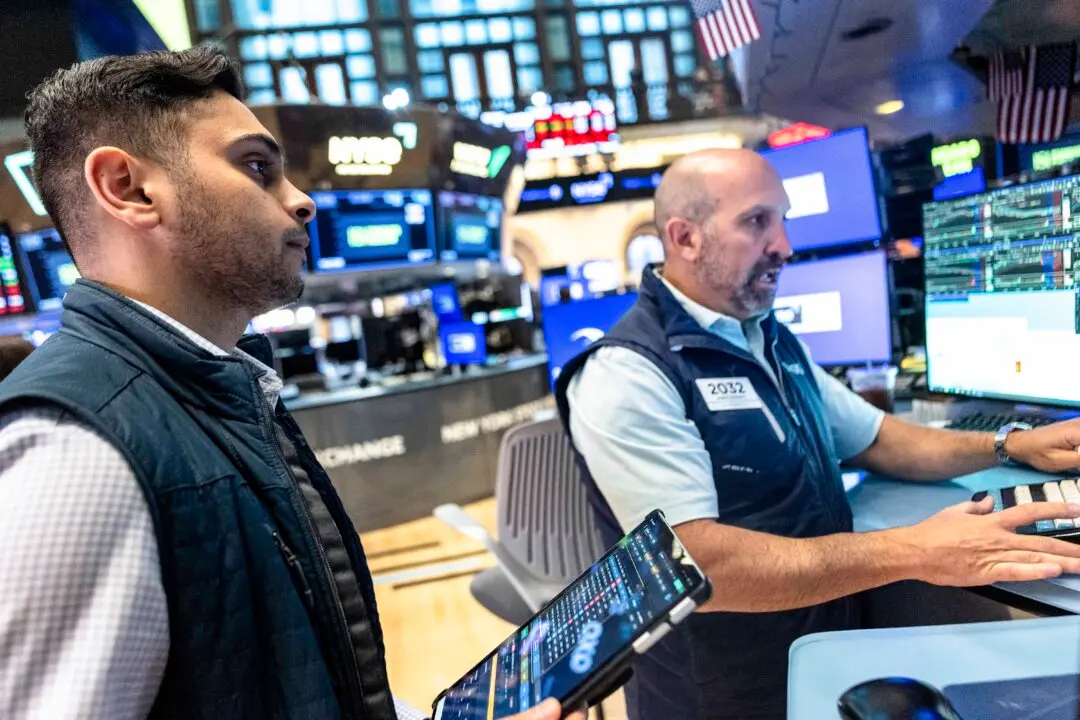
Equities finished the week mixed as a renewed tug-of-war played out between bullish investors focused on the prospect of lower interest rates and bearish investors concerned about stretched valuations and emerging bubble risks.
Stocks opened higher on Dec. 15 as bargain hunters stepped in following the sharp sell-off at the end of the previous week. However, sellers quickly regained control, pushing all major indexes into negative territory. Small-cap and technology stocks led the decline, as Broadcom and Oracle resumed losses amid ongoing valuation concerns.
Several factors partially cushioned the pullback. One was a portfolio rotation out of technology stocks, which had driven gains for much of the year, and into lagging sectors such as health care, pharmaceuticals, and leisure. Another was traders’ reluctance to take large positions ahead of the November payroll report scheduled for release on Dec. 16.
A third stabilizing factor was steady bond yields, with the benchmark 10-year Treasury yield edging down to 4.16 percent from 4.20 percent a week earlier.


Markets were mixed on Dec. 16 following the release of the labor market report. Technology stocks closed in positive territory, while the Dow, the S&P 500, and the Russell 2000 finished in the red.
eToro U.S. investment analyst Bret Kenwell characterized the payroll report as mixed. He said while November’s headline job growth exceeded expectations, October’s steep decline disappointed investors and reinforced signs of a cooling labor market. He also pointed to the unemployment rate, which has climbed steadily from 4.1 percent in June to 4.6 percent, the highest level since September 2021.
“With the continued cooling in the labor market, this should have the Fed leaning slightly more dovish as attention turns to 2026,” Kenwell told the Epoch Times. “The committee may gain more confidence in that view if this week’s inflation update shows that prices are being held in check. Should that be the case, it could give the bulls an early advantage to start the year.”
Nicole Bachaud, labor economist at ZipRecruiter, expressed concern about what she described as a crisis of long-term unemployment. The share of unemployed individuals who have been out of work for 27 weeks or longer rose to 24.3 percent, up 15.5 percentage points over the past year.
“This increase signifies that for a growing segment of the population, unemployment is transforming from a temporary, transitory state into a protracted state of being,” she told The Epoch Times.
Bachaud also noted that some workers are leaving the labor force altogether, with the number of marginally attached workers up by 16.1 percent and discouraged workers rising 62.3 percent over the past year.
Equity market sentiment deteriorated sharply on Dec. 17 as profit-taking accelerated in the tech-heavy Nasdaq. Renewed concerns emerged about large technology companies’ ability to raise sufficient capital to fund the expansion of artificial intelligence infrastructure.
Shares of Oracle, Google, and Broadcom were hit particularly hard, pulling down the Nasdaq by 1.81 percent and the S&P 500 by 1.16 percent. The Dow Jones Industrial Average and the Russell 2000 also closed lower, as rotation into other sectors failed to offset the broader decline in investor confidence.
Sentiment shifted decisively more positive over the final two trading days following lower-than-expected inflation data released on the morning of Dec. 18.
Adding to the improved sentiment were solid earnings results from Micron Technology, which helped reignite momentum in the technology sector and lift equities more broadly.
“This week’s inflation and jobs data, while noisy due to the delays from the government shutdown, suggest that interest rates are at appropriate levels at this time, and that’s why stocks are rallying and starting to rebound from the past several weeks of choppiness,” Alexander Guiliano, chief investment officer at Resonate Wealth Partners in Ridgewood, New Jersey, told The Epoch Times.
Guiliano said there remains an opportunity for stocks to stage a Santa Claus rally, which historically occurs during the final trading days of the year.
“Even though markets have been choppy for about six weeks, the backdrop remains strong, and this contraction in valuations is presenting opportunities for investors who don’t have enough stock exposure,” he said.
Guiliano also pointed to continued opportunities in international markets.
“Many stock markets overseas are trading at better valuations than the U.S.,” he said.
“We see opportunity in stocks in Japan, India, and Europe. These regions are seeing economic growth, and their markets are not up as much as the U.S. over the past five years, creating potentially more attractive entry points for investors.”