The Santa Claus rally that propelled equity markets to fresh record highs last week lost steam this week, as investors locked in profits from last year’s top performers and rotated into lagging sectors. Nonetheless, equities closed 2025 with solid gains.
The Dow Jones Industrial Average fell by 0.72 percent for the week to 48,382. The S&P 500 declined by 1.06 percent to 6,858, finishing slightly below its weekly low reached during the Jan. 2 trading session. The tech-heavy Nasdaq Composite slid by 1.60 percent, also near its weekly low, while the Russell 2000 was down by 1.56 percent.
Market volatility rebounded after three weeks of declines, as the Chicago Board Options Exchange Volatility Index rose by 6.69 percent to 14.49.
After a couple of weeks in hibernation, equity market bears returned on Dec. 29, interrupting the seasonal Santa Claus rally. One catalyst was a sharp sell-off in precious metals, which had been among the strongest performers of 2025. Another factor was year-end profit-taking in technology shares and small-cap stocks, driven by portfolio rotation and rebalancing.
Seasonally light trading volume also contributed to the sell-off, with all major equity indexes closing lower in a single session, led by losses in the Nasdaq and the Russell 2000, which fell nearly half a percent.
A decline in bond yields tamed losses. The benchmark 10-year U.S. Treasury yield edged down to around 4.1 percent amid holiday-thin trading and expectations of additional cuts to short-term interest rates by the Federal Reserve in the year.
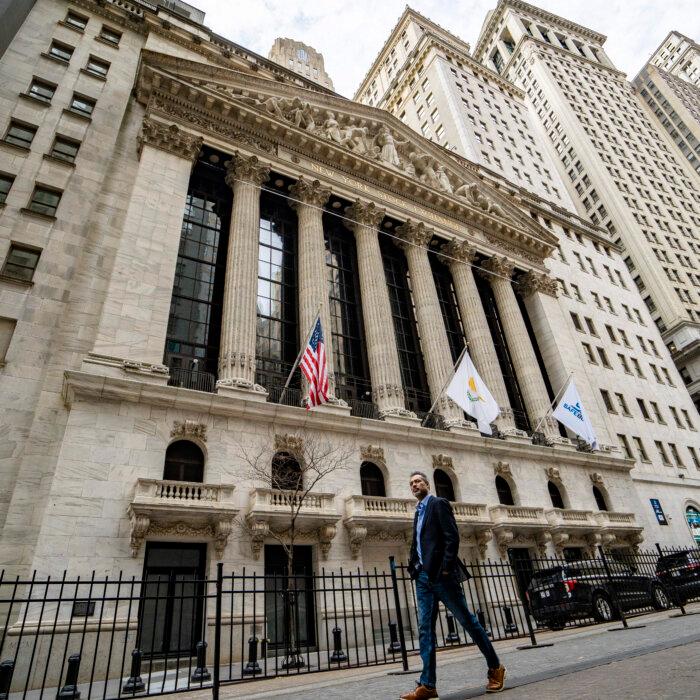
Equities extended their decline into the Dec. 30 session despite a rebound in precious metals, as year-end rotation and portfolio rebalancing continued under light trading conditions.
Additional pressure came from the release of the minutes from the December Federal Open Market Committee meeting, which underscored divisions within the Federal Reserve and added uncertainty about the future course of monetary policy.
“Policymakers are all over the place because there’s uncertainty in nearly every direction. They want to cut, but inflation is still too high. They’re unsure about data and see no reason to rush. They also know stimulus is coming and is expected to boost GDP in 2026,” David Russell, global head of market strategy at TradeStation, told The Epoch Times.
“Markets could view these minutes as slightly hawkish because some doves were on the fence about easing. We could be near the end of this rate-cutting cycle.”
Heather Long, chief economist at Navy Federal Credit Union, expressed a similar view.
“Fed leaders think they have done a lot now to help the labor market and overall economy, and they want to wait and see what happens,” Long told The Epoch Times.
She added that many Federal Reserve officials expect the impact of tariffs to fade and believe upside risks to inflation have diminished.
“This gives the Fed time to wait and see what happens in 2026,” Long said. She noted that the minutes indicated that most policymakers discussed a K-shaped economy, with stronger spending among higher-income households. This trend could present ongoing challenges unless hiring and wage growth accelerate.
Equities didn’t get any help from U.S. treasuries, as concerns about monetary policy persisted on Dec. 31, with the 10-year Treasury yield jumping to 4.17 percent from 4.12 percent the previous day.
Seasonally light trading didn’t help equities either. The Nasdaq, which led the bull market for much of the year, posted the largest decline, falling by 0.76 percent.
Despite the recent pullback, equities delivered solid gains over the year. The Dow rose by nearly 13 percent, the S&P 500 gained by 16.39 percent, the Nasdaq Composite advanced by 20.36 percent, and the Russell 2000 finished the year about 11 percent higher.
Adam Turnquist, chief technical strategist at North Carolina-based LPL Financial, said in a note emailed to The Epoch Times that it might be an understatement to describe 2025 as “resilient.”
“The economy showed remarkable strength by overcoming higher inflation, a slowing labor market, fewer rate cuts than originally expected, and a sharp rise in the effective tariff rate,” Turnquist said. “Despite these challenges, growth remained steady without slipping into recession.”
He noted that many U.S. companies delivered double-digit earnings growth in multiple quarters, and profit margins remained strong, underscoring their operational strength. Meanwhile, consumers continued spending steadily despite tariff concerns and higher prices.
Following the Christmas holiday, stocks opened the new year on a stronger note on Jan. 2, with most major indexes closing higher. Small-cap stocks led the advance, rising 1.06 percent, followed by the Dow, up by 0.66 percent. The S&P 500 edged up by 0.19 percent, while the Nasdaq moved slightly lower, down by 0.03 percent.
However, the rebound was not enough to offset weekly losses among last year’s top performers amid ongoing profit-taking. Palantir fell by 13.55 percent for the week, Tesla declined by 9.75 percent, and Microsoft slipped by 3.09 percent.
By contrast, several laggards posted gains, suggesting a rotation rather than a broad exit from equities. Nike rose by 5.47 percent for the week, UnitedHealth Group gained by 2.69 percent, and CVS Health advanced by 1.28 percent.