The gap in goods and services declined by 39 percent from the previous month to $29.4 billion, the smallest monthly deficit since June 2009.
Economists had penciled in a reading of $58.9 billion.
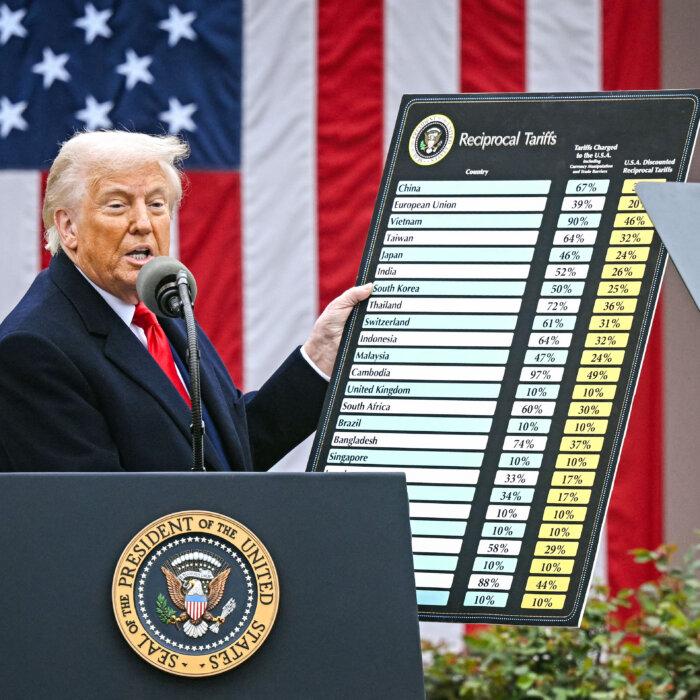
October’s reading reflected the continuing impact of President Donald Trump’s global tariffs, as well as shifting business and consumer behaviors.
The lower-than-expected number was driven by a sharp pullback in imports, falling by $11 billion, or 3.2 percent, to a nine-month low of $331.4 billion.
This was fueled by a $2.7 billion drop in purchases of industrial supplies and materials, which partly offset the $6.8 billion increase in capital goods imports.
Exports increased by 2.6 percent, or almost $8 billion, to a record high of $302 billion.
Shipments of U.S. goods were led by a $10.2 billion increase in industrial supplies and materials.
Still, the trade deficit was slightly higher in the first 10 months of 2025, reaching nearly $783 billion. By comparison, the gap was $736 billion in the same year-to-date period in 2024.
October figures also highlighted improvements in U.S. surpluses and deficits.
The deficit with the European Union fell by approximately $9 billion from the previous month to $7.96 billion. The deficit with Ireland declined sharply by $15.1 billion, to $3.2 billion.
Trade balances with China and India were little changed from September to October, totaling $14.94 billion and $2.91 billion, respectively.
Surpluses widened with several trading partners, including the UK ($6.8 billion), Switzerland ($8.83 billion), Singapore ($1.84 billion), and Brazil ($2.58 billion).
Early in 2025, global trade was volatile, with many companies front-running Trump’s tariffs. However, in recent months, trade conditions have stabilized, according to Stamatis Tsantanis, chairman and CEO of Seanergy Maritime and United Maritime.
“After a long period of uncertainty around tariffs and industrial policy, things finally appear to be stabilizing,” Tsantanis said in a note emailed to The Epoch Times.
“The tension earlier in 2025 created a significant volatility on sentiment in physical freight, futures, and importantly on the equity markets of listed shipping companies.”
With recent momentum in U.S.–China talks and the prospect of greater grain and energy shipments between the world’s two largest economies, the overall outlook has brightened. New trade deals with Japan, South Korea, and the EU further contribute to a steadier, more predictable trade landscape, according to Tsantanis.

Monitoring Tariff Policy
The global economy is now in its second year of expansive U.S. tariff policy, but changes could be coming regarding the president’s use of emergency tariff powers.The Supreme Court will soon determine whether Trump can rely on the International Emergency Economic Powers Act to impose tariffs without congressional approval. A ruling could come as early as Jan. 9.
Justices signaled skepticism during oral arguments in November 2025.
For weeks, Trump has repeatedly urged the high court to side with the administration, arguing in November that overturning tariffs would be an “economic disaster.”
“Because of tariffs, our country is financially, and from a national security standpoint, far stronger and more respected than ever before.”
U.S. officials have said that should the Supreme Court rule against the White House, they would still have several options available to continue implementing the president’s tariff agenda.
“The others are more cumbersome, but they can be effective.”