Consumers’ appetite for shopping rebounded in June following a pullback in the previous month.
The consensus estimate suggested a 0.1 percent rise.
Retail sales also climbed by 3.9 percent year over year, surpassing the market forecast of 3.6 percent.
Excluding cars and auto parts, retail sales jumped by 0.5 percent.
“Consumers seem to be over the tariff shock in April and are back at it with spending,” Jamie Cox, managing partner at Harris Financial Group, said in a note emailed to The Epoch Times.

While the headline figures suggest that consumers shrugged off tariff-related anxiety, one expert said tariff fears may have bolstered June’s consumption trends.
“If anything, tariff fears seem to be accelerating sales, at least in the near term,” Ted Rossman, senior industry analyst at Bankrate, said in a statement to The Epoch Times.
“There is, of course, a lot of uncertainty regarding tariffs and the path forward. But a strong June was about more than just a tariff pull-forward. The consumer is generally in good shape.”
Despite the Trump administration’s levies and economic uncertainty, Commerce Department data revealed broad-based strength across the U.S. marketplace.
Transactions at car dealers and auto parts vendors surged by 1.2 percent. Apparel sales advanced by 0.9 percent, while restaurant sales rose by 0.6 percent. Sales at online retailers also increased by 0.4 percent.
In addition, a key metric used to calculate gross domestic product exceeded economists’ expectations.
The retail sales control group—excluding auto dealers, building materials stores, food services, and gasoline stations—rose by 0.5 percent from a downwardly revised 0.2 percent in May.
Looking ahead, July could see a blockbuster retail sales report.
This month, scores of retailers launched various sales events, led by Amazon’s Prime Day event. Experts say consumers took advantage of the discounts.
“This is more than two Black Fridays—which drove $10.8 billion in online spend during the 2024 holiday shopping season—and sets a new benchmark for the summer shopping season,” the Adobe report stated.

Back to School
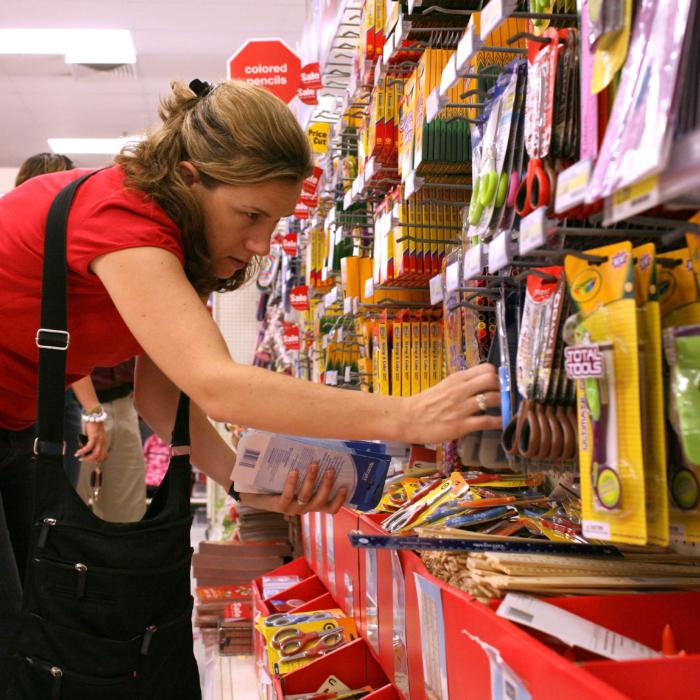
Market watchers will turn their attention to the busy back-to-school shopping season, and industry experts say households have already started purchasing backpacks and pencils.Half of the early-bird shoppers are doing so out of concern that tariffs will raise prices, according to Katherine Cullen, vice president of industry and consumer insights at the National Retail Federation.
“Consumers are being mindful of the potential impacts of tariffs and inflation on back-to-school items, and have turned to early shopping, discount stores, and summer sales for savings on school essentials,” Cullen said in a statement.
Families with K–12 students plan to spend an average of $858.07 on apparel, electronics, and school supplies this year, which is slightly lower than last year’s average of $874.68, according to the National Retail Federation.
Consumer Prices
The latest retail sales data come as economists digest three key reports to determine if President Donald Trump’s global tariffs are resurrecting inflation threats.While these numbers are unlikely to persuade the Federal Reserve to lower interest rates later in July—investors overwhelmingly expected a rate cut in September—they are positive for the financial markets.
“After May’s slump, a 0.6 [percent] jump in retail sales shows that the American shopper is alive and well—and that matters for markets. Strong retail sales are like oxygen for the economy, and Wall Street is breathing a sigh of relief today,” Gina Bolvin, president of Bolvin Wealth Management Group, said in a note emailed to The Epoch Times.
U.S. stocks were in the green following the flurry of economic data, with the leading benchmark averages up by about 0.3 percent.