Last month, small business filings under Chapter 11’s Subchapter V climbed to 223, a 23 percent increase from the 182 filings registered in November 2024.
Subchapter V, established in February 2020, streamlines Chapter 11 for small businesses, providing a faster, lower-cost path to restructuring.
Commercial Chapter 11 filings rose by 20 percent year over year to 2,687, “signaling ongoing financial stress,” according to Michael Hunter, vice president of Epiq AACER. Individual bankruptcies also jumped by 8 percent from a year ago to 40,973.
Overall, bankruptcies climbed by 8 percent, totaling almost 44,000.
“These trends suggest bankruptcy volumes will continue rising next year as households and businesses contend with growing balances, tighter credit conditions amid higher interest rates, and pockets of mortgage distress,” Hunter said in a statement.


Gloom or Boom
Small businesses have endured a series of economic headwinds this year, from tariff uncertainty to more cost-conscious consumers, and these hurdles could lead to broader consequences for the U.S. economy.“Business owners are approaching the coming year with confidence and a clear focus on growth,” Sharon Miller, president of business banking at the Bank of America (BofA), said in the report.
“Many plan to retain their current staff and hire more, and anticipate that local, national and global economies will improve.”
However, small businesses were at the center of last month’s decline in private payrolls.
Last month’s reading represented the largest decline since March 2023, fueled by a plunge of 120,000 at smaller establishments. Medium- and large-sized businesses created 51,000 and 39,000 new jobs, respectively.
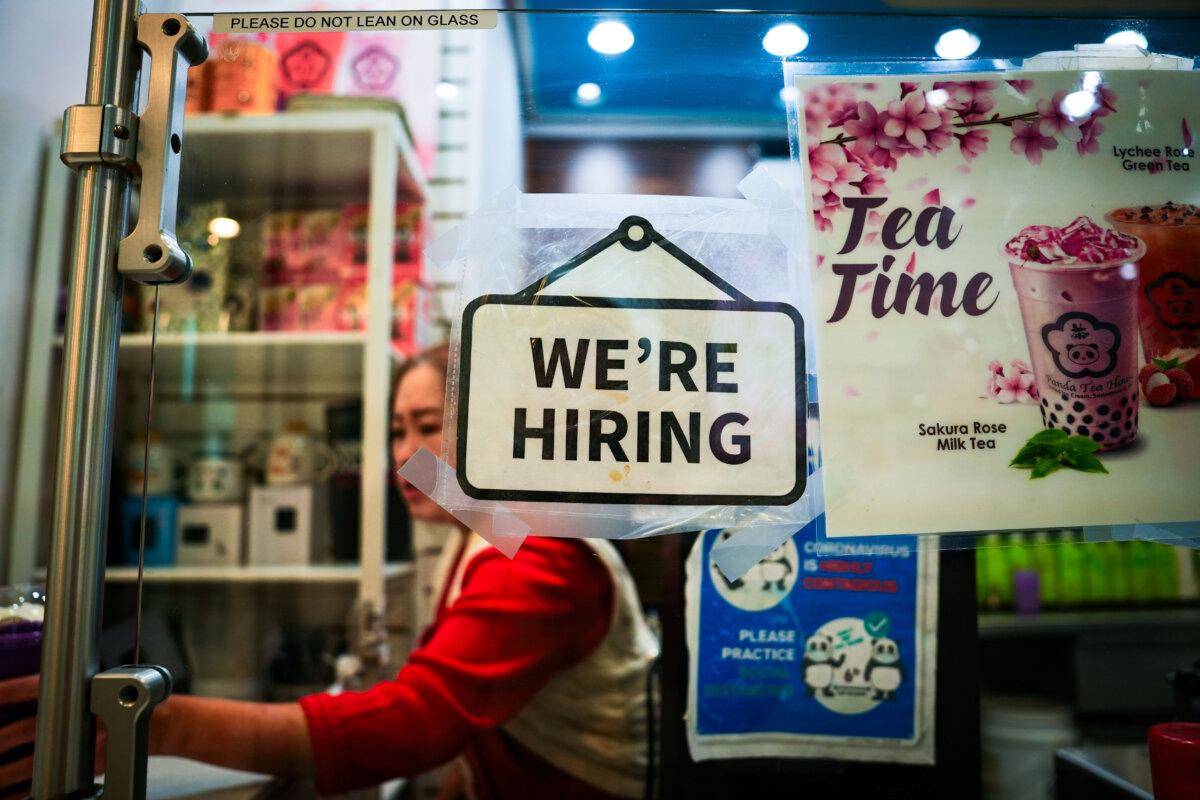
Additionally, according to the National Federation of Independent Business’s small business optimism index, business hiring intentions eased; the net share planning to add workers fell by 1 point, to 15 percent—the first relative pullback since May 2025.
Still, senior administration officials have expressed optimism for the year ahead, citing President Donald Trump’s signature One Big Beautiful Bill Act as a boon for small businesses.
Under the landmark tax law, small businesses receive a permanent 20 percent qualified business income deduction, immediate research and development expensing, enhanced employee benefit credits, and expanded equipment and property write-offs.
“Next year is going to be the year for Main Street as all this kicks in,” Treasury Secretary Scott Bessent said at the Dec. 2 Cabinet meeting.
“We can look back—be very proud of this year—but I think 2026 is going to be a great year for the American people.”
Economists have presented various growth forecasts for 2026.
“Some contacts noted an increased risk of slower activity in coming months, while some optimism was noted among manufacturers,” the report stated.
Ultimately, many of the major themes that dominated this year—artificial intelligence (AI), budget deficits, fiscal and monetary policy, and sluggish conditions in China—will evolve heading into 2026 rather than disappear, BofA said.
“Despite these lingering concerns, our team remains bullish on the economy and AI,” Candace Browning, head of BofA Global Research, said in a Dec. 2 research note.