The number of Americans filing for first-time unemployment benefits declined for the fourth straight week, in a sign that the U.S. labor market remains resilient.
This is down from the previous week’s downwardly adjusted 232,000, and came in below the consensus estimate of 235,000.
The four-week average, stripping out week-to-week volatility, tumbled to 235,500 from 241,250.
Jobless claims for federal workers decreased by 15 to 438. Economists have closely monitored this program over the past several months to determine the Trump administration’s impact on the government workforce.
Monitoring Help-Wanted Signs
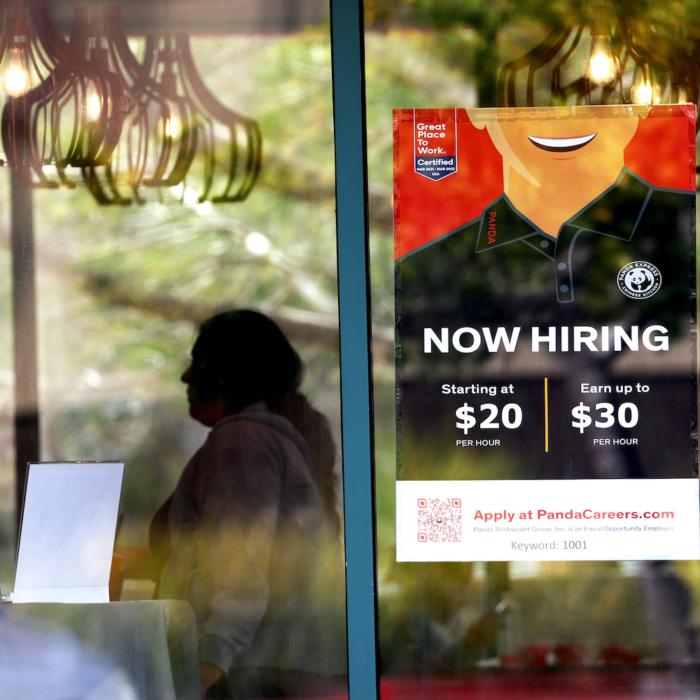
Overall, the U.S. labor market has been resilient amid economic uncertainty. But while employment conditions remain intact, there is still consternation among businesses, workers, and market-watchers.
“Given this, it is not difficult to see lower payroll numbers in the coming months, especially if we do not get more clarity on international trade policy,” LPL Research added.
The monthly report revealed that the share of employees reporting a positive six-month business outlook declined to 43.6 percent in June, down from 44.4 percent in the previous month.
“As the job market has steadily cooled, worker sentiment has slumped further. Even though the job market hasn’t fallen off a cliff, economic anxiety is still gripping workers,” Daniel Zhao, lead economist at Glassdoor, said in the report.
Still, these concerns have yet to appear in the data.
In June, the U.S. economy added a much better-than-expected 147,000 new jobs, and the unemployment rate slid to 4.1 percent.
“The June jobs report is like a summer blockbuster—plenty of action and a surprise twist. Despite tariffs, D.C. drama, and global headwinds, the U.S. labor market just pulled off a better-than-expected performance,” Gina Bolvin, president of Bolvin Wealth Management, said in an email to The Epoch Times.
Federal Reserve Has Patience
The Federal Reserve’s dual mandate consists of maximum employment and price stability.“Participants generally agreed that, with economic growth and the labor market still solid and current monetary policy moderately or modestly restrictive, the Committee was well positioned to wait for more clarity on the outlook for inflation and economic activity,” the meeting summary stated.
At last month’s meeting, the institution left its target rate in the range of 4.25 to 4.5 percent for the fourth consecutive meeting, and investors are betting that the monetary authorities will leave rates intact at the July 29–30 meeting.