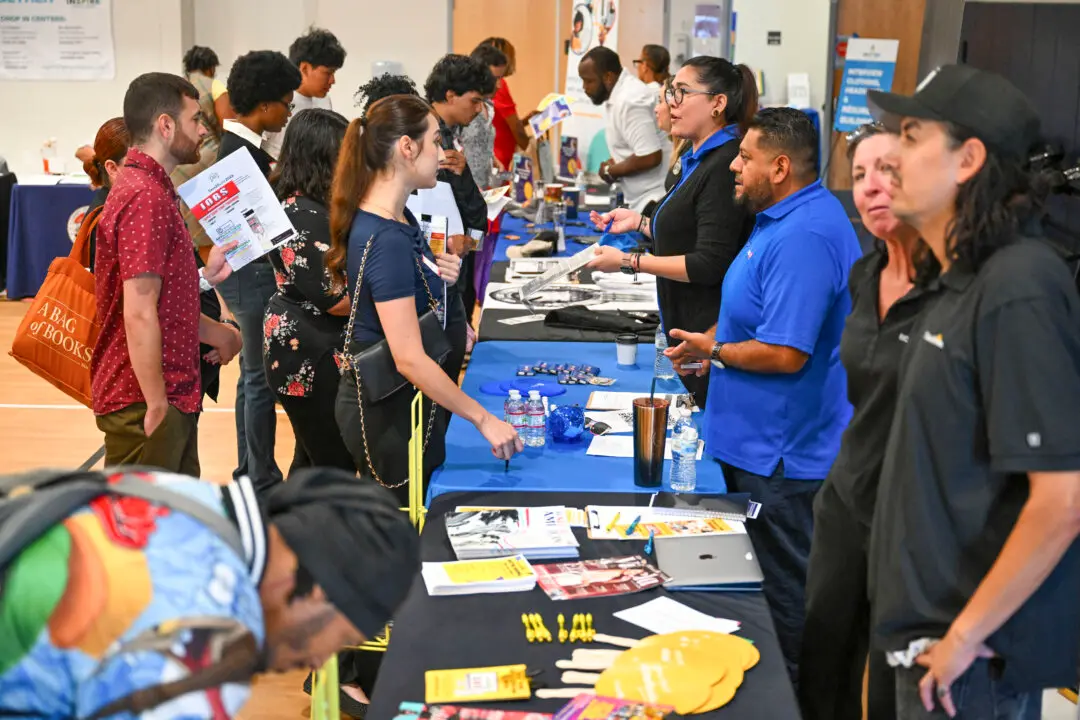
The U.S. economy created a smaller-than-expected 73,000 new jobs in July, causing concerns that the labor market could be in trouble.
But while the headline number signaled a potential slowdown ahead, changes to initial estimates over the last two months have captured Wall Street’s attention.
U.S. stocks were in a sea of red to finish the trading week on Aug. 1. The tech-heavy Nasdaq Composite Index plunged about 2 percent, while the blue-chip Dow Jones Industrial Average and the broader S&P 500 erased more than 1 percent.
“Business demand for labor is slowing, adding uncertainty to the growth trajectory for the latter half of this year,” Jeffrey Roach, chief economist for LPL Financial, said in a note emailed to The Epoch Times.
Revisions and Collections
Sizable revisions of federal government data show the U.S. economy added 33,000 new jobs in May and June.
The federal agency reported that May’s employment gains were adjusted lower by 125,000 to 19,000. The June payroll increase was altered downward by 133,000 to 14,000.
While revisions have been a key trend in recent years, the federal agency noted that the “revisions for May and June were larger than normal.”
In the first six months of the year, downward adjustments have totaled 461,000.
Revisions have become a common problem for the Bureau of Labor Statistics in recent years. For example, the actual January-through-June employment gains were almost 600,000 lower than initially reported.
In the aftermath of the July jobs report, many are wondering how government statisticians are getting the data wrong.
The Bureau of Labor Statistics often revises initial numbers after obtaining additional data. “Monthly revisions result from additional reports received from businesses and government agencies since the last published estimates and from the recalculation of seasonal factors,” it says.
Officials also use statistical models to adjust seasonal hiring patterns and will release annual benchmark revisions based on unemployment insurance records.
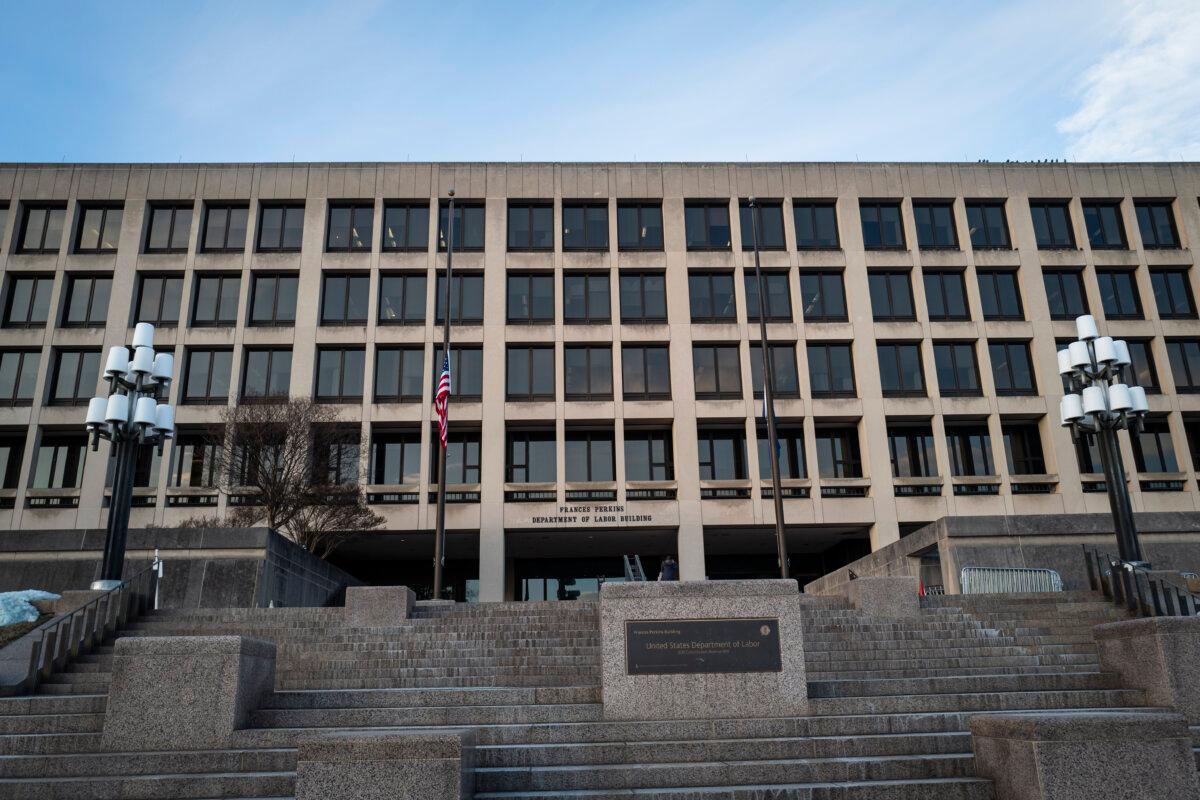
Another challenge has been declining response rates.
Experts have attributed this trend to a scarcity of resources, outdated methods of collection, and inadequate survey designs. This can lead to poor data quality and skewed results.
President Donald Trump, in an Aug. 1 Truth Social post, stated that he has ordered the immediate termination of Erika McEntarfer, commissioner of the Bureau of Labor Statistics.
What This Means for the Fed
Is the Federal Reserve behind the curve?Following the July policy meeting, the interest rate-setting Federal Open Market Committee said in a statement that “the unemployment rate remains low, and labor market conditions remain solid.”
“You do not see a weakening in the labor market. You do see a slowing in job creation, but also in a slowing in the supply of workers,” Powell said on July 30.
“So, you’ve got a labor market that’s in balance, albeit partially because both demand and supply for workers is coming down at the same pace.”
A chorus of monetary policymakers has expressed the same sentiment in the aftermath of the July data.
Bostic also noted that he would not have changed his decision to support keeping interest rates steady if this information were available at the time.
“There is still a lot of strength underlying the labor market,” he said, pointing to solid wage growth and low unemployment.
“I still am not hearing from businesses that they’re on the verge of letting go [of] a lot of people,” Bostic added.
Leading up to the July meeting, two key central bank officials warned about weakness building in the U.S. labor market.
Fed Gov. Christopher Waller and Fed Vice Chair for Supervision Michelle Bowman—the two dissenting votes at this week’s policy meeting—argued that the institution needs to lower rates now to prevent further deterioration in the jobs arena.
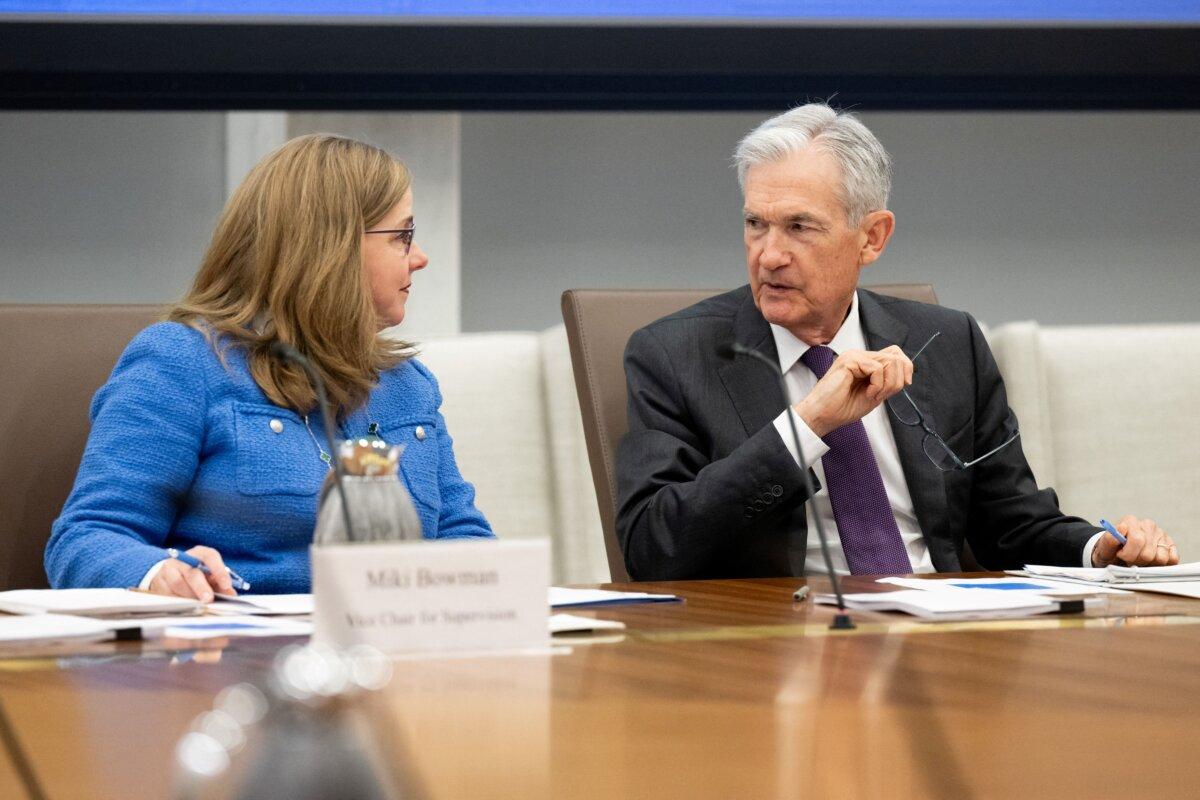
Being proactive would prevent “unnecessary erosion in labor market conditions,” and ensure the Fed does not experience a “significantly larger policy correction at a future date,” Bowman added.
The futures market is now betting on a September rate cut.
This is a complete reversal from the 52 percent chance that the Fed would hold rates steady.
Immigration Crackdown
Cleveland Fed President Beth Hammack, in an Aug. 1 interview with Bloomberg Television, says the headline numbers are unsurprising, “given what we’ve seen happening on the immigration side.”Since the coronavirus pandemic, immigrants have played a pivotal role in the job data, creating a divergence between employed U.S.- and foreign-born workers. The gap has narrowed this year.
“We’re going to see millions and millions more self-deportations,” Miller said.
The immigration crackdown is starting to take a toll on the labor market, say economists at Capital Economics.