This copy is for your personal, non-commercial use only. Distribution and use of this material are governed by our Subscriber Agreement and by copyright law. For non-personal use or to order multiple copies, please contact The Epoch Times Reprints.
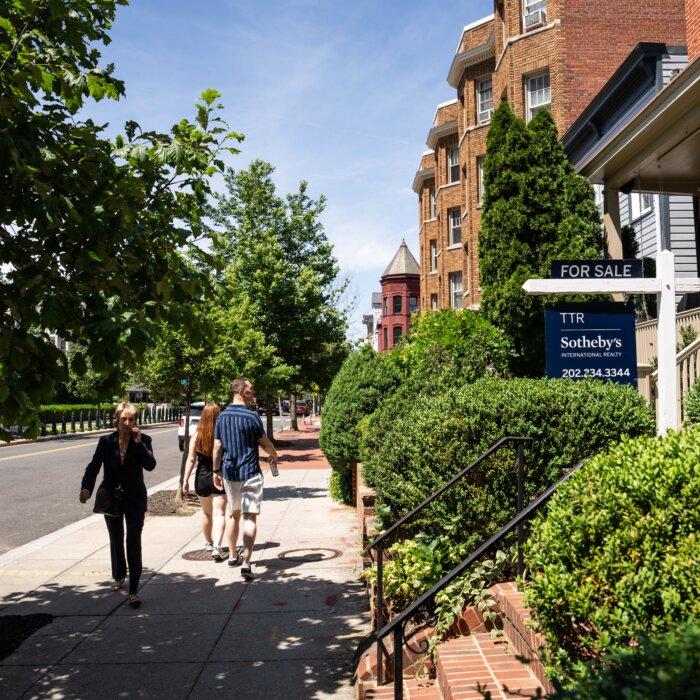
The number of houses that began construction rose in June from the previous month, driven by strong growth in the multifamily segment, the Census Bureau said in a July 18 statement.
Privately owned housing starts in June were at a seasonally adjusted annual rate of 1,321,000 units, a 4.6 percent jump from May. On an annual basis, housing starts were down by 0.5 percent.
Region-wise, the Northeast saw housing starts jump by 73.3 percent month-over-month to 182,000 units from May’s 105,000 units, while other regions registered declines of 0.7 percent to 5.3 percent.
The overall starts were boosted by strong multifamily construction, with the sector seeing a growth of 30.6 percent on a monthly basis.
In contrast, single-family starts fell by 4.6 percent, raising concerns among developers.
In a July 18 statement, the National Association of Home Builders (NAHB) stated that the decline in single-family housing starts was due to rising inventories, elevated interest rates, and supply issues weighing on the housing sector.
“Single-family building conditions continued to weaken in June as housing affordability challenges caused builder traffic to move lower as buyers moved to the sidelines,” said Buddy Hughes, chairman of NAHB.
The average weekly rate on a 30-year fixed-rate mortgage was 6.75 percent for the week that ended on July 17, according to data from Freddie Mac. The rate has consistently remained above 6.5 percent for every single week this year. Since mid-September 2022, rates have remained above the 6 percent level.
Meanwhile, the median sales price of new homes sold in the United States was $426,600 in May, according to data from the Federal Reserve Bank of St. Louis. Prices have been moving in a range of about $460,000 to $397,000 since October 2022.
The high costs to buy a new home, coupled with elevated mortgage rates, dampen the interest of many prospective buyers, keeping them at bay. The demand has declined for single homes, which has affected housing start numbers.
“Policymakers need to focus on easing high housing costs by eliminating burdensome regulations, promoting careers in the skilled trades, alleviating permitting roadblocks and overturning inefficient zoning rules,” Hughes said.
2025 Market Ahead
Home values may not continue to remain elevated for the remainder of the year. Real estate marketplace Zillow forecasts home values to decline by the end of 2025, with sales moving up marginally compared with 2024, the company said in a July 21 statement.
“Typical home values are expected to drift down slightly in the months ahead, ending 2025 2 percent below where they started the year. That’s a larger decline than last month’s forecast,” the statement reads.
“Existing home sales are in line to reach 4.16 million by the end 2025, a slight 2.5 percent improvement over last year. The forecast is largely unchanged from last month.”
As for inventories, it is expected to continue growing in almost “all metro areas,” Zillow said, noting that inventory is predicted to get close to pre-pandemic levels by the end of this year.
Regarding interest rates, Lisa Sturtevant, chief economist at real estate data company Bright MLS, said in a July 17 commentary that higher rates were preventing many homeowners from selling properties as they are hesitating to give up current low rates and take up a higher-rate mortgage.
“As home prices soften, sellers are going to be further reticent to sell because they are less likely to get the price they want for their home,” Sturtevant said.
“What does this mean for the housing market in the second half of 2025? It is likely going to continue to be a slow market. Mortgage rates will remain in the mid- to high-6 percent range. Existing home sales likely will track around last year’s levels while new home sales will drop below 2024.”
Any significant decline in mortgage rates may necessitate a sizable fall in the Federal Reserve’s interest rates, which have remained unchanged in a range of 4.25 percent to 4.5 percent since last year.
Fed Chair Jerome Powell has given no indication that any immediate rate cut may come into effect, thereby providing support for mortgage rates. The next meeting of the Fed is set to take place on July 29 and 30.