The U.S. labor market could be showing signs of heating up after the economy topped economists’ expectations.
April payrolls rose by 115,000 from the previous month’s upwardly revised 185,000, according to Bureau of Labor Statistics data released on May 8.
The consensus forecast indicated a gain of 62,000 jobs.
The unemployment rate was unchanged at 4.3 percent, in line with market estimates.
For the past year, employment conditions have been typically described as “low-fire, low-hire.” New data could suggest that while the economy is witnessing a low number of layoffs, hiring could be gaining momentum.
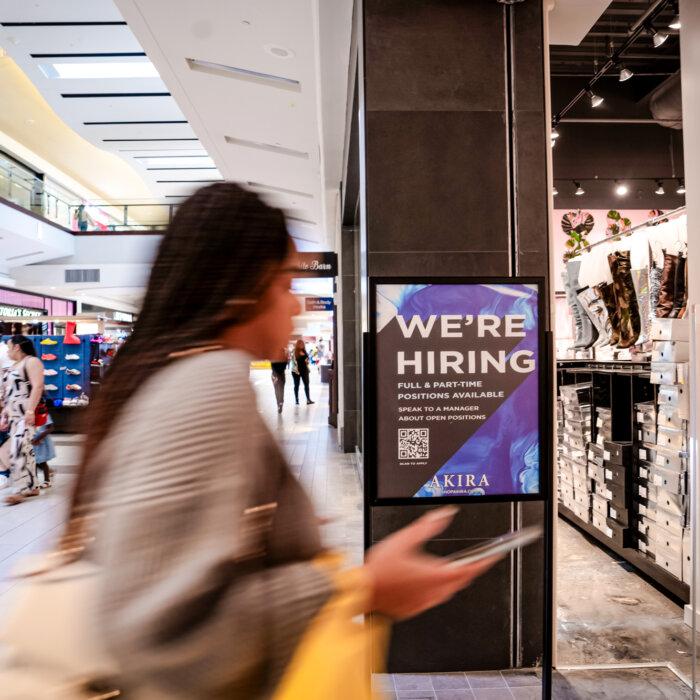
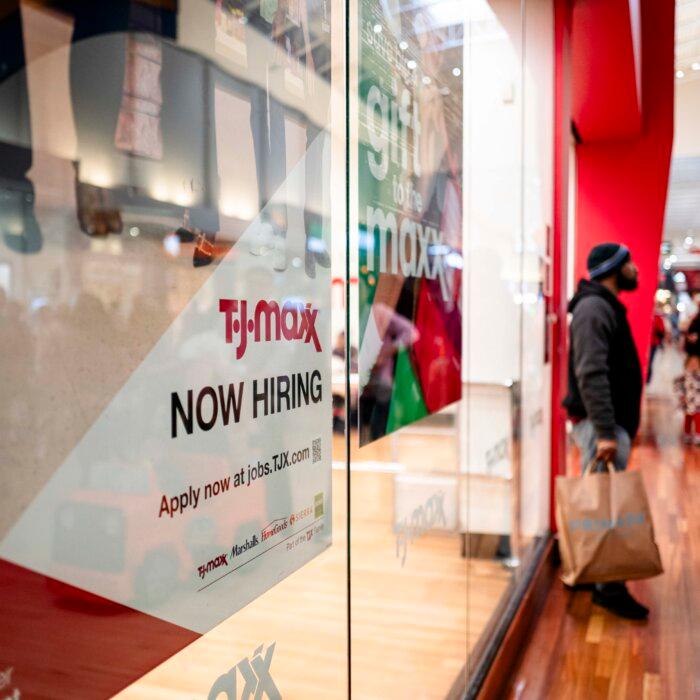
Employment gains were broad-based last month, led by health care (37,000), transportation and warehousing (30,000), and retail (22,000).
Federal government payrolls continued their downward trend, erasing 9,000 jobs.
“Since reaching a peak in October 2024, federal government employment is down by 348,000, or 11.5 percent,” the bureau said in the May 8 report.
“Federal employees on furlough during the partial government shutdown were counted as employed in the establishment survey because they worked or received (or will receive) pay for the pay period that included the 12th of the month.”
Payrolls in the information sector lost 13,000 jobs as employment in motion picture and sound recording, computing infrastructure, data processing, and web hosting continued to decline.
Manufacturing also shed 2,000 positions.
Wages fell short of economists’ projections.
Average hourly earnings rose by 0.2 percent monthly and edged up by 3.6 percent year-over-year. Markets had forecast a 0.3 percent monthly jump and a 3.8 percent year-over-year reading.
Overall, labor force participation fell for the fifth consecutive month to 61.8 percent, the lowest since 2021.
Revisions to previous nonfarm payrolls were modest. February was adjusted lower by 23,000 to a total change of negative 156,000, while the March change was revised up by 7,000 to a total change of 185,000.
A deeper dive into the April jobs report shows that the number of employed full-time workers decreased by more than 400,000, but the number of part-time workers jumped by 123,000.
Market Reaction
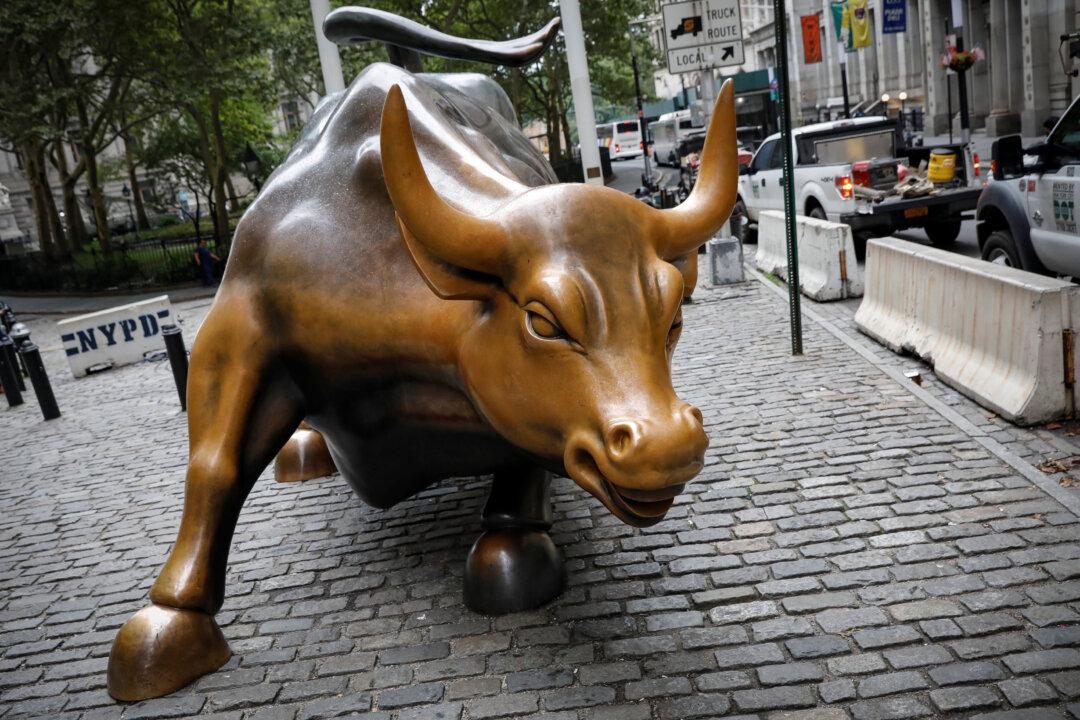
Wall Street cheered the better-than-expected jobs report, as well as the prospects of a peace deal between the United States and Iran.The blue-chip Dow Jones Industrial Average gained more than 200 points, or 0.5 percent, and is eyeing 50,000 again. The tech-heavy Nasdaq Composite Index rose by almost 300 points, or about 1 percent. The broader S&P 500 tacked on 47 points, or 0.64 percent, to above 7,400.
What Other Data Show
This week’s data suggested that the labor market was perking up.But the big reading from the Job Openings and Labor Turnover Survey was the acceleration in hiring.
The number of hires also gained some steam, surging by 655,000 to almost 5.6 million.
Quits—a measurement that economists use to determine workers’ confidence in finding new employment—also edged higher to 3.171 million in March.
Employment gains were broad-based, although they were led by education and health services, a common theme for the past year.
Layoff data were mixed.
Fed Eyes Inflation
With the latest batch of employment conditions suggesting that the labor market is stable, a chorus of Federal Reserve policymakers will likely be focused more on inflation.Since the start of the war in Iran—nearing its 11th week—headline inflation figures have been surging, fueled mainly by higher energy costs.
“That change—from worrying about a softening labour market to worrying about overheating price pressures—puts inflation/wages figures front and centre, while making the headline [nonfarm payrolls] somewhat secondary when it comes to guessing the Fed’s next move,” Ipek Ozkardeskaya, senior analyst at Swissquote Bank, said in a note emailed to The Epoch Times.
Next week, the Bureau of Labor Statistics will release the April consumer price index report. Early estimates suggest that it will rise to 3.6 percent, according to the Cleveland Fed Inflation Nowcasting model.
May’s consumer price index report could also see the annual inflation rate climb to 3.9 percent.
Despite the headline numbers rising, underlying trends remain tame.
Core inflation, which removes volatile energy and food prices, is expected to hover at about 2.6 percent.
This is key for monetary policymakers because they have to see through both the effects of the war-driven oil price shock and President Donald Trump’s tariffs traversing the U.S. marketplace.
For investors, however, current conditions will mean higher-for-longer interest rates.
While futures market data show traders pricing in no rate action, the odds of a rate hike late next year have been rising, according to the CME FedWatch tool.
The next rate-setting two-day Federal Open Market Committee policy meeting will take place on June 16 and June 17.