Federal Reserve board member Stephen Miran said the U.S. central bank should be more aggressive in cutting interest rates.
Officials believe the federal funds rate—which influences borrowing costs for businesses and consumers—will settle at around 3 percent by the end of 2027.
But Miran said that it should be “almost 2 percentage points lower,” or about 2.5 percent.
Appearing at the Economic Club of New York on Sept. 22, the new member of the Fed Board said the current administration policies are creating a different economic climate, pointing to deregulation, tariff income, and changes to immigration and tax policy. Keeping interest rates elevated for longer threatens the maximum employment side of the Fed’s dual mandate, he said.
“Leaving policy restrictive by such a large degree brings significant risks for the Fed’s employment mandate,” Miran said in his first public speech since joining the institution. “Leaving short-term interest rates roughly 2 percentage points too tight risks unnecessary layoffs and higher unemployment.”
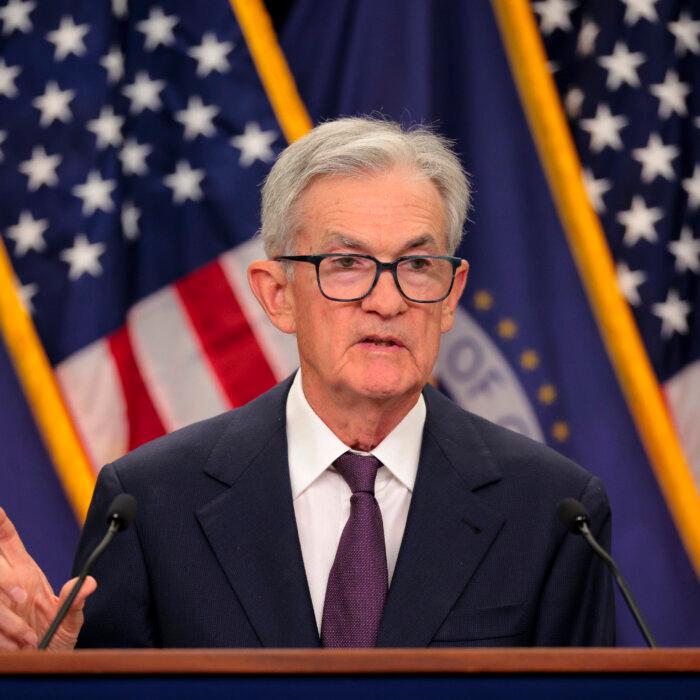
He was the lone dissent at the September Federal Open Market Committee meeting, preferring an interest rate cut of 50 basis points.
Recent employment data suggest the U.S. labor market could be slowing.
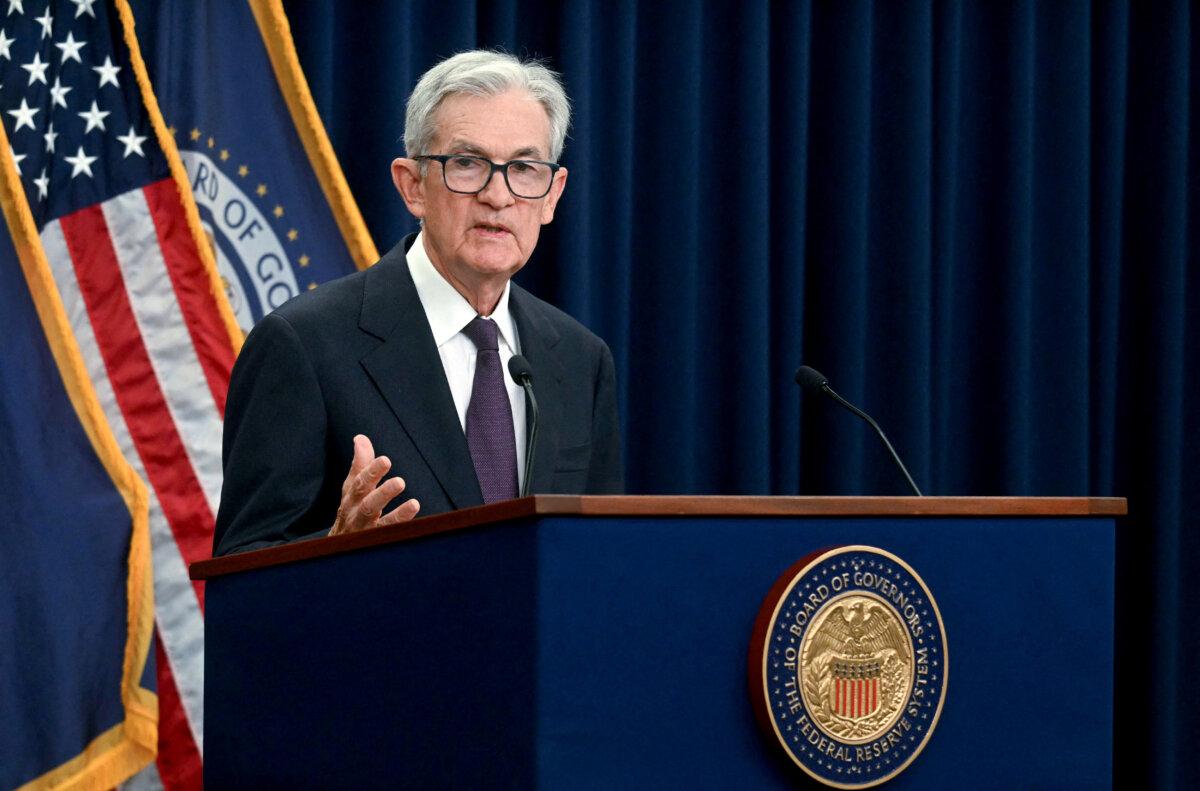
Fed Chair Jerome Powell acknowledged that risks to the institution’s employment mandate have grown, describing the labor market as being in a “curious balance.”
Despite Powell stating that the Fed is transitioning to neutral policy—interest rates are neither expansionary nor contractionary—Miran said the federal funds rate “is well into restrictive territory.”
While he accepted that there is no perfect gauge to determine appropriate monetary policy, Miran referenced the Taylor rule multiple times throughout his speech.
Named after economist John Taylor in 1993, the Taylor rule helps policymakers estimate the short-term rate that should be targeted by considering the economic output gap and inflation relative to the Fed’s target rate of 2 percent.
“Including the inflation and output channels along with the median model-implied r-star, the fed funds rate should be around 2 to 2.25 percent under the standard Taylor rule approach,” Miran said.
The r-star is the neutral federal funds rate.
What Fed Officials Are Saying
Several Federal Reserve officials, including St. Louis Fed President Alberto Musalem and Cleveland Fed President Beth Hammack, signaled concern about cutting interest rates any further.Musalem, speaking at the Brookings Institution on Sept. 22, defended his support for last week’s 25-basis-point rate cut. However, he said he is reluctant to go any further.
He said that while the risks are tilting more toward employment than inflation, emphasizing “one goal at the expense of the other can lead to undesirable outcomes.”
Hammack shared Musalem’s consternation, saying that the central bank must be “very cautious” in shifting too far away from a restrictive stance.
The Summary of Economic Projections—a periodic survey of officials’ expectations for monetary policy and the economy—reveals officials forecasting two more quarter-point rate cuts this year and one more reduction in 2026.
Investors have followed suit, penciling in a 90 percent chance of a 25-basis-point rate cut at next month’s meeting, according to the CME FedWatch Tool.
The next two-day Federal Open Market Committee meeting will take place on Oct. 28 and 29.