President Donald Trump has touted the federal government’s stake in chipmaker Intel and pledged to make similar deals “all day long.”
Intel provided the shares after receiving government funds through grants under the CHIPS and Science Act, with additional funds allocated through a separate government initiative—the Secure Enclave program. The investment is aimed at ensuring the tech giant continues to build or expand factories in the United States.
“I will also help those companies that make such lucrative deals with the United States,” he said on his social media platform.
“I love seeing their stock price go up, making the USA richer and richer. More jobs for America! Who would not want to make deals like that?”
Shares of Intel have risen by more than 20 percent in the past month to about $25. The stock rose by about 1 percent to kick off the trading week. This year, it has increased by almost 25 percent.
“I think this is a very, very special circumstance because of the massive amount of CHIPS Act spending that was coming in,” Hassett said.
“But the president has made it clear, all the way back to the campaign, he thinks that in the end, it would be great if the U.S. could start to build up a sovereign wealth fund. So I’m sure that at some point there’ll be more transactions, if not in this industry then other industries.”
Pushback and Praise
The current administration has received pushback from members of its own party.“If socialism is government owning the means of production, wouldn’t the government owning part of Intel be a step toward socialism?” Paul said.
“Terrible idea.”
“The counter to Biden is not to lean in and have govt own part of Intel,” Haley said.
“This will only lead to more government subsidies and less productivity. Intel will become a test case of what not to do.”
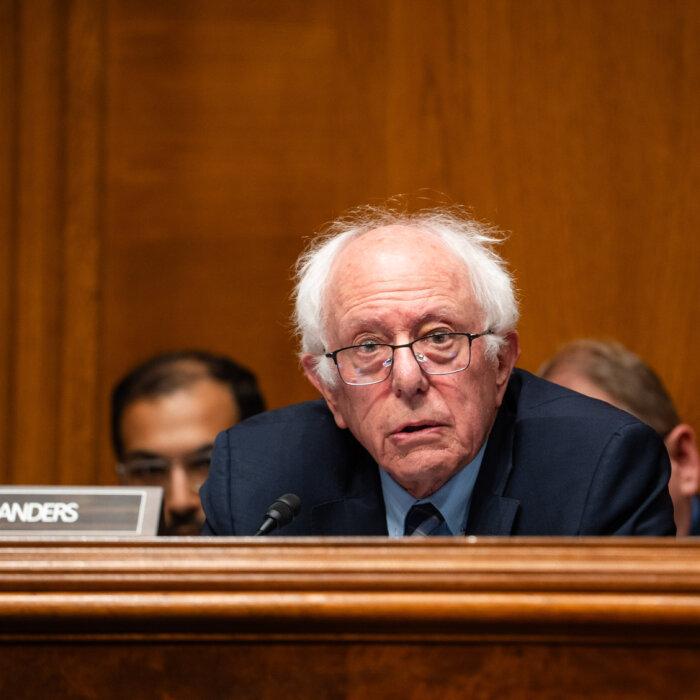
However, Sen. Bernie Sanders (I-Vt.) said that while the federal government should not hand out “billions of dollars in corporate welfare” to corporations, taxpayers should get some benefit.
“If microchip companies make a profit from the generous grants they receive from the federal government, the taxpayers of America have a right to a reasonable return on that investment,” Sanders said.

Hassett, meanwhile, told CNBC that it is not unprecedented for Washington to take vast positions in companies.
He pointed to the federal government’s takeover of mortgage giants Fannie Mae and Freddie Mac during the 2008 global financial crisis. The government purchased 80 percent of common stock in each company as the Treasury Department injected $191 billion into the two companies.
The federal government also purchased stakes in the insurance behemoth American International Group, as well as Bank of America, Citigroup, and General Motors, during the Great Recession.
“We’re absolutely not in the business of picking winners and losers,” Hassett said. “But this is not a thing that is unprecedented.”
In June, the president authorized Japan’s Nippon Steel’s acquisition of U.S. Steel, with the two companies giving the federal government a “golden share,” allowing Washington to appoint a board member and weigh in on decisions influencing domestic steel production.