Last month, non-inflation-adjusted retail sales tumbled by 0.9 percent, down from the 0.1 percent dip in April.
This came in below the consensus forecast of a 0.7 percent decline and was the biggest drop since January.
According to the Commerce Department, sales at motor vehicle and parts dealers led the decline in May, sliding by 3.5 percent. This was followed by building material and garden equipment suppliers (negative 2.7 percent) and gasoline stations (negative 2 percent).
But receipts at furniture stores surged by 1.2 percent. Apparel retail and online sales climbed by 0.9 percent and 0.8 percent, respectively.
Retail sales rose by 3.3 percent year over year, down from the 5 percent year-over-year increase in April.

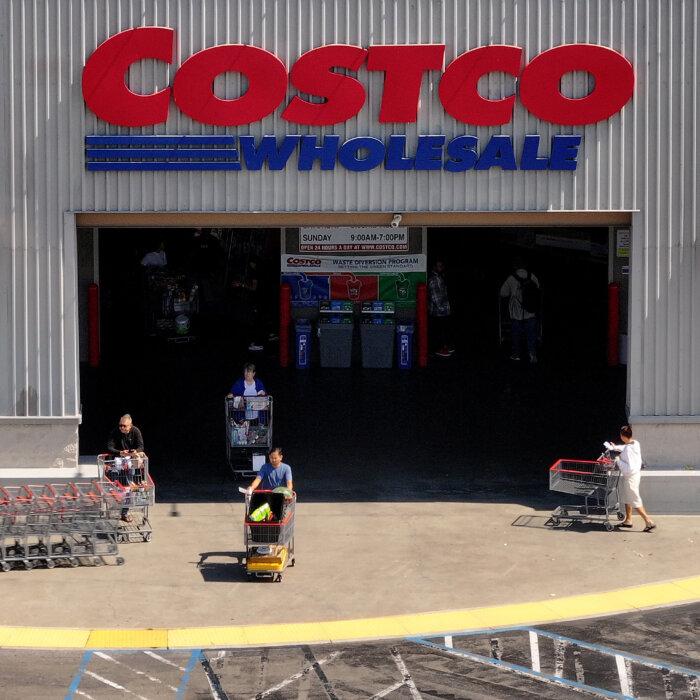
Core retail sales, which strip out automobiles and gas, fell at a worse-than-expected pace of 0.1 percent.
Ted Rossman, senior industry analyst at Bankrate, attributes the consumer pullback largely to shoppers front-running U.S. tariffs.
“Americans stocked up on things like cars and furniture that they feared would soon become more expensive,” Rossman said in a statement to The Epoch Times.
“We didn’t see as much stocking up in May, in part because many tariffs were delayed or rolled back, and also because some demand that otherwise would have appeared in May was accelerated by a month or two.”
However, a measure factored into gross domestic product (GDP) calculations—the retail sales control group—surged by 0.4 percent, slightly higher than the market estimate of 0.3 percent. This gauge omits transactions at places such as building materials suppliers and gas stations.
The new consumer figures could be the start of weakness appearing in the economic data, said Chris Zaccarelli, chief investment officer at Northlight Asset Management.
“Weak consumer spending [on June 17] finally shows a connection between soft data and hard data, as the negative consumer sentiment surveys we’ve been seeing are now showing in the month-over-month Retail Sales numbers,” Zaccarelli said in a note emailed to The Epoch Times.
Over the past few months, consumer surveys have indicated deteriorating confidence and sentiment regarding the broader economy. However, as trade policy stabilizes and the White House reaches new agreements, sentiment has improved.
The RealClearMarkets/TIPP Economic Optimism Index also advanced on renewed optimism surrounding the economy and personal finances.
Zaccarelli said May was the first negative reading for core sales, “and it could be a one-off.”
Optimism or Caution Ahead
U.S. households are taking a more cautious approach to spending than they have in recent years.“The gradual easing in consumer spending momentum is not just due to lower inflation—the growth in the number of transactions has also cooled,” the report states. “Consumers appear to be pulling back particularly on bigger ticket discretionary services like airline tickets and lodging.”
Revolving credit, such as credit cards, soared by 7 percent year over year. Nonrevolving credit, such as auto and student loans, rose at an annual rate of 3.3 percent.
Mixed soft and hard data reflect uncertainty among businesses and consumers. However, economic conditions remain largely intact, even as President Donald Trump’s sweeping global tariffs have upended international commerce.
On the labor front, the economy created a better-than-expected 139,000 new jobs in May, and the demand for labor remains strong, with 7.4 million job openings.
Price pressures have also yet to materialize in the government’s numbers.
Still, the United States is not out of the woods just yet, Rossman said.
“Will we see a flood of trade agreements?” he said. “Another extension? The implementation of higher tariffs? Some combination of the three? Relative optimism has reigned on Wall Street in recent weeks, although there’s a lot we don’t know about the path forward.”
The president’s 90-day pause on reciprocal tariffs is set to expire on July 9.