Kentucky bourbon maker Jim Beam says it plans to stop production at its main distillery on Jan. 1, as the state faces growing inventories.
Since the beginning of President Donald Trump’s sweeping global tariff agenda, Kentucky has faced a swelling supply of aging barrels amid trade uncertainty.
In October, the Kentucky Distillers’ Association confirmed that the Bluegrass State maintained a record high of 16.1 million aging barrels of bourbon in its warehouses.
The cost ultimately falls on distillers due to Kentucky’s tax on barrels during the aging process. The trade group reports that producers paid $75 million in aging-barrel taxes this year, up 27 percent from 2024.
Jim Beam—owned by Japanese drinks titan Suntory Global Spirits—said it will halt output at the James B. Beam campus in Clermont, Kentucky, as it invests in “site enhancements.”
“We are always assessing production levels to best meet consumer demand and recently met with our team to discuss our volumes for 2026,” James B. Beam Distilling Co. said in a statement to The Epoch Times on Dec. 22.

It will keep distilling at its Fred B. Noe craft distillery in Clermont, and at the Booker Noe distillery in Boston, Kentucky.
Trade Weapon
Throughout the president’s tariff announcements and negotiations, various markets have warned that levies would be imposed on American whiskey, distilled spirits, wine, and used barrels.This past spring, for example, the European Union threatened to slap a 50 percent retaliatory tariff on U.S. whiskey. The bloc has turned into a massive customer for the product, with exports ballooning about 60 percent to almost $700 million.
North of the border, in response to the White House’s sweeping tariffs on Canadian exports and the president’s “51st state” remarks, a broad Canadian boycott of U.S. goods emerged.
Across the country, “Buy Canadian” and “Elbows Up” campaigns popped up. Videos of provincial liquor board staff pulling American alcohol from displays went viral, sparking widespread U.S. industry complaints.
“That means hard-working Americans—corn farmers, truckers, distillery workers, barrel makers, bartenders, servers, and the communities and businesses built around Kentucky Bourbon will suffer.”
Industry data show the sector is experiencing hardship.
The American Distilled Spirits Exports 2025 Mid-Year Report, released in October, found a 9 percent year-over-year decline in U.S. spirits in the second quarter.
The drop was seen primarily in the four key markets: the EU, Canada, the United Kingdom, and Japan.
“Persistent trade tensions are having an immediate and adverse effect on U.S. spirits exports. There’s a growing concern that our international consumers are increasingly opting for domestically produced spirits or imports from countries other than the United States, signaling a shift away from our great American spirits brands.”
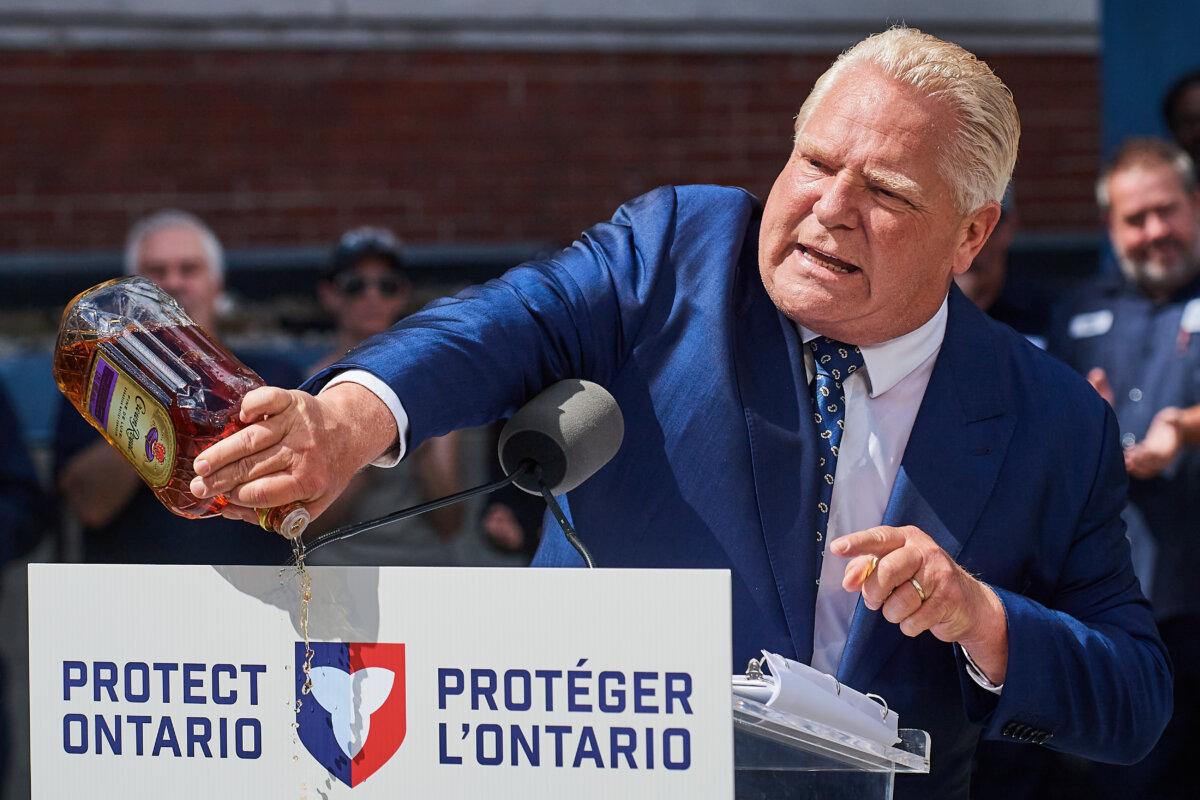
While U.S.-Canada trade negotiations appear at an impasse, Canadian provinces are sitting on a vast stockpile of American alcohol as they boycott these products.
Ontario has approximately $80 million worth in storage, and $2 million more could expire over the next six months.
Still, Ontario Premier Doug Ford says he has no intention of selling off these inventories.
Others, including Manitoba and Nova Scotia, say they will sell their remaining supplies and donate proceeds to local charities.
In the meantime, Canada will engage in formal negotiations with the United States next month as part of a scheduled review of the U.S.-Mexico-Canada Agreement.
The current administration has flagged multiple issues with the deal, such as alcohol distribution rules, dairy market access, and provincial procurement rules.