Despite many unresolved tariff treaties and the Fed’s foot-dragging on interest rate cuts, the S&P 500 and Russell 2000 gained 2.4% last week, while NASDAQ rose nearly 4%. That’s mainly because the current (second quarter) earnings announcement season is “coming in hot,” as Axon Enterprise (AXON), Kinross Gold (KGC), Paymentus Holdings (PAY) and Palantir Technologies (PLTR) posted better-than-expected sales and earnings last week, while also raising guidance. Then, Niagen Bioscience (NAGE) joined the earnings announcement party after posting a 10% sales surprise and a massive 300% earnings surprise.
The big exception was Super Micro Computer (SMCI), which reported that its latest quarterly sales rose 7.5% to $5.76 billion, compared with $5.31 billion in the same quarter a year ago, but in the same period, the company’s earnings declined 34% to $195.2 million, or 31 cents per share, vs. $297.2 million and 46 cents per share last year. The analyst community was expecting sales of $5.98 billion and earnings of 44 cents per share, so SMCI posted a 3.7% sales miss and a larger earnings disappointment. As a result, the stock fell, and some of the excitement associated with AI and data center stocks has temporarily fizzled.
Here are the most important developments recently and what they mean:
- The Labor Department on Tuesday announced that the Consumer Price Index (CPI) rose 0.2% in July and 2.7% in the past 12 months. The core CPI, excluding food and energy, rose 0.3% and 3.1% in the past 12 months. Energy costs declined 1.1%, aided by a 2.2% decline in gasoline prices. Shelter costs, namely owners’ equivalent rent, rose 0.2% in July and 3.7% in the past 12 months. Overall, the annual CPI number came in slightly below economists’ consensus estimate, so Treasury yields declined and ensured that a September key interest rate cut from the Federal Open Market Committee (FOMC) would be forthcoming.
- I should add that President Trump nominated E.J. Antoni, the chief economist at the Heritage Foundation, to lead the Bureau of Labor Statistics. Antoni is a longtime critic of the Labor Department’s handling of jobs data, and his position requires Senate confirmation. I suspect that his confirmation hearing will be more colorful than normal, but that he will ultimately be confirmed.
- Global rice prices are now at the lowest level in the past eight years after record harvests in Asia, as well as the removal of an Indian export ban on rice. The global rice benchmark, namely “broken white rice,” has fallen 27% in the past year and is now at its lowest level since 2017. Also, the United Nations has an “All Rice Price” index that is down 13% this year. India’s export curbs back in 2008 caused the prices of rice to rise, but with India’s export ban now being lifted, the market for white rice has collapsed, because there is virtually no demand from countries like Indonesia and the Philippines. India’s warehouses hold 60 million tons of rice, which is 33% higher than normal this time of year, so the price of rice is expected to remain low while excess inventories persist.
- Since Russia invaded Ukraine, Brazil has tripled its trade with Russia and is one of the largest buyers of Russian diesel and fertilizer. Now that Brazil is subject to 50% U.S. tariffs (excluding orange juice and aircraft components), its extensive trade with Russia is expected to possibly hinder its relations with the U.S. All Brazil had to do to prevent its U.S. tariffs surging from 10% to 50% recently, was to agree to President Trump’s demand to stop prosecuting former president Jair Bolsonaro on coup charges. However, the current president, Lula da Silva, is very stubborn and was also sentenced to jail back in 2017 for money laundering in “Operation Car Wash” and spent 580 days in prison. Lula da Silva’s case was annulled by the Supreme Federal Court in 2021. It will be interesting if Lula da Silva talks to President Trump, since he feels that he has been “disrespected,” so Brazil is suffering from this unfortunate impasse.
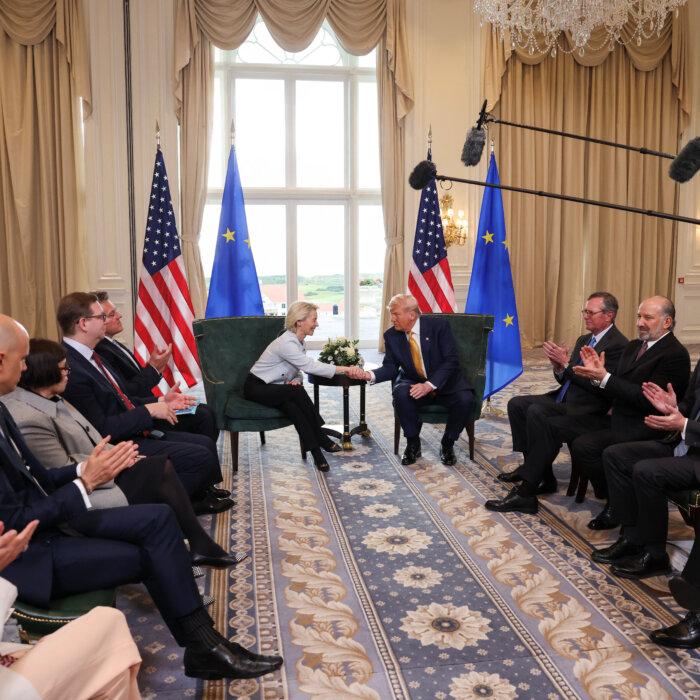
- The upcoming meeting on Friday in Alaska between Vladimir Putin and President Trump to agree to a ceasefire in exchange for Eastern Ukraine, plus the official recognition of captured territory like Crimea, has infuriated Ukrainian President Volodymyr Zelensky, who is not invited to the Alaska meeting. British Foreign Secretary David Lammy told Vice President J.D. Vance that a cease-fire must take place first before there are any territorial concessions. Europe is still open to Ukraine joining NATO, which infuriates Vladimir Putin. I suspect that President Trump will agree to block Ukraine from joining NATO as well as to agree to territorial concessions in exchange for a permanent cease-fire. Despite complaints emanating from Europe, they will likely reluctantly agree to the terms eventually dictated by President Trump and Vladimir Putin.
- Why Vladimir Putin suddenly wants to have a ceasefire is that the new sanctions the U.S. is threatening would be debilitating to Russia and its allies, like Brazil, China and India. So ironically, by President Trump using tariffs to conduct foreign policy, it is apparently having an impact. Ukrainian President Volodymyr Zelensky remains a wildcard, but now that Ukraine has been conscripting men up to age 60, they are running out of troops, so the time to make a peace deal is imminent.
- In the meantime, gold prices plunged to a three-month low on the anticipation of a ceasefire. President Trump confirmed this week that there will be no tariffs on Swiss gold bars, which briefly spiked to a record high of $3,534 per ounce. I expect that gold prices will resume climbing higher since, as central banks continue to cut key interest rates, gold will continue to look attractive to many investors who lack confidence in central banks.
- Ola Källenius, who is the CEO of Mercedes-Benz and also the President of the European Automobile Manufacturers’ Association (ACEA), warned that if the European Union’s (EU) sales ban on new combustion-engine cars remains in place for 2035, Europe’s automotive industry will implode. The EU’s 2035 ban is not set in stone, as it is scheduled for review in the coming months. However, as recently as March, the European Commission, the EU’s executive arm, reaffirmed its commitment to zero CO₂ emissions. It will be interesting to see what the EU does and if they continue to fine auto manufacturers, like Stellantis, for failing to meet CO₂ emission standards.
Overall, while uncertainties remain regarding the ultimate resolution of the tariff story as to who will bear the brunt of the charges: consumer prices or the profit margins along the supply chains, for now, the market is showing no fear of labor issues or inflation. It appears likely that the S&P may hit yet another new all-time high this week.