
“Once you let inflation take hold in the economy, it’s more expensive and harder to bring it down, and so the fatal policy error going back four or five years is still a legacy that we’re dealing with,” Warsh said. “Hard-working Americans are no doubt feeling it.”
What is the new Fed chair’s plan to get inflation under control? Analysts predict that he will bring a different approach, which will include reducing the Fed’s massive $6.8 trillion bond holdings, prioritizing interest-rate actions over quantitative easing, and focusing on the money supply over other metrics.
The Legacy of Cheap Dollars
Except for a brief interlude during President Donald Trump’s first term, the Fed has pursued a cheap-money strategy since the mortgage crisis of 2008–2009, keeping its benchmark short-term interest rate—the federal funds rate—near zero, and only raising rates in 2022 when inflation was approaching double digits. Simultaneously, the Fed pursued an experimental policy called quantitative easing, under which it created money to buy bonds from money-center banks, flooding the U.S. economy with dollars.
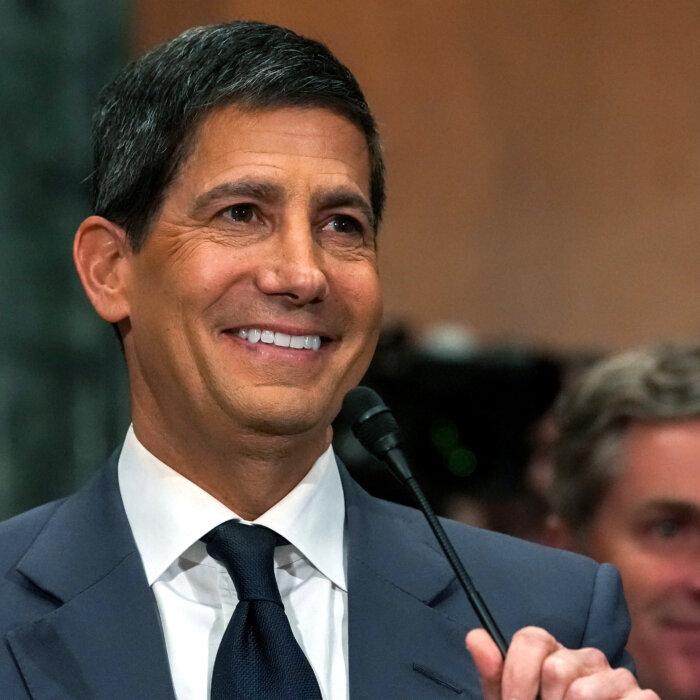
During his confirmation hearing, he stated: “The Fed has an interest rate tool and a balance sheet tool. ... The balance sheet tool disproportionately helps those with financial assets; the interest rate tool hits the entire economy.”
Although quantitative easing and low interest rates boosted demand in the wake of the mortgage collapse and COVID-19 pandemic lockdowns, they also drove up asset prices—notably stocks, bonds, and houses—to the benefit of wealthier Americans. Simultaneously, living standards fell for many Americans, whose dollars have lost more than 20 percent of their value over the past five years.
Follow the Money Supply
Although the Iran war and tariffs have driven up prices, Steve Hanke, a professor of economics at Johns Hopkins University who served on President Ronald Reagan’s Council of Economic Advisers, maintained that inflation is fundamentally a monetary phenomenon, a matter of too much money chasing too few goods.“To put the inflation genie back in the bottle, the Fed must dump the post-Keynesian economic models it relies on and start paying attention to the quantity theory of money and the money supply, broadly measured,” Hanke told The Epoch Times.
“The Fed should announce that it is going to target the growth rate in the money supply that is consistent with hitting its 2-percent-per-year inflation target. Based on the quantity theory of money, that would require the rate of growth in M2 to be around 6 percent per year.”
The M2 measurement of the money supply includes cash, bank deposits, and funds that are readily convertible to cash, such as certificates of deposit and money market funds. During the United States’ low-inflation period, between 2008 and 2020, the annual growth rate in the money supply (M2) was 6.11 percent, Hanke said, and inflation, measured by the consumer price index, averaged 1.77 percent.
Indeed, Warsh has indicated that he will focus on different metrics to measure and control inflation, beyond short-term price fluctuations.
The Power of the Supply Side
What can the Trump administration do to help the Fed fight inflation? Economists call for supply-side initiatives, such as continuing deregulation, lowering tariffs, and boosting energy supply, as well as cutting government spending.“Deficit financing pressures the Fed to expand the money supply and keeps interest rates higher than necessary,” Cartwright said.
She also advocated a hands-off approach to private industry, despite the recent stakes the Trump administration has taken in companies such as Intel.
“In a functioning economy, businesses compete primarily by bringing prices down—the more competition, the lower the prices and the better off consumers are,” Cartwright said. “The most persistent and under-appreciated source of higher prices is government interference in that competition through subsidies, preferential corporate deals, tariffs, and industrial policy that substitutes Washington’s judgment for the market’s.”
Lastly, economists say, politicians should let the Fed focus on fighting inflation rather than pressuring Fed officials to cut interest rates before inflation is tamed.
“The best course of action for the Trump administration to take would be to go radio silent on monetary policy,” Hanke said. “Do what President Reagan did with [then-Fed chair] Paul Volcker: Reagan gave Volcker the monetary policy reins and left him alone.”