Experts say the increasing use of A7A5 is allowing Russia to evade sanctions with greater ease, and is setting up a parallel economic system that allows the Kremlin and its associates to operate in the shadows.
Decentralized Exchanges Key
“For importers bringing goods into Russia, the primary sanctions evasion case is to convert rubles into A7A5 and then into USDT on decentralized exchanges,” he said. “Foreign suppliers may not know the payment originated in Russia. For exporters selling Russian goods abroad, the scheme helps repatriate funds when traditional banking channels are severely restricted.”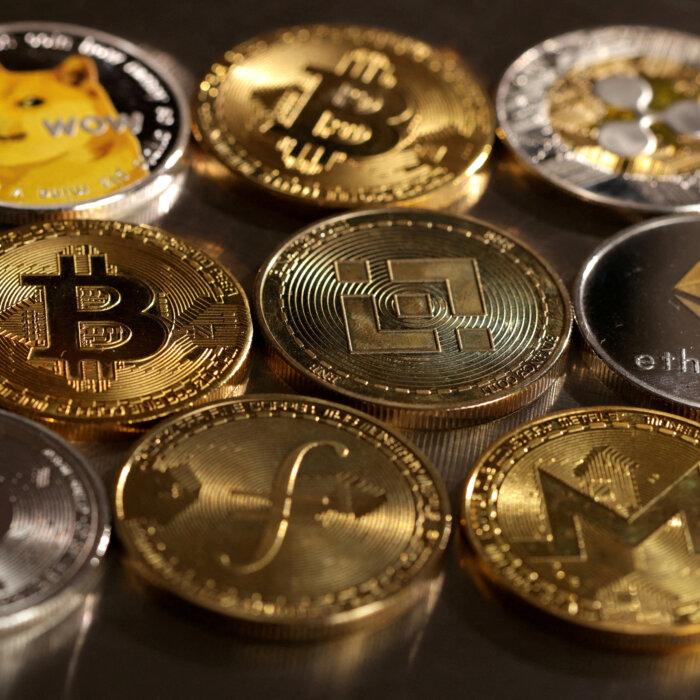
All other stablecoin—such as Tether (USDT) and USDC—are pegged to the dollar, but A7A5 is pegged to the Russian ruble.
“A Russian-backed stablecoin is still just a stablecoin pegged to something,” said Michael Litman, cryptocurrency expert and founder of Cultural Capital Labs in London. “The peg target can be U.S. dollars, euros, gold, or, in this case, the Russian ruble.”
‘Higher Geopolitical Risk’
“A ruble-pegged stablecoin is not useless but it comes with higher currency risk, higher geopolitical risk, and lower global liquidity,” said Litman, who said fewer cryptocurrency exchanges were likely to support it compared with dollar-pegged stablecoin.Litman said there would also be more “trust issues” surrounding custody.
“So it matters because it changes the nature of the risk you’re exposed to,” he said.
“A7A5 is mainly traded through Uniswap—a decentralized exchange—with a typical daily transfer volume of around US$250 million,” said Gomez.
Gomez said that means A7A5 only accounts for 1 percent of stablecoin transactions.
“A7A5 expanded its total circulating supply more aggressively than both major dollar-backed stablecoins USDT and USDC combined,” said the Dallas spokesman, “meaning Russia’s ruble stablecoin was being issued and distributed into the market at an unprecedented rate compared to the market leaders. This suggests coordinated, large-scale institutional adoption by Russian entities.”
Gomez said there appears to be no limit to the supply of A7A5.
“The bank and the company behind the A7A5 token have the authority to continue issuing more and more money. So this is very important, and could be dangerous if this gets traction, because it’s like a free inflationary policy inside this stable coin,” she said.
The token is not designed to challenge dollar-pegged stablecoins, but simply to help out the Kremlin and its allies, said Gomez, who points out that, unlike other stablecoins, A7A5 transactions are made predominantly during weekdays, suggesting they are used by corporations and institutions, rather than by individuals or investors.
“U.S. dollar stablecoins target a broad global market. In contrast, A7A5 serves a niche of individuals and companies operating in Russia or interacting with Russian companies that have been targeted by financial sanctions,” she said.
But such sanctions may be ineffective, say experts.
“Ruble-pegged stablecoins eliminate Moscow’s vulnerability to asset freezes that plague dollar-pegged alternatives,” said the Dallas spokesman, “When Russia relied on USDT through exchanges like Garantex, Western authorities could collaborate with Tether to freeze funds–in March 2025, approximately $28 million in Garantex-linked USDT was frozen following coordinated law enforcement action by the U.S. Secret Service with Europol.”
Who is Ilan Shor?
OFAC said representatives of Israel-born Shor, who now lives in Moscow, had met with officers from Garantex to establish the trading of the A7A5 stablecoin on the exchange.“A ruble stablecoin has obviously a lot more risk than the U.S.-based stablecoin,” Felix Shipkevich, a fintech attorney and special professor of law at Hofstra Law School in New York, told The Epoch Times.
“But the ultimate question is, who’s essentially backing up the stablecoin? Because you need to have reserves,” said Shipkevich, who said the flip side was that if the Russian government ultimately backed A7A5—and they have a lot of money—then it might be a good investment for those untroubled by the war in Ukraine or the risk of sanctions.
But Gomez said a lot of people in China use dollar-based cryptocurrencies to circumvent the controls imposed by the Chinese regime.