Mortgage Rates Plunge as Government Plans Bond Buying—Here’s How It Works

Mortgage Rates Plunge as Government Plans Bond Buying—Here’s How It Works
A townhouse for sale in Elkridge, Md., on Dec. 14, 2025. Madalina Kilroy/The Epoch Times
|Updated:
0:00
President Donald Trump wants the federal government to purchase mortgage-backed securities to help restore housing affordability.

The current administration has proposed a range of ideas to help young families achieve homeownership, including bringing down mortgage rates, and banning large institutional investors from buying residential homes.

Here’s how the president’s latest idea surrounding mortgage bonds would work.

Understanding Mortgage-Backed Securities

A mortgage-backed security (MBS) is a bond comprised of home loans.

Thousands of individual mortgages are pooled into a single investment, and the homeowners’ monthly payments are passed through to the investors who hold it.

The two most common are agency and non-agency mortgage-backed securities.

The former is backed by government-sponsored enterprises (GSE), including Fannie Mae and Freddie Mac, and Ginnie Mae. The latter is an investment that is not guaranteed by the federal government but rather issued by banks, mortgage lenders, and other private institutions.

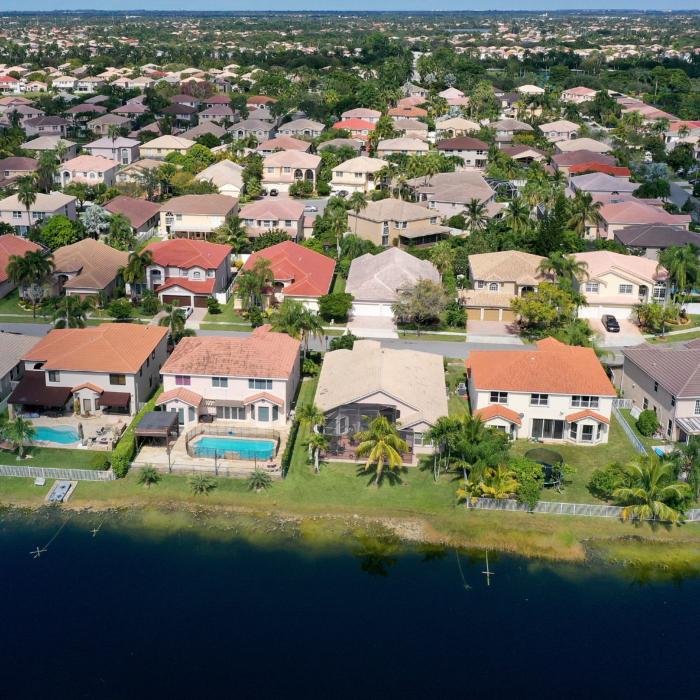
Investors are attracted to mortgage-backed securities because they yield higher income than government bonds, and agency investment vehicles carry less credit risk than corporate bonds.

Trump’s Proposal

In a Jan. 8 Truth Social post, the president directed the purchase of $200 billion in mortgage bonds to restore housing affordability.

“This will drive Mortgage Rates down, monthly payments down, and make the cost of owning a home more affordable,” Trump wrote on his social media platform.

Bill Pulte, director of the Federal Housing Finance Agency and chairman of Fannie Mae and Freddie Mac, confirmed on X that his agency will carry out the president’s proposal.

Fannie and Freddie, which have been under federal control since the 2008 Global Financial Crisis, “will do the purchases,” he said.

“We are on it, Mr. President!” Pulte said in a later X post.

This would be a drop in the bucket compared to the wider market, though. U.S. mortgage bonds are valued at approximately $11 trillion, accounting for the majority of the global market.

How This Lowers Interest Rates

The idea behind Trump’s plan is to bolster demand for mortgage-backed securities, raising their prices and pushing yields lower—bonds trade inversely—leading to falling mortgage rates.

Trump’s proposal has already led to results in the mortgage market.

As of Jan. 9, the average 30-year fixed-rate mortgage reached 5.99 percent, down 22 basis points from the previous day, according to the Mortgage News Daily Index. This marked the lowest level since August 2022.
Homes for sale sign in Maryland on Nov. 12, 2023. (Madalina Vasiliu/The Epoch Times)
Homes for sale sign in Maryland on Nov. 12, 2023. Madalina Vasiliu/The Epoch Times

The volatility is likely to persist, says Matthew Graham, COO of Mortgage News Daily.

“The MBS market continues sorting out a huge reaction to the GSE purchase news. Rates are definitely quite a bit lower,” Graham said in a report. “It remains to be seen how much lower they'll be when the initial volatility settles down—something that will probably require more clarity on the specifics of the MBS buying plan.”
That said, mortgage rates generally track the U.S. Treasury market, specifically the 10-year yield. The benchmark Treasury yield has fallen by about 50 basis points over the last 12 months, to below 4.2 percent.

Experts’ Expectations

Estimates vary among industry experts regarding how much impact the president’s proposal, if realized, will have on the mortgage market.

Chao Zhen, head of economics research at Redfin, projects the move will bring mortgage rates down between 10 to 15 basis points.

“We don’t expect this to massively lower rates or unlock tons of inventory,” Zhao said in a note. “The impact is likely to be limited because spending $200 billion on mortgage bonds is actually a relatively small asset purchase program.”

The Federal Reserve’s quantitative easing programs over the last 20 years required enormous asset purchases to bring down long-term interest rates.

From 2020 to 2022, for example, the Fed bought $2 trillion in U.S. Treasury securities and $2.5 trillion in mortgage bonds. These transactions helped keep the 30-year rate below 5 percent.

As part of its three-year-long tightening efforts, the central bank has reduced its exposure to mortgage-backed securities, reaching a five-year low of $2.1 trillion.

While this action would generate short-term benefits, “medium-term risks remain substantial,” according to Dilin Wu, research strategist at Pepperstone.

“Expanding GSE-held MBS leaves more risk on government-backed balance sheets,” Wu said in a Jan. 9 research note, adding that the $200 billion inches closer to “regulatory tolerance limits.”

“If the FHFA [Federal Housing Finance Agency] cannot or will not loosen constraints further, the plan’s effectiveness could be limited,” she said.

Ultimately, the structural challenges persist, mainly that decades of underbuilding have led to supply shortages across the U.S. housing market.

Even if this stimulates demand, it will likely push up prices, countering the administration’s affordability objectives.

Another Tool Available

Since 2020, median home prices have risen more than 20 percent amid a homebuying frenzy at the onset of the pandemic, fueled by ultra-low mortgage rates.

Conditions created a lock-in effect, with homeowners securing 3 percent to 4 percent mortgages and being unable to move.
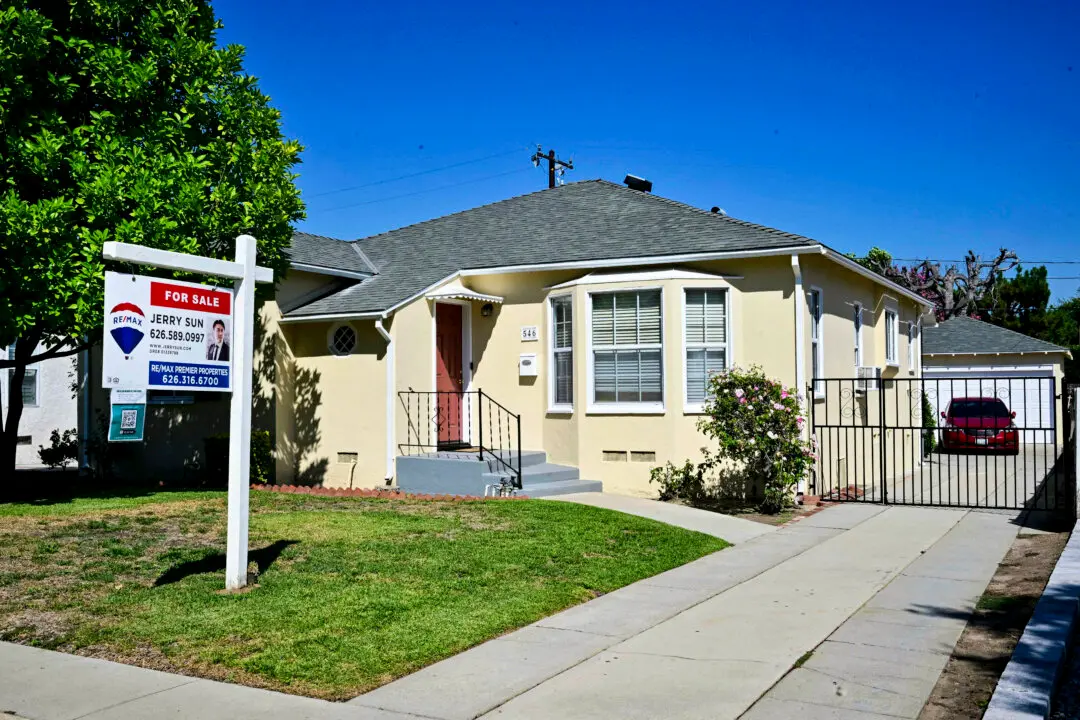

Over the last several months, the administration has considered an all-of-the-above approach—from portable mortgages to building incentives—to ensure homeownership is attainable for the young generation of families.
Kimberly Hayek contributed to this report.
Andrew Moran
Andrew Moran
Author
Andrew Moran has been writing about business, economics, and finance for more than a decade. He is the author of "The War on Cash."