Wall Street shrugged off the second day of the U.S. government shutdown, with stocks and bonds little changed on Oct. 2.
The S&P 500, a broad market index, reached a new all-time intraday high, but pared its gains and slipped by about 0.1 percent. The index is looking to register another sizable weekly boost.
The blue-chip Dow Jones Industrial Average dipped by 0.2 percent in intraday trading and is on track for a modest weekly gain. This year, despite the springtime selloff, the Dow Jones is up by 9 percent.
The tech-heavy Nasdaq Composite Index rose by 0.1 percent to a record high. The Nasdaq has surged by 18 percent year to date and is also poised for a solid weekly increase.
Investors have largely dismissed the battle between Republicans and Democrats in Washington, anticipating that a government shutdown will be brief and have a minimal impact on the broader economy.
The U.S. government shut down on Oct. 1 after Congress failed to reach a federal funding deal to keep the government running.
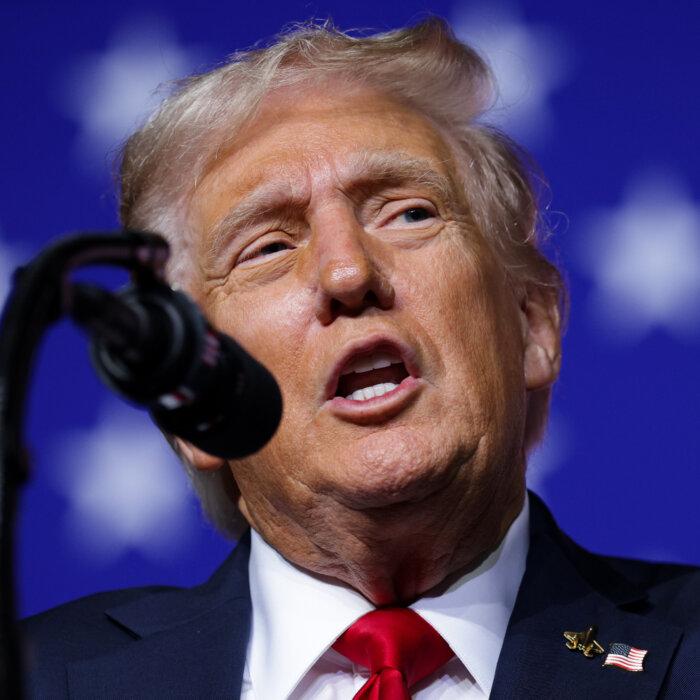

Republicans and Democrats have blamed each other for the closure and are now at a stalemate.
Although these political events present a fresh layer of uncertainty for financial markets, traders have typically ignored short-term budget-related disputes and focused on broader economic trends, macroeconomic factors, and corporate earnings, according to Adam Turnquist, chief technical strategist at LPL Financial.
“Over the last 50 years, the U.S. government has experienced 20 shutdowns,” Turnquist said in a note emailed to The Epoch Times. “The average duration of those shutdowns was only eight days, with the longest spanning 34 days from Dec. 22, 2018, to Jan. 25, 2019.”
During the previous shutdown, the S&P 500 rose by more than 10 percent, driven by the Federal Reserve’s transition from a tighter policy stance to a more accommodative one.
Turnquist said that this was “a great example of how macro factors matter more to markets than short-term political turmoil.”
After gradually raising interest rates from 2015 to 2018, the Federal Reserve engaged in a “mid-cycle adjustment.”
Fed Chair Jerome Powell followed through on three consecutive quarter-point rate cuts to give the broader economy a boost and keep unemployment low.
Yields on U.S. Treasury securities, meanwhile, were relatively unchanged.
The benchmark 10-year Treasury yield was flat at 4.11 percent.
The two-year yield rose by 2.2 basis points to 3.57 percent, while the 30-year dipped by 1 basis point to 4.7 percent.
The U.S. Dollar Index, a measure of the greenback against a basket of currencies, surged by about 0.4 percent to above 98.00.
The index has slumped this year, falling by almost 10 percent.
“If you look [at] six months after each shutdown ended, the results have generally been positive,” Mark Malek, CIO at Siebert Financial, said in a note emailed to The Epoch Times.
Economic Data
The prediction markets anticipate that the shutdown will last for two weeks. This could make it difficult for investors to examine the economy’s overall health.The Department of Labor did not release weekly jobless claims on Oct. 2, and the Bureau of Labor Statistics will not publish the critical September nonfarm payrolls report should the government remain shuttered on Oct. 3.
As a result, market watchers are placing an emphasis on private-sector readings.
Early indicators suggested that the labor market created 50,000 new jobs in September, and the unemployment rate was unchanged at 4.3 percent.
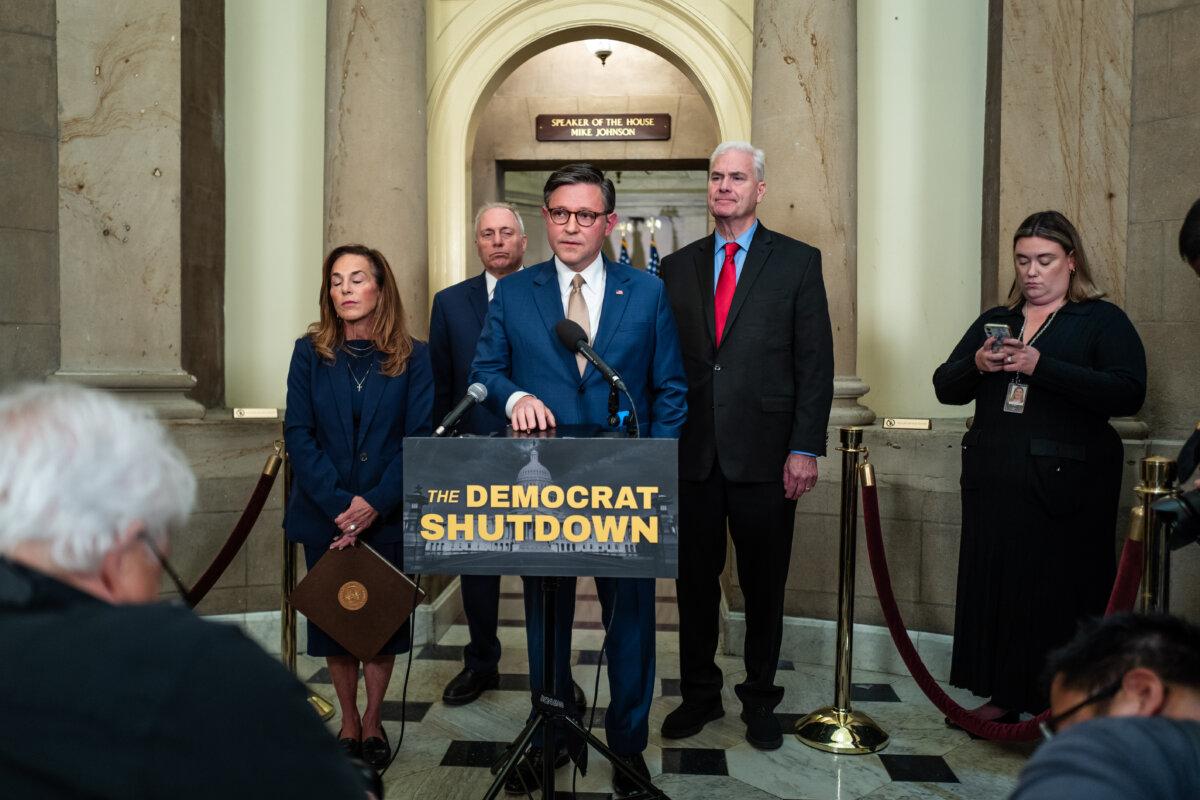
Tony Bancroft, portfolio manager at Gabelli Funds, said a brief shutdown would have minimal effects, although subcontractors and service providers would be the first to be affected.
“If this drags into weeks, like the 35-day 2018–2019 shutdown, expect broader fallout,” Bancroft said in a note emailed to The Epoch Times, pointing to the potential that contractors impose unpaid furloughs and layoffs.
“We have a 3.8 percent GDP, and the Democrats shut down the government. ... We could see a hit to the GDP, a hit to growth, and a hit to working Americans,” Bessent said.
After registering a 3.8 percent rebound in the second quarter, the July–September period could experience a similar expansion.