The number of Americans filing new applications for unemployment benefits was little changed, highlighting the low level of layoffs in the U.S. labor market.
The market consensus had forecast weekly claims totaling 212,000.
Economists view 200,000 as near-historically low levels, suggesting that employers are not terminating employees at a rampant pace.
Despite recent volatility in the claims data since the Thanksgiving weekend, the four-week average, which removes week-to-week noise, dipped to 201,500.
In a sign that employment conditions could be improving, continuing jobless claims declined for the second straight week to 1.849 million, from the downwardly adjusted 1.875 million.
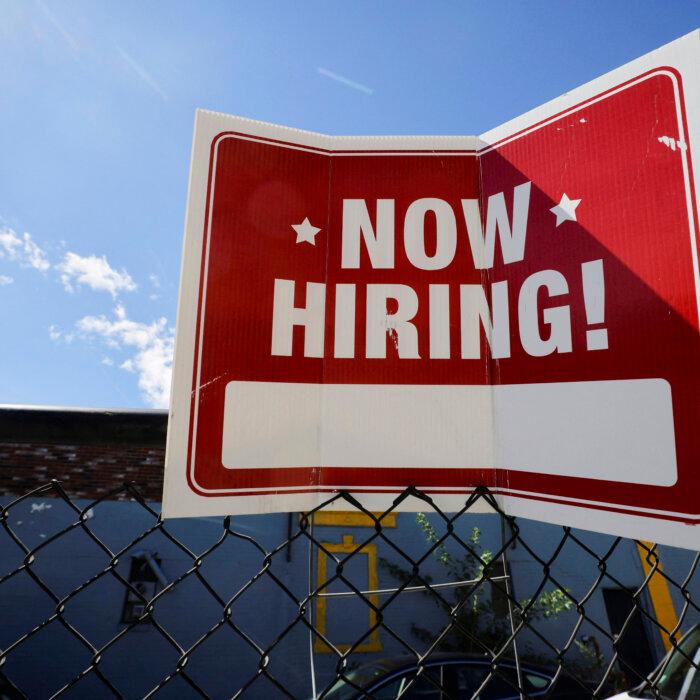

Recurring claims measure the number of out-of-work individuals currently receiving unemployment benefits. Economists use the statistic to determine the difficulty workers may have in finding jobs.
It could also reflect that individuals may have exhausted their unemployment benefits—eligibility is limited to 26 weeks in many states.
In the second half of 2025, the labor market has witnessed a notable slowdown. But economists have refrained from panicking, often describing it as a “low fire, low hire” climate.
The data do support this view.
In December 2025, employers announced 35,553 job cuts, the lowest level since July 2024 and 8 percent below the December 2024 level.
While labor conditions are not deteriorating at a fast and furious pace, risks remain in the year ahead, says Jeffrey Roach, chief economist for LPL Financial.
“For now, the balance of risks tilts toward the weakening labor market. Hence, investors should brace for weaker payrolls and rising unemployment,” Roach said in a note emailed to The Epoch Times.
By the spring, the state of the labor market should “warrant another cut in rates,” he said.

Others say that fiscal policy stimulus and expectations of Fed policy easing could boost employment.
“Job growth will likely broaden over the course of 2026 since economic policies are turning more expansionary,” Bill Adams, chief economist for Comerica Bank, said in a note emailed to The Epoch Times.
How the Year Started
Market watchers will get their first look at the 2026 labor market when the January jobs report arrives on Feb. 6.Additionally, the Bureau of Labor Statistics will publish the annual payroll benchmark revision alongside the employment report next month.
It is widely expected to reveal a further slowdown in hiring momentum and significant overcounting of payroll gains, comparable to what happened in 2024.
“Job creation may actually be negative,” Powell said.
“We think there’s an overstatement in these numbers by about 60,000, so that would be negative 20,000 per month.”
This, the central bank chief noted, requires policymakers to be careful so they are not “pushing down on job creation with our policy.”
One source of data volatility is the birth-death model, which estimates job gains and losses from business openings and closures each month. Moving forward, officials will rely on current sample information rather than historical time-series data.