U.S. motorists will see the lowest gasoline prices heading into Labor Day in five years, a new analysis shows.
By comparison, the average price for a gallon of gasoline on Labor Day was $3.29 last year and $3.77 in 2023.
Patrick De Haan, head of petroleum analysis at GasBuddy, says this has been the “cheapest summer” for gas prices since the pandemic.
“We’ve seen a remarkably affordable summer to hit the road with incomes up and gas prices down, but there are some challenges that remain: hurricane season and uncertainty over trade, tariffs and Russia’s war on Ukraine,” said De Haan.
“However, I remain optimistic that as cooler weather invades, gas prices too, will seasonally cool off.”
At the same time, gas prices in nearly half of all states have increased over the past month amid localized refinery outages, the report stated.
Looking ahead, De Haan thinks the national average will drop below $3 per gallon this fall.
Global Oil Markets
A chief contributing factor for less pain at the pump has been falling crude oil prices.This year, a barrel of U.S. West Texas Intermediate crude oil has fallen about 11 percent to $64 on the New York Mercantile Exchange. Likewise, Brent, an international benchmark for oil prices, has declined almost 10 percent to below $68 on London’s ICE Futures exchange.
Oil, which accounts for about half of the cost of gasoline, has slumped due to various factors.
The chief component has been accelerated output by the world’s largest producers, mainly the United States and the Organization of the Petroleum Exporting Countries (OPEC) and its allies, OPEC+.
In April, key OPEC+ members—Algeria, Iraq, Kuwait, Oman, Russia, Saudi Arabia, and the United Arab Emirates—reversed their voluntary production cuts of 2.2 million barrels a day and will phase them out over 18 months, ending in September 2026. The group plans to bolster daily output by 547,000 barrels in September.
Softer domestic and global petroleum demand, as well as growing inventories, have also contributed to lower prices.
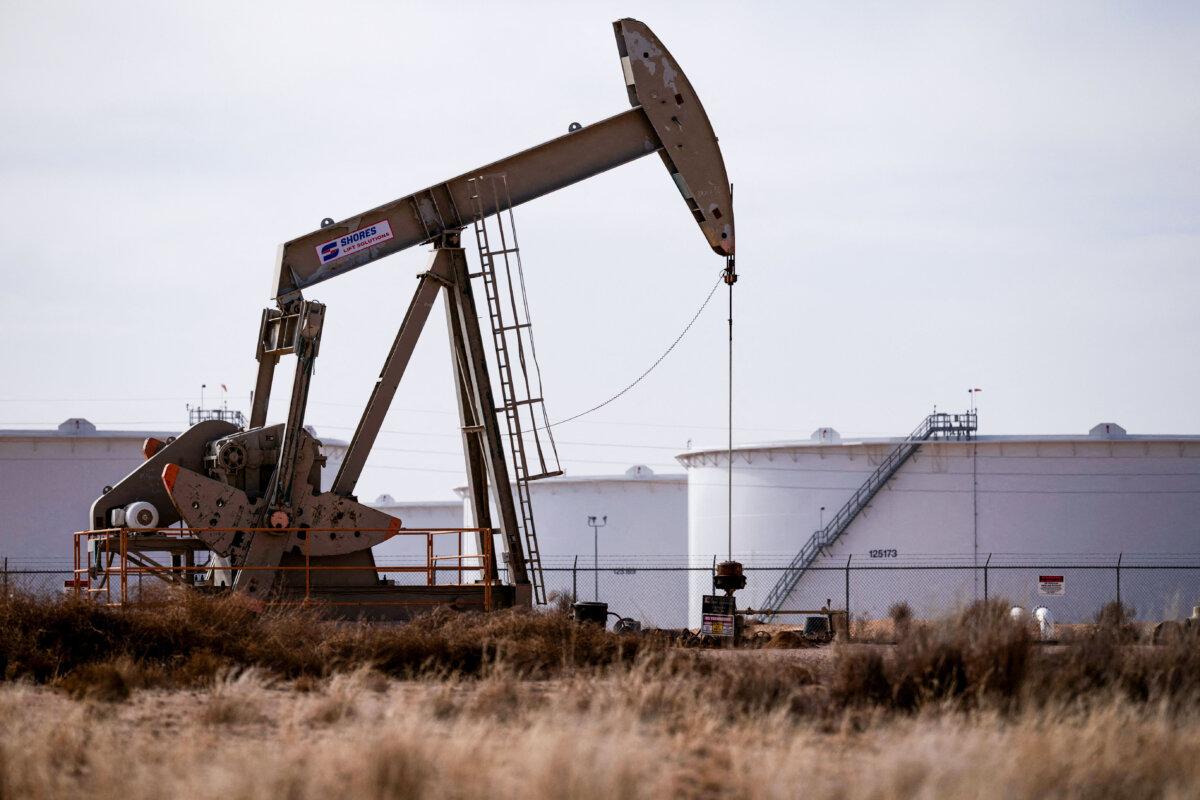
The U.S. four-week moving average for gasoline demand is about 9 million barrels per day, down 1.1 percent compared to last year, says Phil Flynn, energy strategist at The PRICE Futures Group.
Geopolitics has also played a role, with the situation in the Middle East stabilizing, and President Donald Trump potentially brokering a peace agreement between Ukraine and Russia. At the same time, market watchers have become skeptical that both sides will agree to end the conflict in Eastern Europe, leaving oil prices vulnerable to sudden developments.
Still, a wide range of forecasts point to lower oil prices in the year ahead.
Adam Turnquist, chief technical strategist for LPL Financial, says the recent break below $65 could prompt oil prices to retest the intraday lows of around $55 a barrel observed this past spring.
“Momentum remains bearish but is not oversold,” Turnquist said in a note emailed to The Epoch Times.