This copy is for your personal, non-commercial use only. Distribution and use of this material are governed by our Subscriber Agreement and by copyright law. For non-personal use or to order multiple copies, please contact The Epoch Times Reprints.
Korea Zinc said on Dec. 31 it has revised its planned share issuance to 2.833 trillion won ($1.94 billion) from the previously announced 2.85 trillion won ($1.96 billion), citing finalized pricing and changes in foreign exchange rates, according to its regulatory filing.
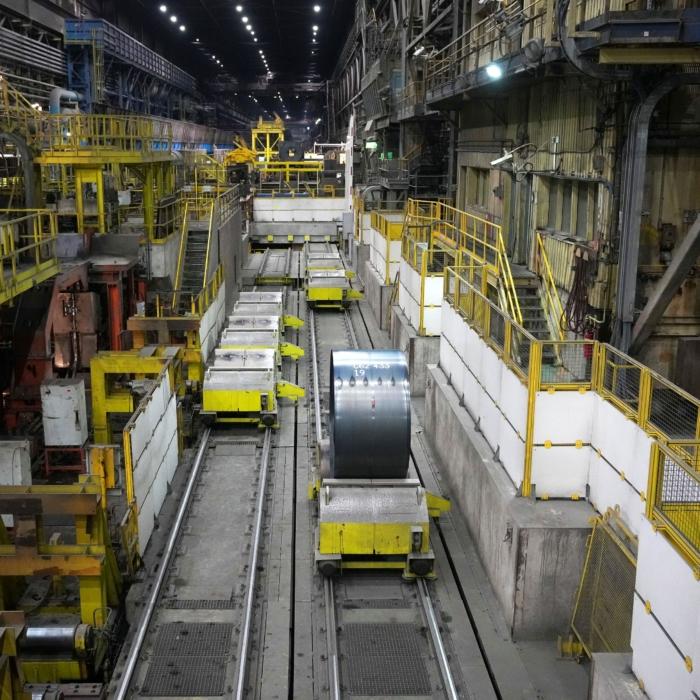
The South Korean metals producer said the proceeds would be used to fund the establishment of a non-ferrous metal smelter in the U.S. state of Tennessee, focused on producing core minerals, including antimony and gallium.
These metals are critical for high-tech, automotive, and defence industries.
In addition to gallium, antimony, and germanium, which are used in the production of semiconductors and advanced chips, as well as fiber optics and thermal-imaging cameras, the facility will produce zinc, gold, silver, copper, and lead.
Earlier this month, Commerce Secretary Howard Lutnick said Korea Zinc’s $7.4 billion zinc smelter will produce as much as 540,000 tons of essential minerals per year.
“These minerals power the technologies that matter most for our future: defense systems, semiconductors, artificial intelligence, quantum computing, autos, data centers, and advanced manufacturing,” Lutnick said in a Dec. 15 post on X.
The move is the result of the Trump administration’s ongoing efforts to onshore the production of critical minerals.
In July, MP Minerals of Las Vegas announced a public/private partnership with the Department of Defense to build a magnet manufacturing facility.
In October, the Department of Energy took a 5 percent stake in Lithium Americas, as well as an additional 5 percent stake in the company’s lithium mine that’s under construction in central Nevada.
The administration in October also announced a $35.6 million partnership and 10 percent stake in Trilogy Metals to advance mining operations in Alaska’s remote Ambler Mining District.
Korea Zinc’s announced adjustment from 2.85 trillion won to 2.833 trillion won, about 17 billion won ($11.75 million) lower, reflects the final share price agreed upon and the impact of exchange-rate movements since the initial estimate.
Shift From China-Centric Supply
The Tennessee smelter represents one of the largest foreign manufacturing investments by a South Korean company in recent years, aimed at diversifying supply chains away from China, which dominates much of the world’s production of critical minerals.
China banned exports of the minerals in late 2024, but lifted the ban last month.
Nyrstar, of Budel-Dorplein, Netherlands, said in a statement on Dec. 15 that it plans to sell its fully permitted smelter operations in Clarksville, Tennessee, to Korea Zinc.
Financial terms of the transaction were not disclosed. Nyrstar added that zinc produced at the facility in 2026 would be sold to its parent company, Trafigura of Singapore.
The deal, which is subject to regulatory approval, is expected to close in the first half of 2026. Nyrstar’s Tennessee operations have been running for nearly 50 years, providing a long-established industrial base that Korea Zinc plans to build upon.
“This transaction would enable a secure and stable U.S. zinc and zinc byproducts supply for the future,” Nyrstar CEO Guido Janssen said.
“Korea Zinc is a world leader in smelting technology, and we are confident they will build on the strong foundations Nyrstar has laid in the State of Tennessee.”
Evgenia Filimianova is a UK-based journalist covering a wide range of international stories, with a particular interest in foreign policy, economy, and UK politics.