Corporate America is grappling with a series of issues that may impact or benefit companies’ bottom lines.
Tariffs have raised the cost of imported goods from foreign markets, potentially squeezing profit margins. Price pressures could, once again, become a new threat to corporations.
Some companies are navigating this economic landscape with the assistance of artificial intelligence (AI).
Tariffs
Publicly traded businesses have accepted President Donald Trump’s tariffs into their operations.Despite the sharp decline, it still represented the second-highest number over the past 10 years, FactSet senior earnings analyst John Butters said.


The industrial and information technology sectors accounted for the highest number of mentions of “tariff” or “tariffs,” followed by the consumer staples and materials sectors. The financial and real estate sectors posted a sizable decrease from the previous three-month span.
Since the president unveiled the contours of his global trade agenda, companies’ reactions to the levies have been mixed.
Procter & Gamble, Walmart, Best Buy, and AutoZone have been among the major brands to confirm tariff-related price increases.
“We’ve continued to see our costs increase each week, which we expect will continue into the third and fourth quarters,” McMillon stated.
Apple, General Motors, Ford, and fashion retailer Mango have stated that they will not respond to higher levies with higher prices.
Apple CEO Tim Cook said price hikes on the newest iPhone model are not tied to higher import duties.

During its August earnings call, Home Depot acknowledged that tariffs could lead to price increases on select imported products. The company said that broad-based price hikes across its inventory are not expected.
Inflation
Inflationary pressures have been building at a modest pace in recent months.The headline annual inflation rate in the August consumer price index (CPI) report rose to 2.9 percent from 2.7 percent. On a month-over-month basis, consumer prices jumped at a higher-than-expected pace of 0.4 percent.
The term “inflation” was cited on 178 earnings calls from June 15 to Sept. 12, a 24 percent decrease from the first quarter of 2025 (March 15 to June 14). This represents the lowest number in almost five years.
“In fact, this quarter marks the lowest number of S&P 500 earnings calls citing the term ‘inflation’ since Q4 2020 (144),” Butters said.
While large companies are absorbing the tariffs, small- and medium-sized businesses are stuck.
“While some firms reported passing through their entire cost increases to customers, some firms in nearly all Districts described at least some hesitancy in raising prices, citing customer price sensitivity, lack of pricing power, and fear of losing business,” the latest report stated.
“If you buy something and you sell it through retail or you use it to make a product, you’re probably taking a lot of those costs on and not able to pass it fully along to the consumer yet,” Powell said.
Although the effects of tariffs on consumer prices have become “clearly visible,” Powell believes the impact on inflation will be “relatively short-lived—a one-time shift in the price level.”
AI Over Hiring, Pay Raises
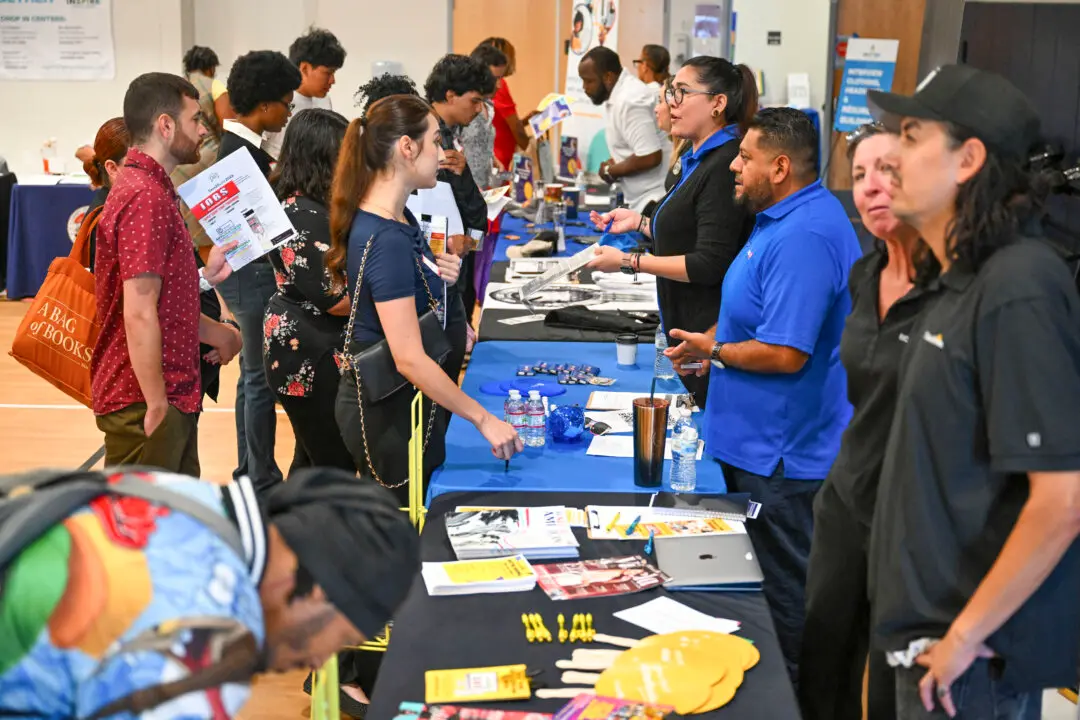
Powell described the U.S. economy as facing a “low firing, low hiring environment.”He pointed to the low job-finding rate as well as a small redundancy rate, creating a situation where “kids coming out of college and younger people, minorities, are having a hard time finding jobs.”
While he did not specifically blame AI, Powell noted that it “may be part of the story.”
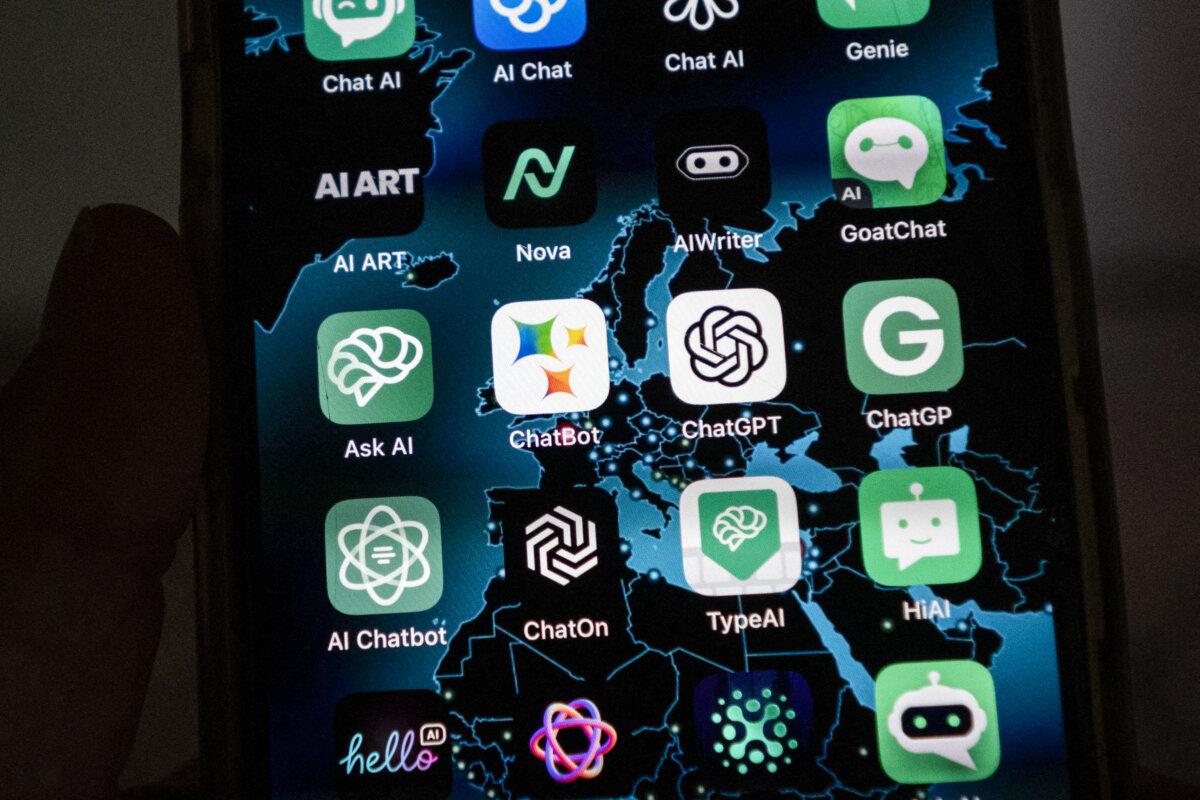
AI and machine learning investment has accelerated in recent years—from data centers to consumer products—as investors anticipate massive returns for shareholders.
According to data compiled by Torsten Slok, chief economist at Apollo Wealth Management, an increasing share of venture capital activity worldwide is centered in AI, “and 63 percent of all VC deals in North America are now AI or machine learning.”
Slok says AI investors are overexposed to AI.
“The outlook for the rest of the economy is much more bearish: Earnings expectations for the S&P 493 have remained suppressed and are not moving higher,” he said in a Sept. 17 note emailed to The Epoch Times. “The bottom line is once again that there is an extreme degree of concentration in the S&P 500, and equity investors are dramatically overexposed to AI.”
The dramatic investments being made in AI might not necessarily translate to more employment, Minneapolis Federal Reserve President Neel Kashkari said last week.
Technology is fueling fast-growing industries that need fewer workers, which explains why the stock market is thriving even as job growth remains slow, the regional central bank chief added.
Michael Feroli, chief U.S. economist at JPMorgan Chase, suggests that recent data indicate AI may already be impacting the labor market, particularly for the younger generation.
St. Louis Federal Reserve economists say this highlights “a significant shift in how the economy is absorbing newly educated workers,” adding that “the magnitude of this change becomes even more striking when compared with that of other demographic groups.”
The unemployment rates of non-college-educated workers and older college graduates have edged up by 0.47 percentage points and 0.38 percentage points, respectively.
The economics team at J.P. Morgan Global Research found that graduates in a broad array of fields, including anthropology, computer engineering, graphic design, and industrial engineering, are struggling to find employment.
“All in all, we find little association between various measures of AI intensity and job growth outside of selected tech industries, and conclude that so far AI has not been a major driver of the composition of employment gains, except perhaps in tech,” Feroli said.
Scores of companies—whether consumer-facing or otherwise—have announced transitions to an AI-first strategy.
This initiative involves constructing a business with artificial intelligence at its core.
Murat Tasci, senior U.S. economist at JPMorgan Chase, warns that AI could have a substantial role in the labor market during the next recession.
“We think that during the next recession, the speed and breadth of the adoption of AI tools and applications in the workplace might induce a large-scale displacement for occupations that consist of primarily non-routine cognitive tasks,” he said.
For now, the U.S. economy is not facing an imminent recession.