New data show that U.S. housing affordability is showing signs of improvement, but other figures indicate that prospective homebuyers are taking a cautious approach.
Alternative ICE data indicate that 30-year mortgage rates averaged 6.26 percent in mid-September.
Either way, the drop in mortgage rates has resulted in a tailwind for homeowners and homebuyers, according to Andy Walden, head of mortgage and housing market research at ICE.
“The recent pullback in rates has created a tailwind for both homebuyers and existing borrowers,” Walden said in a statement.

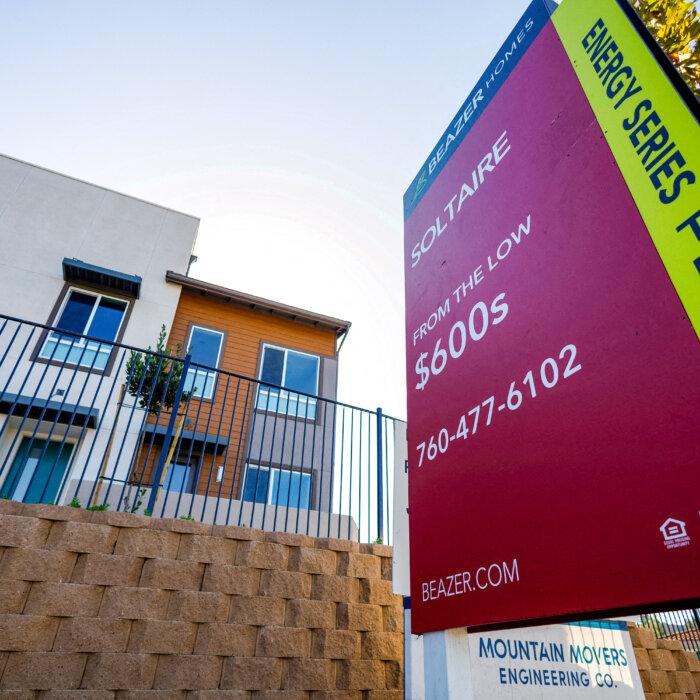
“We’re seeing affordability at a 2.5-year high, which is beginning to bolster purchase demand, while creating more opportunities for homeowners to lower their monthly payments with a rate-and-term refinance loan.”
Monthly principal and interest payments on average-priced homes, the ICE report states, have declined to $2,148.
This represents approximately 30 percent of the median U.S. household income, down from the peak of 35 percent in late 2023.
Mortgage rates, which tend to track the 10-year Treasury yield, have dipped following the Federal Reserve’s restart of its easing cycle in September.
At the September Federal Open Market Committee policy meeting, officials voted to lower the benchmark federal funds rate—a key policy rate that influences borrowing costs for businesses and consumers—by a quarter point, to a new target range of 4 percent to 4.25 percent.
But while the Fed’s policy decisions can affect yields on Treasury securities, other factors also play a role, including economic conditions, fiscal fears, and the government shutdown, which is now in its second week.
The shutdown has prevented many government agencies, including the Bureau of Labor Statistics and the Labor Department, from publishing key economic data.
This is creating considerable uncertainty about broader economic conditions, forcing financial markets to rely on alternative private sector measurements to determine the economy’s health.
At the same time, how the shutdown is resolved could also influence the direction of mortgage rates, according to Jeff DerGurahian, head economist and chief investment officer at loanDepot.
“The direction of mortgage rates remains sensitive to how the shutdown is resolved,” DerGurahian said in a note emailed to The Epoch Times.
“A deal that increases deficit spending could push long-term bond yields and mortgage rates higher, while signs of economic weakness or job loss could support lower rates.”
Mortgage Demand
Mortgage demand soared in September, with applications surging by almost 30 percent in the week ending Sept. 12.Applications to refinance a home loan also increased by 58 percent.
Recent figures suggest that prospective homebuyers and current borrowers may be taking it a bit more slowly.
Applications for mortgage refinancing and home purchases slipped by 8 percent and 1 percent, respectively.
However, they remain 18 percent and 14 percent higher, respectively, than they were at the same time last year.
Still, the association’s weekly survey found growing demand for adjustable-rate mortgages (ARMs), interest rates on home loans that change periodically.
Mike Fratantoni, senior vice president and chief economist at the Mortgage Bankers Association, said households are seeking any potential savings on mortgage products.
“The ARM share increased to 9.5 percent last week from 8.4 percent the prior week,” Fratantoni said in the Mortgage Bankers Association report. “Our survey shows 5/1 ARM rates are averaging almost a percentage point below 30-year fixed rates, and this differential is leading more purchase and refinance applicants to consider ARMs.”
Meanwhile, sales are stalling, and home prices continue firming.
ICE data reveal that annual home price growth rose to 1.2 percent in September as inventory tightens.
Additionally, 80 percent of the housing market witnessed price increases, the highest share in nine months. Twenty percent of the market saw declines, down from 55 percent in July.
This comes as Redfin found that homebuyers are canceling home-purchase agreements at a record rate.
Approximately 56,000 deals were canceled in August, equal to a little more than 15 percent of homes that went under contract that month.
Since it has shifted into a buyer’s market—there are about 500,000 more buyers than sellers—many have become more selective.
Sellers are still asking for top dollar, Redfin stated.
Shutdown Could Affect Housing
Orphe Divounguy, senior economist at Zillow, said the mortgage and housing system could face enormous backlogs when the government reopens.A government shutdown threatens to stall home closings, delay loan approvals, disrupt federal housing programs, and hinder key services at the Department of Housing and Urban Development, he said.
“The housing market is already operating at the edge of affordability. Many households are exposed—and a federal shutdown would exacerbate that vulnerability; marginal households could become cost-burdened overnight.”