
An uptick in pending home sales from May suggests the housing market may be regaining momentum after a largely lackluster spring selling season.
The National Association of Realtors (NAR) reported Wednesday that its Pending Home Sales Index—a measure of signed contracts for existing homes that have not yet closed—rose 3.8 percent in May from April and was up 4.9 percent from a year earlier.
“A late-spring buyer rush—even with mortgage rates not budging—is an indication of pent-up housing demand and consumers’ acceptance of above-6-percent mortgage rates as the new normal,” NAR chief economist Lawrence Yun said in a statement.
The average rate on a 30-year fixed mortgage stood at roughly 6.44 percent in May, a level that weighs on affordability at a time when inflation is still pressuring household budgets and conflict in the Middle East has kept energy markets on edge.
Looking ahead, Yun said homebuyers could see modest relief on mortgage rates if declining oil prices continue to ease inflationary pressures, though he cautioned that any reduction is likely to be gradual.
The report follows encouraging news from the market of previously occupied homes. Last week, the NAR reported that existing-home sales increased to a seasonally adjusted annual rate of 4.17 million units, exceeding economists’ expectations of about 4.07 million and improving from April’s revised pace of 4.04 million.
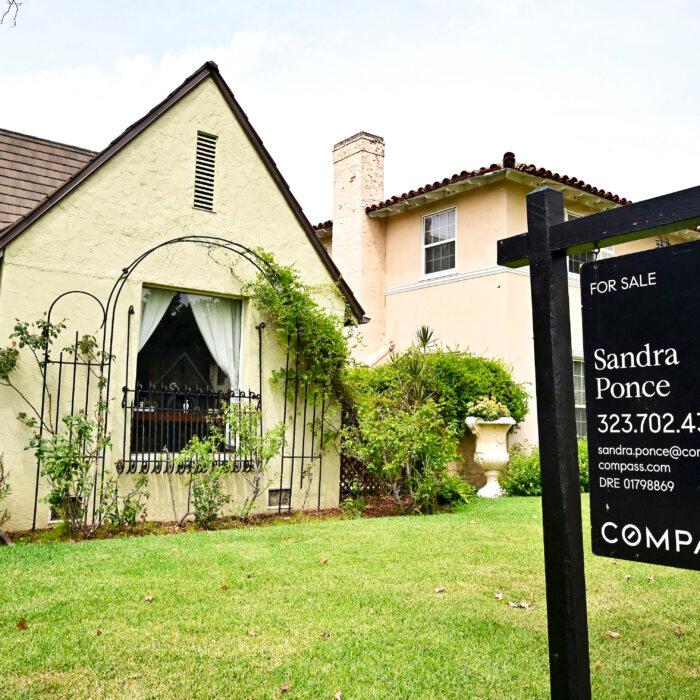
Existing-home sales measure completed transactions that have closed, while pending home sales track properties that are under contract but have not yet reached the closing stage.
“Because a home goes under contract a month or two before it is sold, the Pending Home Sales Index generally leads Existing-Home Sales by a month or two,” the NAR explained.
The May improvement follows an April report that showed existing-home sales essentially flat. Even with the upward revision, April’s 4.04 million pace fell short of what economists expected for what is typically the market’s busiest time of the year.
According to the NAR, pending home sales increased in all four major regions of the country. The Northeast and Midwest posted the strongest gains, with contract signings rising more than 8 percent from April. The South and West recorded more modest increases of about 1 percent.
Among major metropolitan areas, Kansas City led the nation with a 20.1 percent increase in pending sales, followed by San Antonio at 15.7 percent and Minneapolis–St. Paul at 13.9 percent.
“The inventory-constrained Northeast region, which has seen faster home price growth but slower home sales for several months, is now showing more buyer contract signings,” Yun said. “More supply is needed to help moderate home price growth.”