Harley-Davidson is planning to move production of its Revolution Max engine back to the United States, years after shifting some of that work in Thailand.
The maker of the iconic American motorcycle said on Tuesday that its facilities in Pennsylvania and Wisconsin will handle the work. That will include machining, powertrain assembly, painting, and final vehicle assembly.
The transition is expected to be completed ahead of the start of production of the 2028 model in 2027, the company said. The goal is to have motorcycles powered by U.S.-made Revolution Max engines—namely the Pan America, Sportster S and Nightster—to arrive at dealerships in 2028.
Harley-Davidson cited changes in U.S. trade policy under the Trump administration and a shifting global trade environment as reasons for the move, which the company said “has been months in the making.”
It also comes as part of Harley’s “Back to the Bricks” strategy, a turnaround effort pursued by CEO Arthur “Artie” Starrs since he took the helm last October after years of decline at the company.
The current domestic policy and global trade environment represent an opportunity for Harley-Davidson to “lean even further into our American manufacturing footprint and build more motorcycles here at home,” the company said.
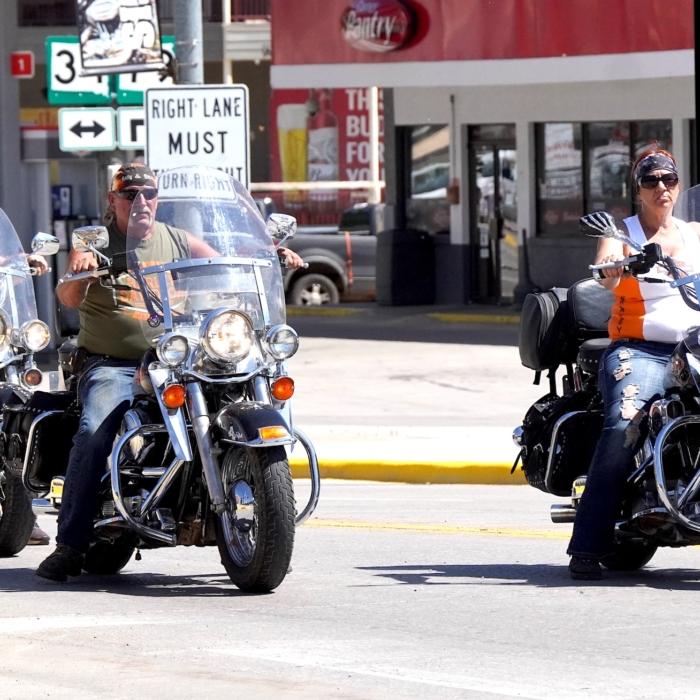

Harley-Davidson moved production of the Pan America and Sport series to Thailand in 2024, a decision the company described at the time as a temporary transition. The move angered labor unions representing Harley workers, which accused the company of breaking a promise it made in 2018, when it said motorcycles produced in Thailand were intended for European and Asian markets and would not be shipped back to the United States for sale.
The offshoring at the time also drew the ire of President Donald Trump. After Harley’s 2018 announcement of its plans to shift some production overseas in response to European Union tariffs levied on U.S.-made motorcycles—which itself was a retaliation to Trump’s tariffs on European steel and aluminum imports—Trump said a Harley-Davidson motorcycle “should never be built in another country.”
The latest reshoring plan comes as Harley-Davidson faces prolonged struggles. In its most recent quarterly earnings report, the company said retail motorcycle sales fell for the fourth straight year in 2025, as it struggled to attract younger riders and navigate a shifting global tariff landscape.
In February, Harley-Davidson reported that global retail motorcycle sales fell 12 percent in 2025 from a year earlier, to 132,500 units. Sales are now down 32 percent from 2021, the last year in which they increased.
The company reported a net loss of $279 million for the fourth quarter of 2025, compared with a loss of $117 million a year earlier. For the full year, consolidated revenue fell 14 percent from the prior year.
Tariffs have also weighed on the company. Harley-Davidson said a 50 percent tariff on aluminum and steel cost it $31 million in 2025. Although 95 percent of its U.S. motorcycle revenue comes from motorcycles assembled at its Pennsylvania final assembly plant, the company still sources materials from outside the United States, leaving it exposed to tariffs.