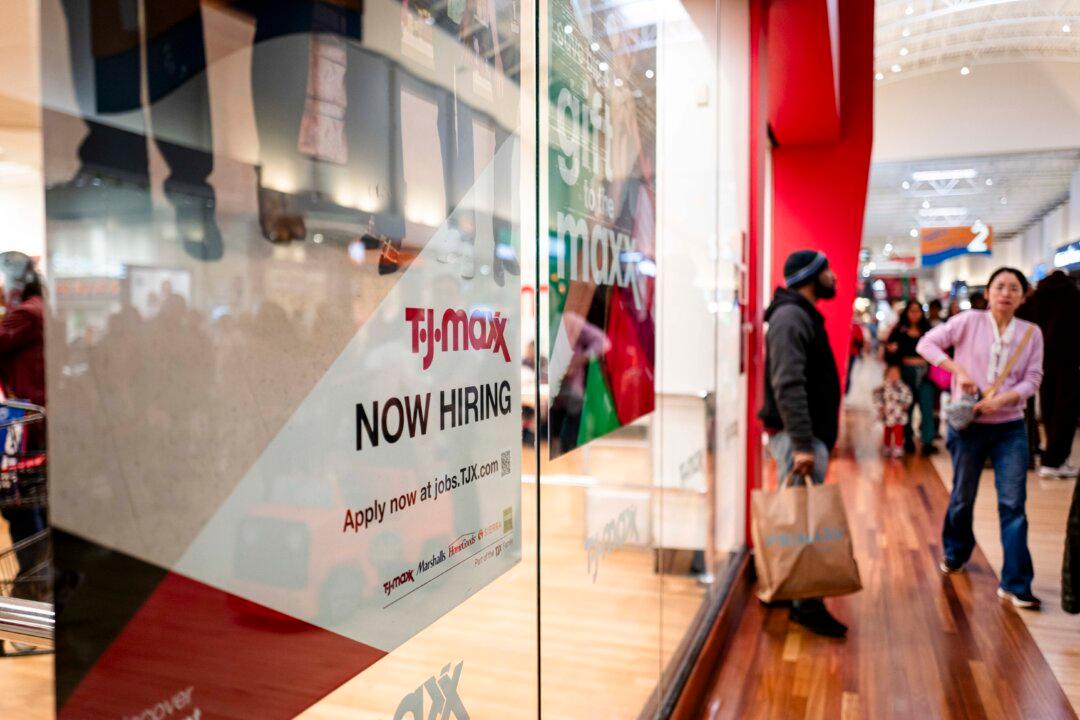
After scores of executives warned white-collar workers that artificial intelligence (AI) is poised to take their jobs, Joseph Briggs, head of global economics research at Goldman Sachs, noted that AI is already having a measurable impact on joblessness among young tech workers.
In a podcast posted on Aug. 5, Briggs told hosts Allison Nathan, senior strategist at Goldman Sachs Research, and George Lee, co-head of Goldman Sachs Global Institute, that the unemployment rate among young workers—aged between 20 and 30—in the tech sector has increased by about 3 percent since the start of the year. He said the increase is significantly greater than among other young workers.
“The overall impacts on young workers in the labor market, speaking from an aggregate perspective, [are] small. But if we start zeroing in and zooming in on these specific industries where we are seeing AI be used to drive efficiency gains, there are signs that headwinds are emerging there,” Briggs said.
While Goldman Sachs estimated that AI adoption could lead to a total job displacement of about 6–7 percent over 10–15 years, Briggs said it depends on how fast AI is adopted.
“If we’re wrong and that AI adoption and all the displacement takes place [during] a one- to three-year period, then all of a sudden that 7 percent displacement rate translates to a 2–2.5 percent boost to the unemployment rate. That’s a pretty big macroeconomic shock,” he said.
Many company executives had rung alarm bells about a more concerning trend.


“Like with every technical transformation, there will be fewer people doing some of the jobs that the technology actually starts to automate,” Jassy said, adding that there would be other positions available.
The email stated that the organization would gradually stop using contractors, transfer more work to AI technologies, and bring on new employees “if a team cannot automate more of their work.”
Salesforce said recently that AI already performs as much as 50 percent of the company’s workload.
AI Everything, Everywhere, All at Once
Last year, International Monetary Fund economists said that about 60 percent of jobs may be affected by artificial intelligence. The analysis highlighted the advantages and pitfalls of AI becoming ubiquitous across advanced and emerging economies.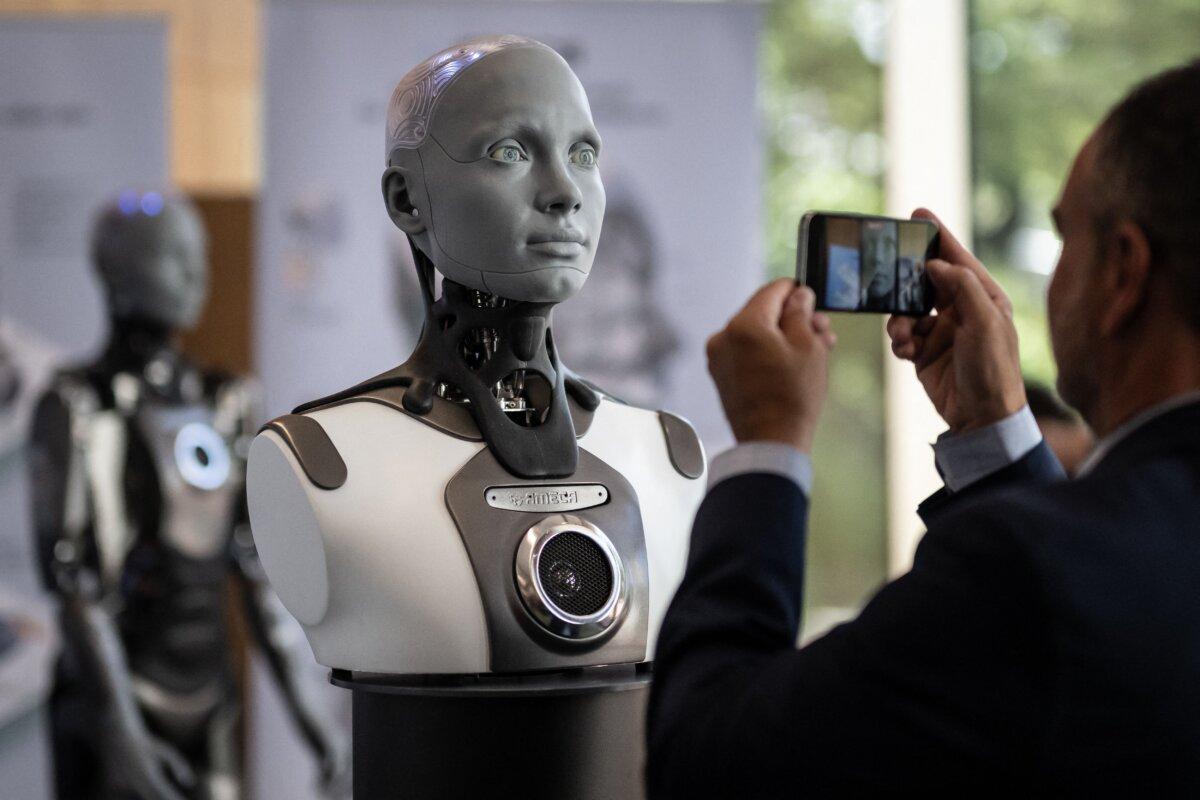
“We find that roughly two-thirds of current jobs are exposed to some degree of AI automation, and that generative AI could substitute up to one-fourth of current work,” it said. “Extrapolating our estimates globally suggests that generative AI could expose the equivalent of 300 mn full-time jobs to automation.”
Today’s generation of workers has also expressed concern about AI taking their jobs.
AI, meanwhile, is beginning to play a sizable role in the office landscape as recent research indicates that many workers are incorporating the technology into their day-to-day office tasks.
The Gallup study revealed that 40 percent of U.S. employees have engaged with AI work, up from 21 percent in 2023.
But while efficiency and productivity are the key drivers behind companies’ investments in AI, industry experts say inherent risks are beginning to emerge.