A shortage of memory chips for smartphones due to chip manufacturers shifting priorities to support the artificial intelligence (AI) boom led to the lowest level of global smartphone shipments in the past 13 years, a new report stated.
Shipments of smartphones in the second quarter fell 11 percent year over year, noted Counterpoint Research’s preliminary market monitor report released on July 13.
With prices for smartphone DRAM (working memory) and NAND (storage memory) continuing to rise as chipmakers prioritize AI data center customers over consumer electronics, smartphone manufacturers have been forced to pass on higher costs to customers, Counterpoint said.
Price hikes have been especially prominent in entry- and mid-tier devices, which account for the majority of smartphones sold worldwide, said Shilpi Jain, Counterpoint senior analyst.
“The global memory crisis has now overtaken every other factor as the single biggest drag on the smartphone industry,” Jain said.
“What started as a components issue last year is now a full-blown demand issue.”
Electronics manufacturers have responded to higher memory prices in a variety of ways, Jain added.
Some have bumped up prices and accepted thinner margins, while others have extended the lifecycle of older smartphones and used promotions to attract customers.
Others are delaying new product launches and pulling back on production, she noted.
Ongoing geopolitical tensions in the Middle East also led to increased shipping costs, further squeezing budget-conscious buyers.
“This coincided with a broader macro squeeze, slower global growth, higher inflation, and record-low consumer sentiment, which hit price-sensitive buyers the hardest,” Jain said.
In June, Apple announced it was raising prices on a range of its popular electronic devices, including tablets, speakers, and laptop computers.
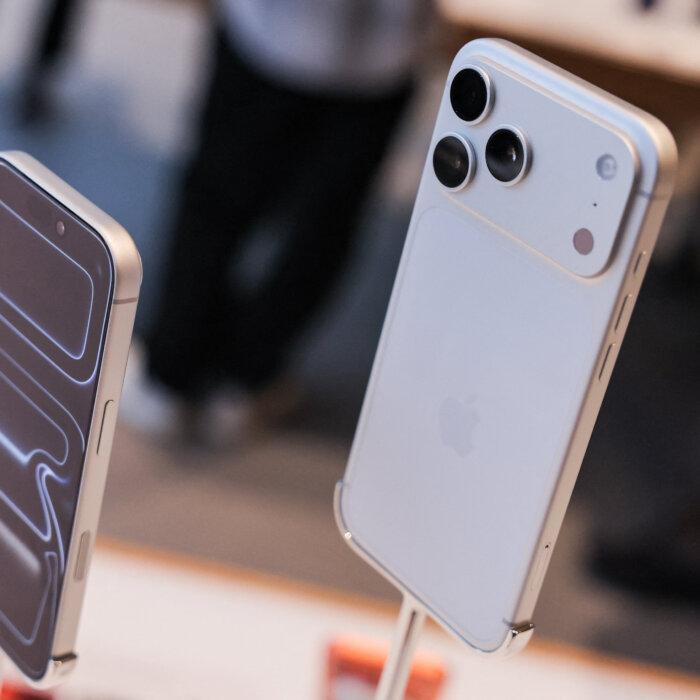
Apple did not announce any price changes to its smartphones, however. Meanwhile, iPhone shipments grew 3 percent year over year in the second quarter while its market share climbed to a record 20 percent, Counterpoint’s senior analyst said.
Apple reported iPhone net sales totaled nearly $57 billion for its second quarter, ended March 31.
Samsung, meanwhile, reclaimed the top spot among smartphone manufacturers with a 24 percent market share.
Shipment growth was buoyed by aggressive summertime promotions and strong sales of its flagship Galaxy S26 Ultra, whose privacy display and AI features helped drive the South Korean smartphone manufacturer’s overall growth in the second quarter, Counterpoint said.
On April 30, Samsung reported first-quarter sales of about $25.4 billion for its mobile division.
Budget Chinese smartphone manufacturers Xiaomi, OPPO, and vivo each had double-digit declines in quarterly shipments due to rising memory costs and subsequent market volatility among entry- and mid-tier devices.
Outside the leading five manufacturers by market share, Google (16 percent) and Huawei (6 percent) each realized shipment volume increases in the quarter.
Full-year global smartphone shipments are projected to decline 14 percent in 2026 as the global memory shortage continues to hamper production, Counterpoint’s Jain stated.
“[Manufacturers] are likely to keep prioritizing value over volume, trimming low-margin models, pushing configuration and storage-tier adjustments, and leaning further into refurbished and previous-generation devices to retain budget-conscious buyers,” Jain said.