“‘Made in the USA’ is not just a slogan—it’s a sign that a product connects us to the workers and businesses that make America great,” said FTC chairman Andrew N. Ferguson. “Consumers want to have confidence that when they buy something labeled ‘Made in the USA’ they are actually supporting American workers and the American economy. Companies that falsely claim their products are ‘Made in the USA’ can expect to hear from the FTC.”
As such, when a seller makes a claim that their product is “Made in the USA” or that it is of domestic origin, the item must be “all or virtually all” manufactured in the country.
In its letter to Americana Liberty, the FTC said while the company advertises its flagpoles as “American Made” and “Made in the USA,” complaints reviewed by FTC staff suggested the item could be “wholly imported.”
The agency made similar allegations regarding footwear products sold by Oak Street Manufacturing—products such as football shoulder pads and accessories sold by Pro Sports Group; and adult diapers, wipes, and other incontinence personal care products sold by Big Mountain Paper—that these products may either be wholly imported or contain “significant imported content.”
The agency warned the sellers that unless they can “adequately substantiate” that products are made in the United States, they will be held liable for violating the FTC Act and the MUSA Labeling Rule.
The FTC asked sellers to get in touch with officials within five business days to discuss their compliance with the FTC Act and the MUSA Labeling Rule.
In an emailed statement to The Epoch Times, a representative from Pro Sports Group said the company’s Custom Football Shoulder Pad Line is made in Jacksonville, Florida, with “American made materials.”
“We have provided the FTC the necessary proof and we are waiting to hear back. We do sell a Stock Standard Line that is imported and we do not advertise that as American made. These comply with the federal import rules regarding labeling for origin,” said the representative, adding that the company has welcomed the FTC to tour its production facility.
“Our plastic comes from NH, foam comes from TX and PA, and other materials come from FL, CA, CT, OH and MA. We are proud of the fact that our Custom Line is Made in the USA.”
Oak Street Bootmakers founder George Vlagos said the company is “happy to answer” any questions from the FTC to ensure it fulfills the compliance requirements.
“Since our founding in 2010, we have proudly showcased skilled American labor and the finest domestic materials. We remain ever committed to traditional shoemaking and the customers we serve,” he said.
Meanwhile, a Walmart spokesperson said the company operates an online marketplace allowing independent sellers to list their items, as do many other retailers.
“We have zero tolerance for noncompliant products from third-party sellers. When we identify non-compliant items, we take action and have these products removed.”
Boosting Made in America
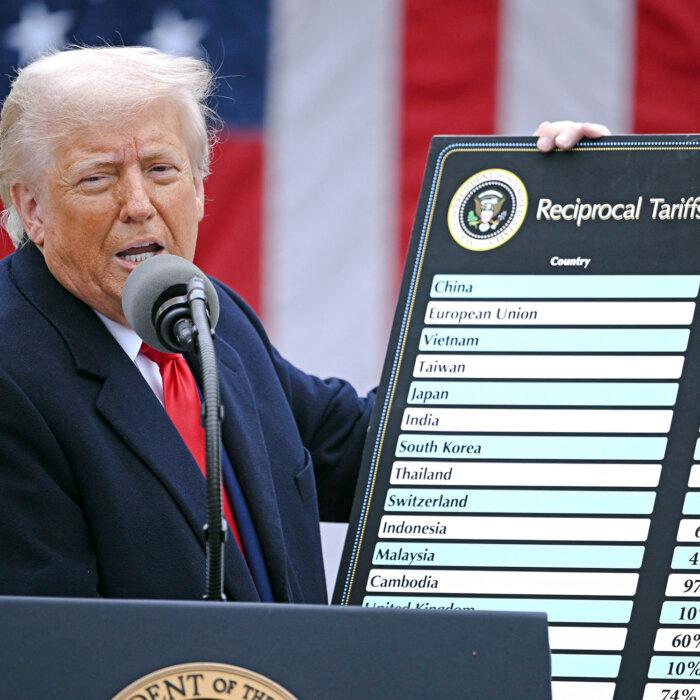
The FTC’s crackdown against fake American-made labeled goods follows the Trump administration’s push to boost manufacturing in the United States.“Large and persistent annual U.S. goods trade deficits have led to the hollowing out of our manufacturing base,” said the Fact Sheet.
“In 2023, U.S. manufacturing output as a share of global manufacturing output was 17.4 percent, down from 28.4 percent in 2001.” Between 1997 and 2004, the United States “lost around 5 million manufacturing jobs and experienced one of the largest drops in manufacturing employment in history.”
“President Trump welcomes the business of our trading partners on American soil. As these countries are aware, there will be no tariff if they decide to build or manufacture products in our country,” it said.
“President Trump has committed that the United States will do everything possible to get approvals quickly, professionally, and routinely to bring back manufacturing jobs for Americans.”