The Federal Reserve’s final policy meeting of the year is expected to end with an interest rate cut, but all eyes will be on Federal Reserve Chairman Jerome Powell’s outlook for 2026.
Monetary policymakers will gather for their Dec. 9—10 Federal Open Market Committee meeting, where they will decide on the benchmark federal funds rate and provide their outlook for next year.
If the rate-setting committee follows through on a cut, it would represent the third consecutive reduction to the policy rate, suggesting that the central bank is entrenched in an easing cycle.
Despite the increasing odds of a cut, policymakers have expressed diverging opinions on the path of monetary policy and current economic conditions.
Leading up to the December meeting, several officials have been vocal in supporting the continued lowering of interest rates in response to a deteriorating labor market. Others are hesitant about proceeding with additional cuts amid elevated sticky inflation.


Minutes from the last meeting also highlighted a chorus of dissenting views.
“The path to this decision has been one of the more intriguing ones of the year,” Jay Woods, chief market strategist at Freedom Capital Markets, said in a note emailed to The Epoch Times.
Based on futures market data, traders are not accustomed to this kind of discourse. Last month, investor sentiment shifted from 70 percent odds of no move to 90 percent odds of a cut.
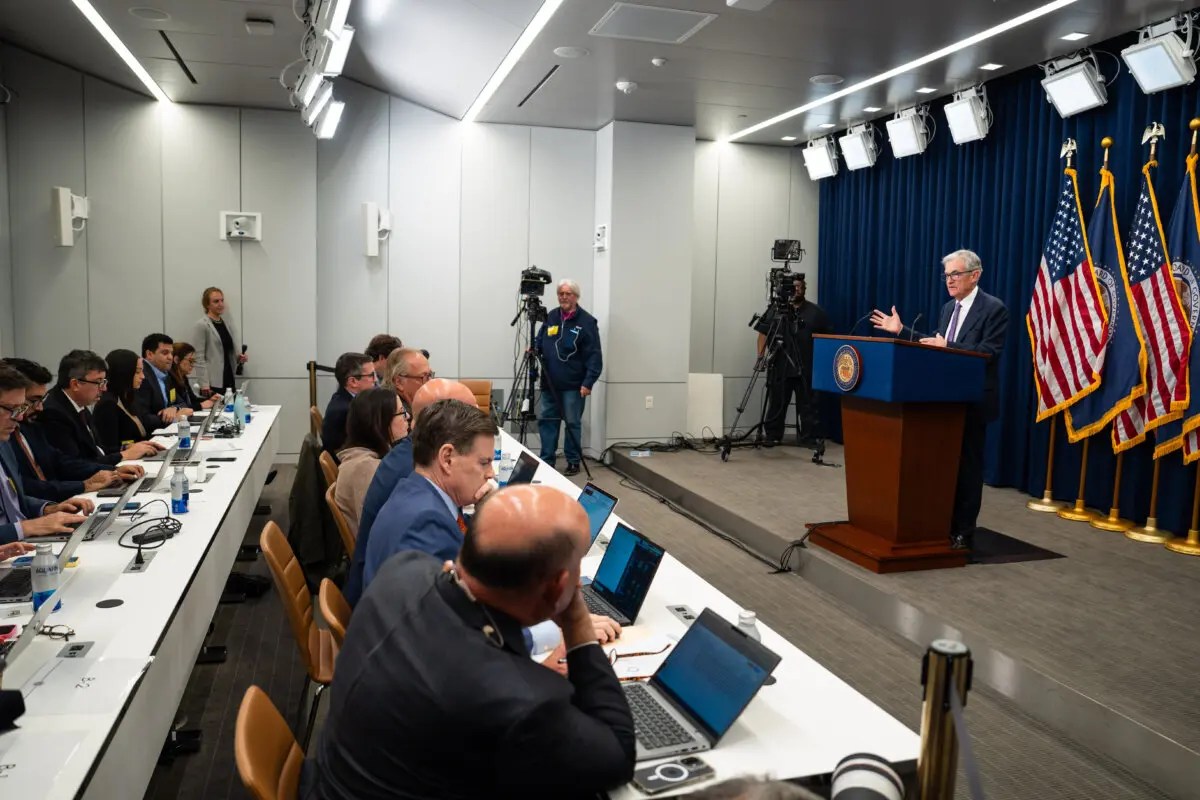
With a December rate cut fully priced in, investors will be paying close attention to Powell’s post-meeting press conference for any clues on what is next.
“For the most dovish fans out there, it may be tough for him to set the table for another cut going forward; the key is that he doesn’t rule it out entirely,” Woods said.
Scanning the Dots
The Summary of Economic Projections—a quarterly survey of officials’ expectations for policy and the broader economy—will also be released at the end of the Dec. 10 meeting.The dot-plot, a visual representation of each committee member’s forecast for the federal funds rate over the next few years, could serve as a window for where monetary policy might traverse throughout 2026.
Some market watchers are not placing too much weight on officials’ forecasts.
“Unlike the October meeting, which benefited from a just-in-time CPI report, the Federal Reserve will now have to make its decision within an unprecedented data vacuum,” Stephen Kates, a financial analyst at Bankrate, said in a statement to The Epoch Times. “The absence of recent inflation data leaves the Federal Reserve operating with limited visibility, while alternative labor indicators and political pressure are steering the committee toward a more accommodative policy stance.”
A flurry of key economic figures, including the November jobs report and the November consumer price index, will not be released until after this week’s meeting.
“What do you do if you’re driving in the fog? You slow down,” Powell said.
“There’s a possibility that it would make sense to be more cautious about moving. I’m not committing to that, I’m just saying it’s certainly a possibility that you would say, ‘We really can’t see, so let’s slow down.’”
The previous Summary of Economic Projections, released in September, revealed just one quarter-point rate cut in 2026.
Traders are pricing in two to three 25-basis-point reductions, reflecting a further easing of employment conditions and softer inflation trends.
As for the labor market, the numbers have been mixed.
Ultimately, officials will have differing views of the data and policy decisions.
“This has become the new normal this year. In fact, last meeting we had two—in different directions. We get a true pulse of the room and lack of uniformity as to the future path of rates,” Woods added.