The Federal Reserve opened its two-day policy meeting on Mar. 17, and Wall Street overwhelmingly expects the central bank to leave interest rates unchanged.
At the January meeting of the policy-making Federal Open Market Committee, Fed officials left the benchmark federal funds rate—a policy rate that influences borrowing costs for businesses and households—unchanged at a range of 3.50–3.75 percent.
Officials likely will wrestle with the economic fallout of the war in Iran, along with other threats to the institution’s dual mandate of maximum employment and price stability.
Prior to the conflict in Tehran, the primary discussion among policymakers was how far away the Fed was from the neutral rate.
The neutral rate is the level at which policy is neither restrictive nor stimulative for the economy.

Some officials argue that rates should be lowered to support the labor market, while others emphasize keeping policy steady until there is clearer evidence that inflation is returning to the Fed’s 2 percent goal.
The Iran Effect
A growing chorus of policymakers has expressed concern that the conflict in Tehran will cloud the outlook, mainly the impact on global energy prices.Oil prices have bounced around as the conflict enters its third week.
A barrel of West Texas Intermediate—the U.S. benchmark for crude oil—surged to as high as $119 in intraday trading last week before falling to around $95 on the New York Mercantile Exchange.
Appearing at a Bloomberg event earlier this month, Neel Kashkari, president of the Federal Reserve Bank of Minneapolis, questioned whether the situation would look more like the early days of the Ukraine–Russia conflict in February 2022 or the Hamas terrorist attack on Israel in October 2023.
“And that’s going to have an effect on monetary policy,” Kashkari stated.
Following Moscow’s invasion of Ukraine, oil prices rocketed past $100 per barrel in 2022. However, Middle East strife in the past few years has had a short-lived impact on international energy markets.
The effects on inflation and the broader economic climate may be observed incrementally, especially the longer the war drags on.
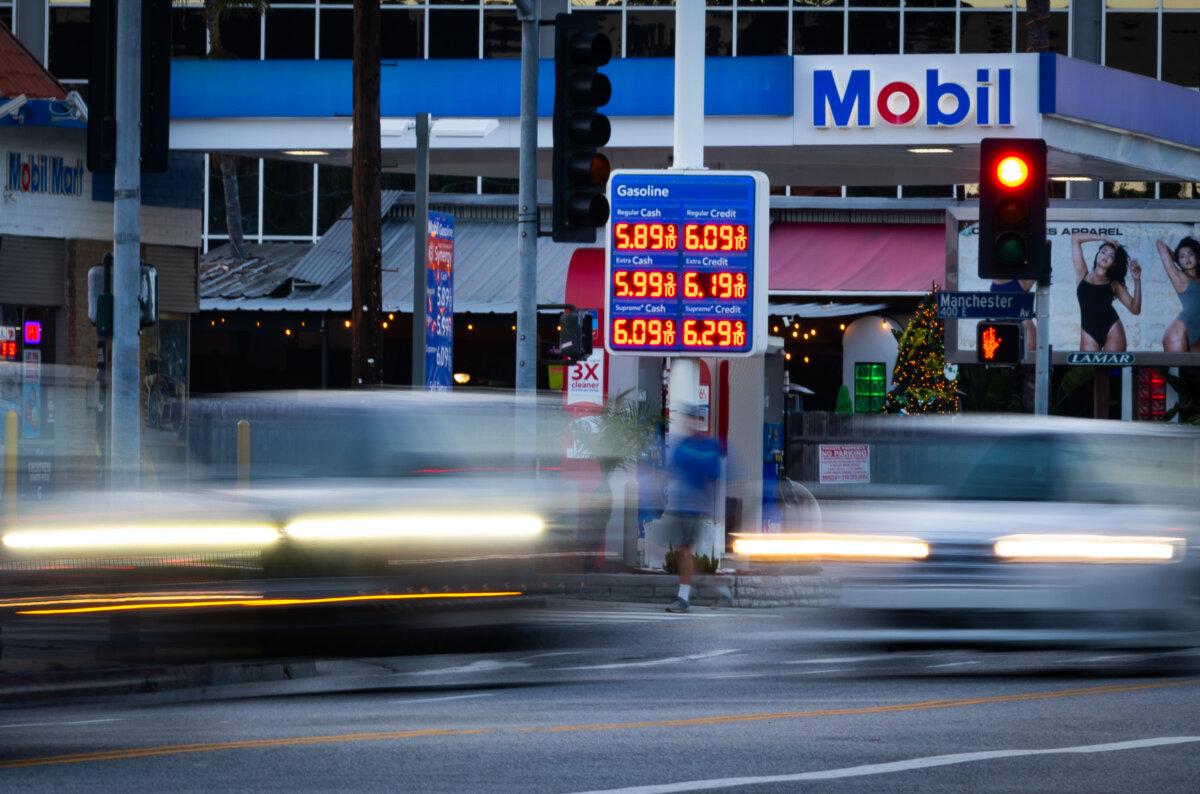
Gasoline prices have advanced substantially this month, with the national average for a gallon of gasoline reaching almost $3.72 as of March 16, according to the American Automobile Association.
Putting all these factors together suggests a Fed with little room to loosen policy, says Justin Bergner, portfolio manager at Gabelli Funds.
Economic Risks
Talk of 1970s-style stagflation—an environment of high inflation, anemic growth, and rising unemployment—has resurfaced recently.Chicago Fed President Austan Goolsbee, in a March 6 interview with The Wall Street Journal, suggested that a “stagflationary environment that’s as uncomfortable as any” could be nearing.
Goolsbee said it is important to bring inflation back to its 2 percent target. “The longer you go with the inflation rate well above the target, the more dangerous it is,” he said.
“The reality is that if the labor market begins to contract, other economic metrics will begin to decline,” Tom Essaye, president and co-founder of the Sevens Research Report, said in a note emailed to The Epoch Times.
“The economic data has started to point towards stagflation and that’s combining with intense energy market volatility to increase stagflation fears.”
Others say that the U.S. economy is more insulated from oil price shocks.
“Historically, these ‘events’ have been short-lived,” Nancy Tengler, CEO and CIO at Laffer Tengler Investments, said in a note emailed to The Epoch Times. “As soon as ships sail through the Hormuz, we think oil prices will melt down.”
Energy now accounts for roughly half the share of GDP it did in the 1970s and represents a far smaller slice of household budgets than it once did, she noted. Factoring in total energy costs, the average U.S. household devotes less than 3 percent of its budget to that category.
The administration also believes that oil prices will plummet as traffic in the Strait of Hormuz—a critical global chokepoint for oil and gas—returns to normal. Once this happens, flows will surge, weighing on prices.
U.S. officials have employed various measures to stabilize energy markets in the outbreak of war, including offering guaranteed political risk insurance and tapping into emergency reserves.
Until then, the Fed is anticipated to remain cautious about following through on rate actions.
President Donald Trump disagrees.
In a March 12 Truth Social post, Trump urged Fed Chair Jerome Powell to cut rates right away.
Central Bank Independence
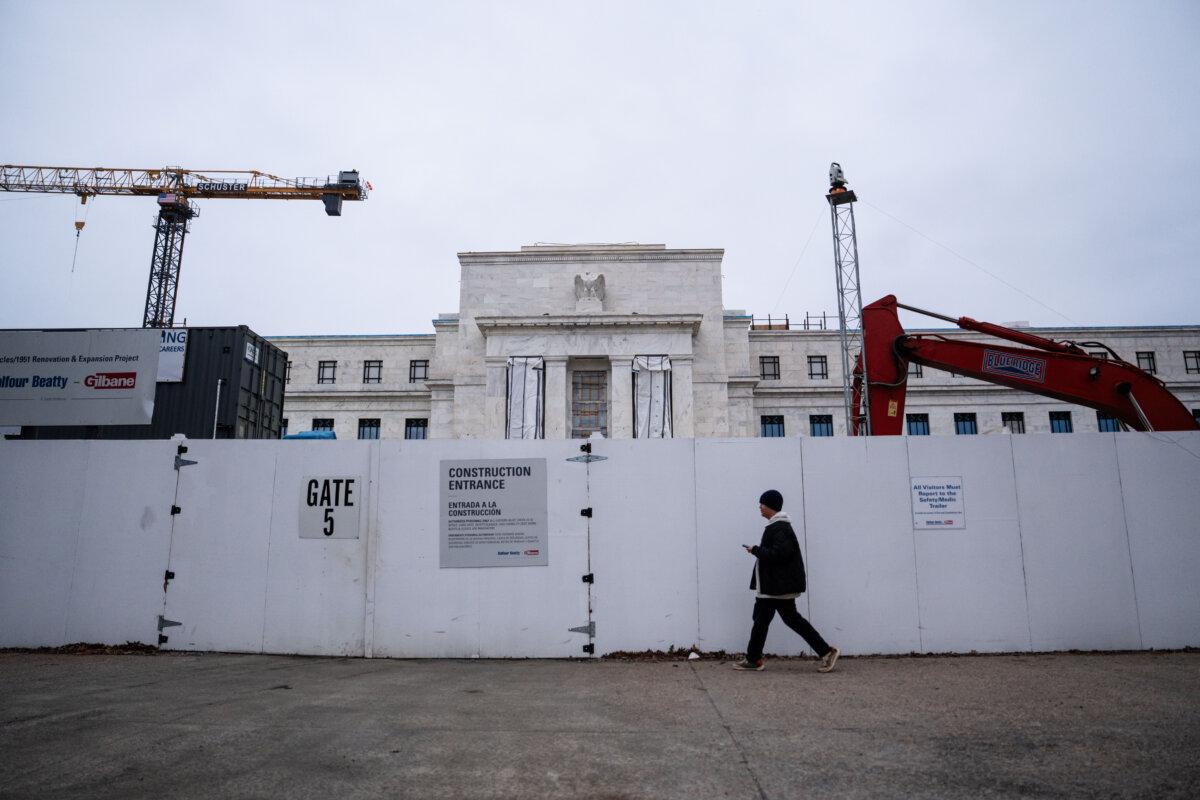
The Federal Reserve’s independence was thrust back into the spotlight when a federal judge quashed the Department of Justice’s efforts to subpoena Powell.Powell said in January that the Department of Justice had served the Fed with grand jury subpoenas related to his June 2025 testimony about renovations to the central bank’s headquarters.
In a ruling released on March 13, Judge James Boasberg stated that prosecutor Jeanine Pirro provided “no evidence” to justify her probe.
“A mountain of evidence suggests that the Government served these subpoenas on the Board to pressure its Chair into voting for lower interest rates or resigning,” Boasberg wrote in a court filing.
The prosecutor later confirmed that she would appeal the decision, arguing that the chief judge on the U.S. District Court for Washington, D.C. had “neutered” her ability to investigate the case.
“This process has been arbitrarily undermined by an activist judge,” she told reporters. “Jerome Powell today is now bathed in immunity.”
According to the Federal Reserve’s Office of the Inspector General, the increase reflected higher labor and material costs, the discovery of asbestos and soil contamination, and extended construction schedules.
Powell’s tenure as head of the Federal Reserve is winding down. His term will be completed in May, but his role at the central bank may not be over. He can still serve on the Fed’s board of governors until 2028.
In the meantime, Washington will consider the president’s nomination of Kevin Warsh.
Some lawmakers have requested that the Senate Banking Committee postpone hearings until the Justice Department’s case is resolved. In addition, Sen. Thom Tillis (R-N.C.) reiterated that he will oppose Warsh’s nomination until Pirro “moves on.”
“Appealing the ruling will only delay the confirmation of Kevin Warsh as the next Fed Chair,” Tillis said in a March 13 statement on X.
The Federal Reserve declined to comment on the judge’s ruling.