A key measure of the Federal Reserve’s money supply reached an all-time high in August, new central bank data show.
The U.S. money supply has increased substantially since the 2008 global financial crisis, when the Federal Reserve implemented three rounds of quantitative easing—a large-scale asset purchasing program. However, the stock of money has taken off like a rocket ship since the onset of the coronavirus pandemic, when it soared by approximately $5 trillion in two years.
Although the M2 money supply started contracting for the first time on record during the central bank’s tightening efforts in 2022 and 2023, it started climbing at a notable pace last year. The latest trend reflects the Fed’s rate cuts in late 2024, Treasury debt issuance, and shifts in bank deposits.
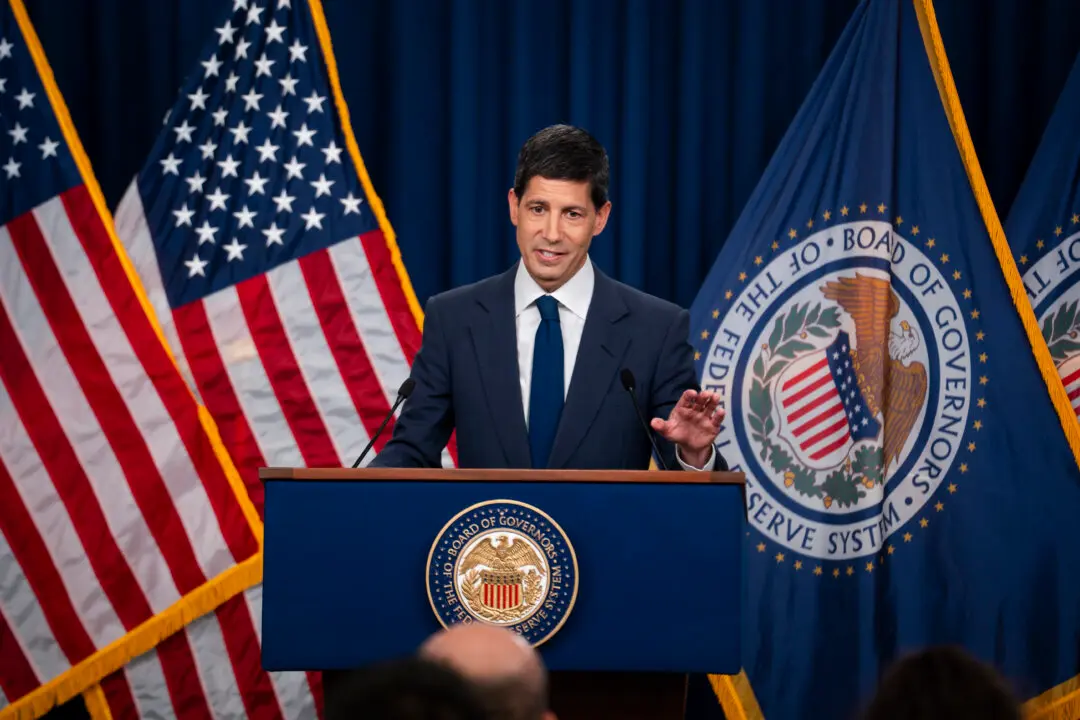
In September 2024, the Federal Reserve reduced the benchmark policy rate for the first time since the onset of the coronavirus pandemic, initiating the easing cycle with a substantial half-point cut. Monetary policymakers followed through with two more quarter-point rate cuts before hitting the pause button until this month’s Federal Open Market Committee (FOMC) meeting.
Since the end of 2023, the Treasury Department has issued more than $19 trillion in gross debt, bringing the total outstanding Treasury debt pile to firmly above $29 trillion. The increase has been in response to the federal government’s managing enormous budget deficits and interest costs, and strong foreign demand amid global economic uncertainty.

Businesses and consumers have also taken advantage of elevated interest rates, particularly certificates of deposits (CDs) or term deposits, by parking more of their cash at banks.
The money supply plays a significant role in the institution’s dual mandate—maximizing employment and maintaining price stability—but it can also serve as a lagging indicator of inflation.
Following the Fed’s money supply injections, the U.S. economy has often grappled with periods of higher inflation.
In 2011, the annual headline inflation rate reached a peak of 3.8 percent as the central bank and the federal government began flooding the economy with liquidity.
This behavior was driven by the Fed’s policy of paying interest on reserves held at the central bank—a mechanism that establishes a floor for short-term interest rates and allows the Fed to effectively control the federal funds rate.
In 2022, meanwhile, inflation exceeded 9 percent following a surge in monetary and fiscal stimulus and relief measures, along with soaring energy costs.
Fed economists often refer to the “long and variable lag” in monetary policy, a phrase coined by eminent free market economist Milton Friedman. The debate is that it can take anywhere between six and 24 months for money supply expansion to have an impact on inflation.
Interest Rates Moving Forward
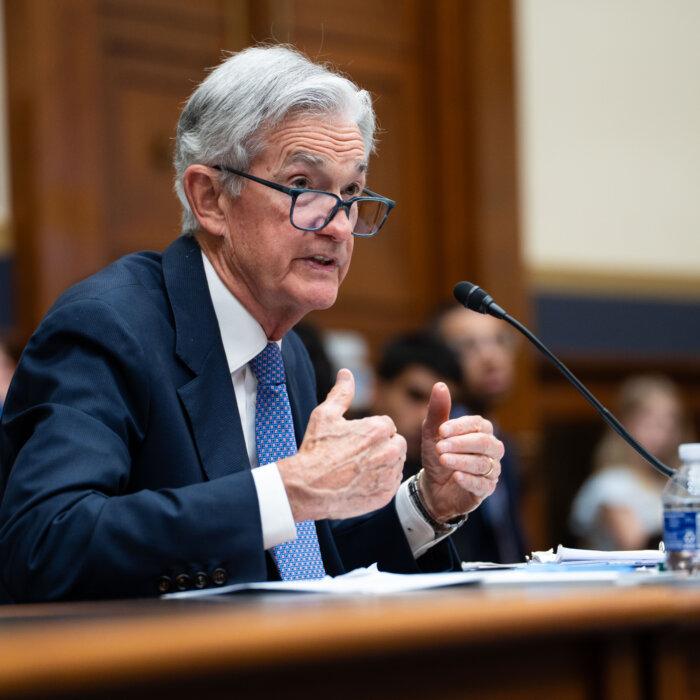
According to the Summary of Economic Projections—a periodic survey of policymakers’ expectations for interest rates and the broader economy—officials expect two more quarter-point interest rate cuts by the year’s end, and another reduction in 2026.Members of the Fed have espoused the need for caution, citing upside risks to inflation and downside risks to the labor market.
“On the inflation side right now, I continue to be worried about where we are from an inflation perspective,” she said on Sept. 29. “We have been missing our mandate on the inflation side, our objective of 2 percent, for more than 4 1/2 years, and I continue to see that we have pressure in inflation both in the headline, in the core, and particularly, where I am worried about it, is I’m seeing it in the services.”
Looking ahead, the summary points to the annual inflation rate in the Fed’s preferred personal consumption expenditure price index rising to 3 percent this year and then steadily slowing to 2.6 percent in 2026 and 2.1 percent in 2027.
However, Fed Vice Chair for Supervision Michelle Bowman is worried about “a materially more fragile labor market.”
Bowman, appearing at the Kentucky Bankers Association Annual Convention on Sept. 23, said that employment conditions “could deteriorate more significantly in the coming months,” citing various data to support her concern.
The next two-day FOMC meeting is scheduled for Oct. 28 and 29.