Cook sued the president, which soon turned into a legal question surrounding central bank independence and executive power. The Supreme Court ruled that Cook, appointed by President Joe Biden, can remain in her position, with oral arguments scheduled for January.
In the meantime, she is examining monetary policy at a time when the institution is flying blind without key economic data from the U.S. government.
Appearing at the Brookings Institution in Washington on Nov. 3, Cook confirmed that she is undecided on an interest rate cut at the December Federal Open Market Committee meeting.
“I viewed that decision as appropriate, because I believe that the downside risks to employment are greater than the upside risks to inflation. I view the latest reduction in the fed funds rate as another gradual step toward normalization,” she said.
Ultimately, she believes the U.S. economy remains intact but agrees that both sides of the dual mandate—maximum employment and price stability—face elevated risks.
Echoing Fed Chair Jerome Powell’s remarks, Cook noted that monetary policy is “not on a predetermined path.”
December Cut Not Guaranteed
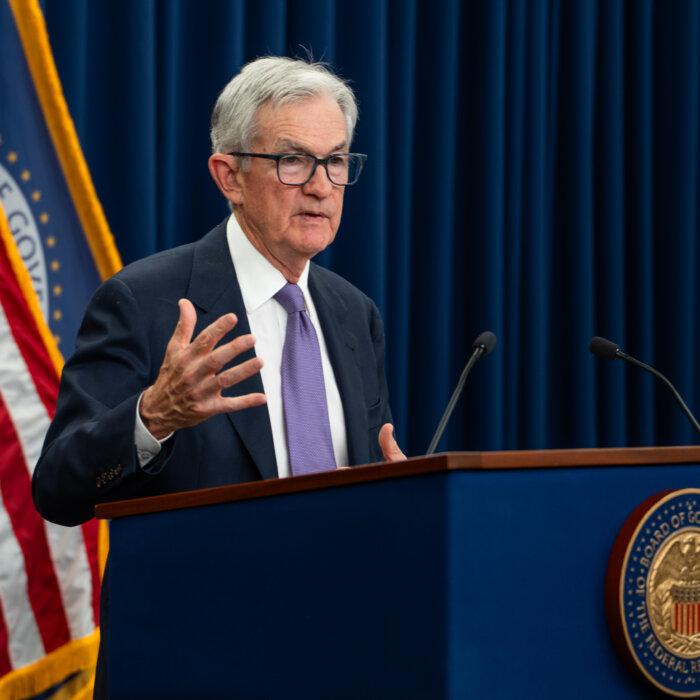
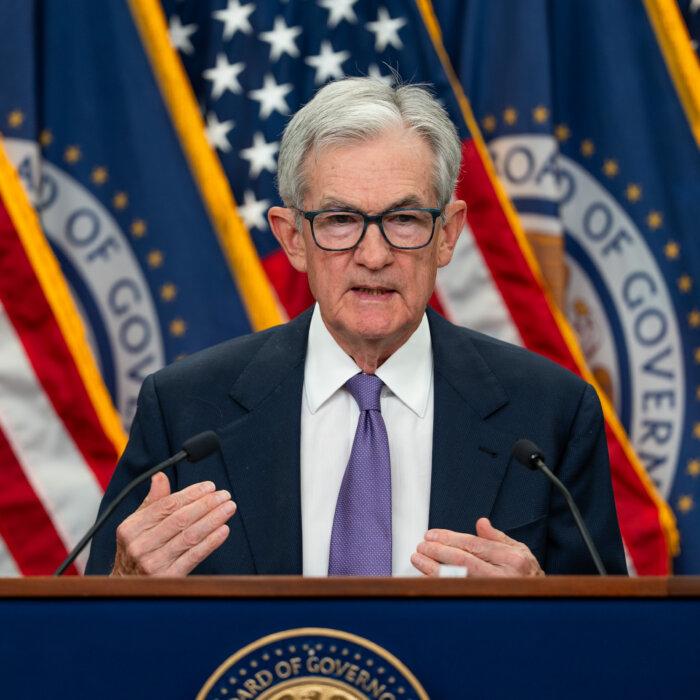
A rate cut next month “is not a foregone conclusion,” says Powell.Speaking to reporters at the Oct. 29 post-meeting press conference, the central bank chief stated that another quarter-point cut is not guaranteed, despite previous signals from monetary policymakers.
“In the committee’s discussions at this meeting, there were strongly differing views about how to proceed in December,” Powell said. “A further reduction in the policy rate at the December meeting is not a forgone conclusion—far from it. Policy is not on a preset course.”
Investors are still betting that the Fed will take the next step and implement a third consecutive rate cut.
The futures market indicates a 67 percent chance of a rate cut, which would bring the new target range to 3.5 percent to 3.75 percent, according to the CME FedWatch Tool.
Chicago Fed President Austan Goolsbee says he has a higher bar for cutting interest rates in December than he had during the past two meetings.
He cited inflation as a key risk.
“I am nervous about the inflation side of the ledger, where you’ve seen inflation above the target for four and a half years, and it’s trending the wrong way,” Goolsbee said.
But Fed Governor Stephen Miran, a Trump appointee, does not see the case for leaving interest rates restrictive—neither stimulative nor accommodative—for longer.

Data Disruption
With the government shutdown entering its fifth week, economic observers fear that disruptions to data collection and reporting will make it harder to gauge inflation and employment conditions. This has prompted economists and Fed officials to depend on alternative sources of data.“The staff at the Federal Reserve and I use a wide variety of data from administrative sources and various private-sector providers to continually evaluate the state of the economy in real time. That practice has become essential in recent weeks, given the lack of official releases,” Cook said.
As for employment conditions, there are numerous measures to assess the U.S. labor market.
The Fed will hold its next meeting on Dec. 9 and 10.