Fed Expected to Cut Interest Rates: What to Watch

Wall Street has penciled in a quarter-point cut, but some see a half point. And will the board witness its first triple dissent in nearly 40 years?
Fed Expected to Cut Interest Rates: What to Watch
The Federal Reserve in Washington on July 21, 2025. Madalina Kilroy/The Epoch Times
|Updated:
0:00

The Federal Reserve will complete one of the most highly anticipated two-day policy meetings of the year on Sept. 17.

Monetary policymakers will decide on interest rates and release an updated forecast for what is ahead at the central bank and in the broader economy.

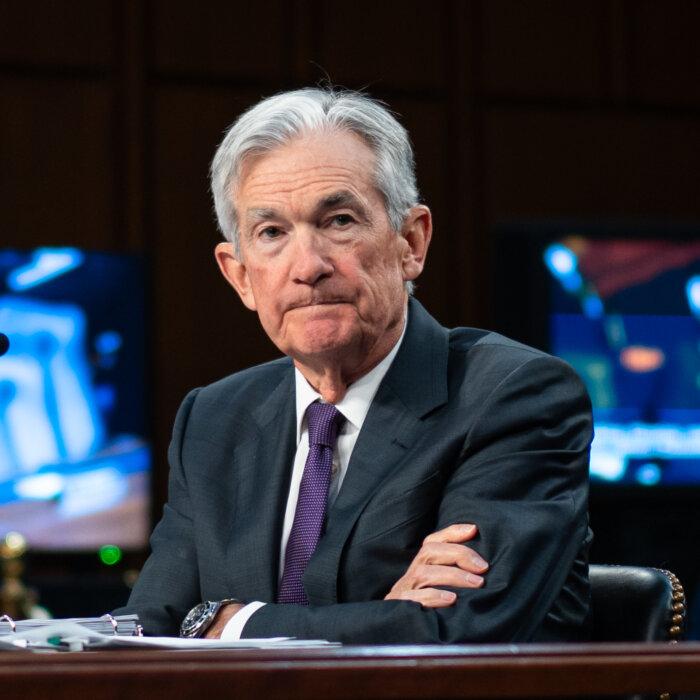
Fed Chair Jerome Powell will also hold his post-meeting press conference, offering insights on the institution’s decision-making and sharing his views on the central bank’s dual mandate—maximum employment and price stability.

Here is what to watch.

25 Basis Points

Since January, the benchmark federal funds rate—a key policy rate that influences borrowing costs for business and households—has remained in the target range of 4.25 percent to 4.5 percent.
For weeks, Wall Street has penciled in a quarter-point interest rate cut at the September Federal Open Market Committee (FOMC) policy meeting, according to data compiled by the CME FedWatch Tool.

“The Federal Reserve is about to start a fresh policy-easing cycle to counter the weakening U.S. jobs market—provided that inflation remains under control,” Ipek Ozkardeskaya, senior analyst at Swissquote Bank, said in a note emailed to The Epoch Times.

But not all market watchers are dismissing the possibility of a half-point reduction, especially after the latest batch of employment data.
“August labor market data has paved the way for a ‘catch-up’ 50 basis point rate cut at the September FOMC meeting, similar to what occurred at this time last year,” Standard Charter said in a Sept. 7 note to clients.

Two key central bank officials—Fed Governor Christopher Waller and Vice Chair for Supervision Michelle Bowman—have warned for months about deteriorating labor market conditions and the lag effect of monetary policy. While the futures market signals a minuscule chance of a jumbo half-point cut, akin to when the Fed launched its easing cycle in September 2024, experts argue that the likelihood is a modest and cautious 25-basis-point reduction.

Ultimately, the Fed’s decision to keep rates unchanged would suggest that Powell and his colleagues fear sticky inflation, according to Roan Capital Partners in a Sept. 16 note. A super-sized half-point cut would “indicate urgency on employment risks.”
By the end of the meeting, the Fed is expected to bring the target rate lower to a range of 4 percent to 4.25 percent.

Summary of Economic Projections

Officials will update the Summary of Economic Projections (SEP) and the so-called dot-plot.

The SEP is a periodic survey of officials’ expectations for interest rates and the broader economic landscape, including inflation, GDP, and the unemployment rate. The dot-plot, meanwhile, is a visual subset of the SEP, highlighting each meeting participant’s projections for the federal funds rate over time.

The last SEP, released in June, indicated two quarter-point rate cuts by the end of the year, with the median policy rate coming in at 3.9 percent. Additionally, median estimates for the unemployment rate and the personal consumption expenditure (PCE) annual inflation rate were 4.5 percent and 3 percent, respectively.

“The updated Summary of Economic Projections (SEP), or dot plot, could show median fed funds rates implying 75-100 bps of total 2025 easing, a dovish shift from June’s outlook,” Roan Capital Partners stated.

Looking ahead, investors anticipate the federal funds rate will settle at around 2 percent by the end of 2026.

Possible Triple Dissent

In July, the FOMC witnessed a double dissent for the first time in 30 years as Bowman and Waller supported a quarter-point interest rate cut.

Could Bowman and Waller dissent again and champion a half-point cut?
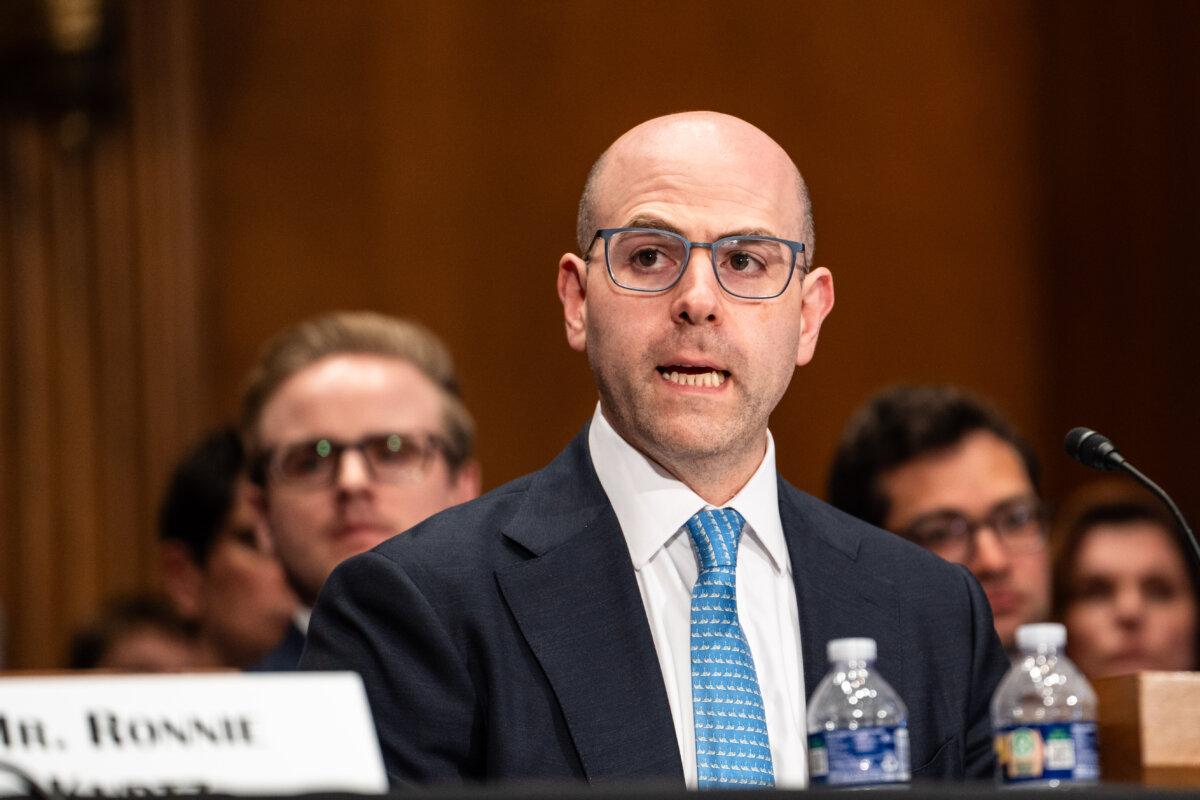
Stephen Miran, nominee for the Fed Board of Governors, testifies before the Committee on Banking, Housing, and Urban Affairs on Capitol Hill on Sept. 4, 2025. (Madalina Kilroy/The Epoch Times)
Stephen Miran, nominee for the Fed Board of Governors, testifies before the Committee on Banking, Housing, and Urban Affairs on Capitol Hill on Sept. 4, 2025. Madalina Kilroy/The Epoch Times
Speaking to CNBC’s “Squawk Box” in a Sept. 3 interview, Waller voiced support for multiple rate cuts over the next three to six months.

“When the labor market turns bad, it turns bad fast. So for me, I think we need to start cutting rates at the next meeting,” Waller said. “We don’t have to go into a lock sequence of steps. We can kind of see where things are going, because people are still worried about tariff inflation. I’m not, but everybody else is.”

While tariffs have begun to appear in the consumer inflation data, they have yet to have a material impact on aggregate prices. Tariff-sensitive items—apparel, new vehicles, or toys—have also sent mixed signals in the various inflation reports.

The other factor is the inclusion of Stephen Miran, the White House’s top economic adviser and President Donald Trump’s pick to replace the resigning Fed Governor Adriana Kugler.

The Senate confirmed Miran’s nomination to the Federal Reserve Board of Governors on Sept. 15. Miran was sworn in on Sept. 16 by Judge Elizabeth L. Branch of the U.S. Court of Appeals for the 11th Circuit.

Miran, whose term is set to expire in late January, has advocated for the Fed to lower interest rates amid little tariff-driven inflation.

In July, the Council of Economic Advisers published a report concluding that “the prices of imported goods have not only fallen this year, but also declined faster than overall goods prices since February.”

“These findings contradict claims that tariffs or tariff fears would lead to an acceleration of inflation,” the report stated.

With the possibility of a triple dissent, it would be the first time since June 1988, when officials were split on whether to maintain a tight monetary policy or loosen the constraints slightly.

Such a scenario would have a mixed reaction, says Torsten Slok, chief economist at Apollo Wealth Management.


“On the one hand, dissents can enhance the Fed’s credibility by promoting transparency,” Slok said in an Aug. 26 note. “On the other hand, frequent or widespread dissents can be perceived as a sign of internal division or weak leadership.”
Reuters contributed to this story.
Google LogoMark Us Preferred on Google
Andrew Moran
Andrew Moran
Author
Andrew Moran has been writing about business, economics, and finance for more than a decade. He is the author of "The War on Cash."