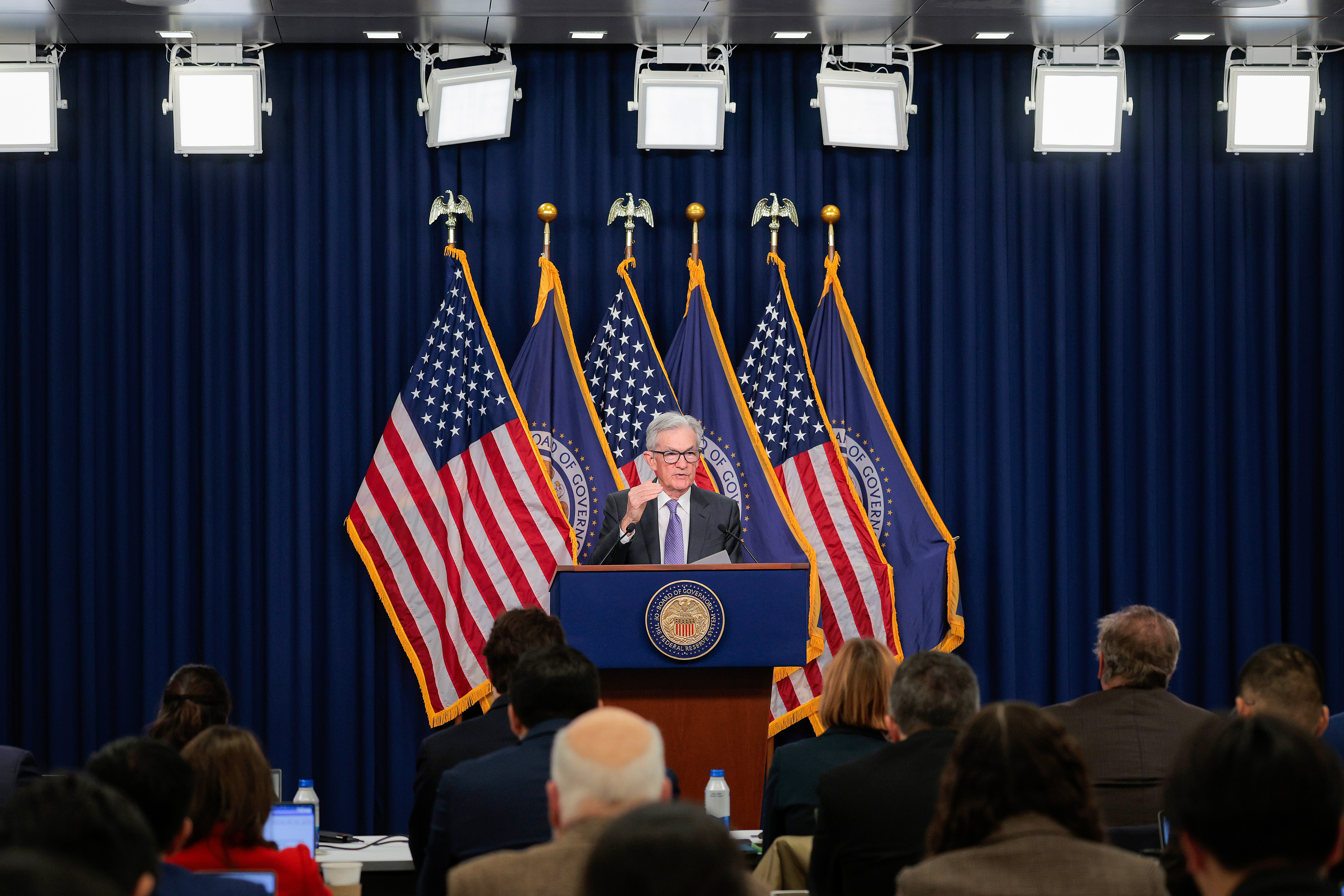

Central bankers voted 9–3 on Dec. 10 to lower the benchmark federal funds rate—a key policy rate that influences business, household, and government borrowing costs—by a quarter point.
The widely expected rate decision brought the new target range to 3.5 percent to 3.75 percent.
Euphoria on Wall Street
U.S. stocks cheered the outcome of the December Federal Open Market Committee meeting.The blue-chip Dow Jones Industrial Average rallied by almost 500 points, or more than 1 percent, to close above 48,000. The tech-heavy Nasdaq and the broader S&P 500 picked up 0.33 percent and 0.67 percent, respectively.
Like the divergence among monetary policymakers at the Fed, there is a gap between the central bank’s policy expectations and those of the markets. Although officials are forecasting one rate cut in 2026, traders are betting on at least two.

But investors may need to accept that the route to lower interest rates may be slower than expected, according to Chris Zaccarelli, chief investment officer at Northlight Asset Management.
“We’re not surprised to see near-term optimism in the markets given that the Fed continues to cut rates even though the economy is growing, however, we think the rose-colored glasses may come off once investors realize that the path to lower interest rates may take longer—or may not materialize at all to the extent that they believe it will,” Zaccarelli said in a note emailed to The Epoch Times.
With the Fed expecting stronger growth, lower inflation, and an intact labor market, Wall Street should not expect the first interest rate cut until the middle of spring, according to LPL Financial’s chief economist Jeffrey Roach.
“There is no risk-free path for monetary policy, but it seems the committee is banking on higher productivity, implying stronger growth despite softer job creation,” Roach said in a note emailed to The Epoch Times.
“Investors should expect the Fed to remain on hold in Q1, especially if the economy responds to the tailwinds from fiscal and policy support. The first cut next year may come in Q2.”
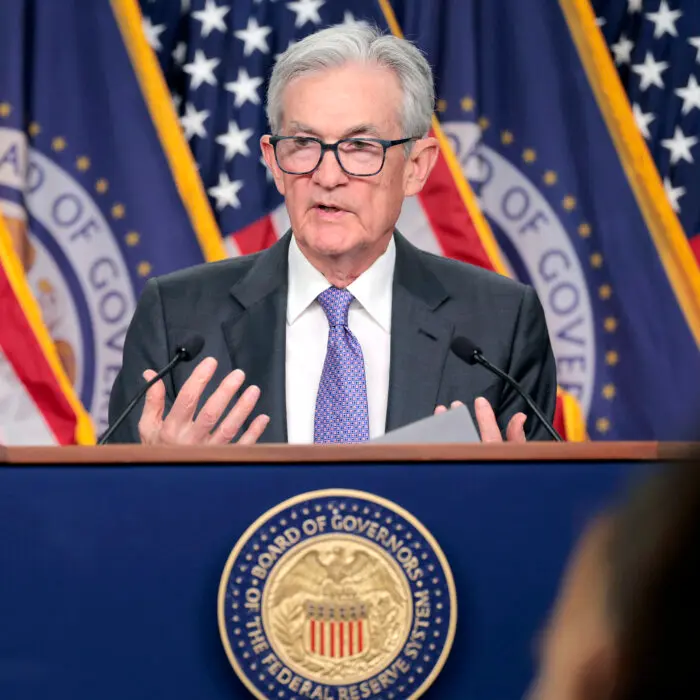
Still, with Fed Chairman Jerome Powell shrugging off the prospect of a rate hike, investors have been assured that interest rates can keep coming down, which is a boon for stocks.
U.S. stocks have often strengthened in periods when the Fed has been clearly committed to an easing path.
Mortgage Rates
The average interest rate for a 30-year fixed-rate mortgage is 6.19 percent, according to Freddie Mac’s Primary Mortgage Market Survey. This is almost half a percentage point lower than a year ago and below the 52-week average.
Jeff DerGurahian, loanDepot’s head economist and chief investment officer, said the Fed’s December policy decision will fuel lower mortgage rates.
“Mortgage rates and Treasury yields fell after the Fed cut short-term rates by 25 basis points at their final meeting of the year,” DerGurahian said in a note emailed to The Epoch Times.
“The announcement of asset purchases, beginning Dec. 12 with $40 billion in Treasury bill purchases, and a somewhat less hawkish tone in the post-meeting press conference helped fuel the rate improvement and pave the way for potentially lower mortgage rates ahead.”
Credit Markets
Borrowers could notice some modest relief across various lending tools.One of these is credit card interest rates, which fluctuate amid adjustments to the federal funds rate. As monetary policy continues to ease, average annual percentage rates for users could fall over the coming billing cycles.
Drivers might find better auto loan rates moving forward.
Auto loan rates vary by borrower profile and vehicle type, and they also move with broader market conditions. Lenders generally track the Fed’s policy rate, while the five-year Treasury yield serves as a key midterm benchmark. This yield has also edged up in December, topping 3.7 percent.
Dollars and Cents
Savers should expect lower returns on their deposits as interest rates decline.When the Fed cuts the federal funds rate, banks earn less on loans such as mortgages and commercial credit. To protect their margins, they usually trim the interest paid on deposits. Online banks and credit unions may remain more competitive, but their yields are likely to drift lower as well.