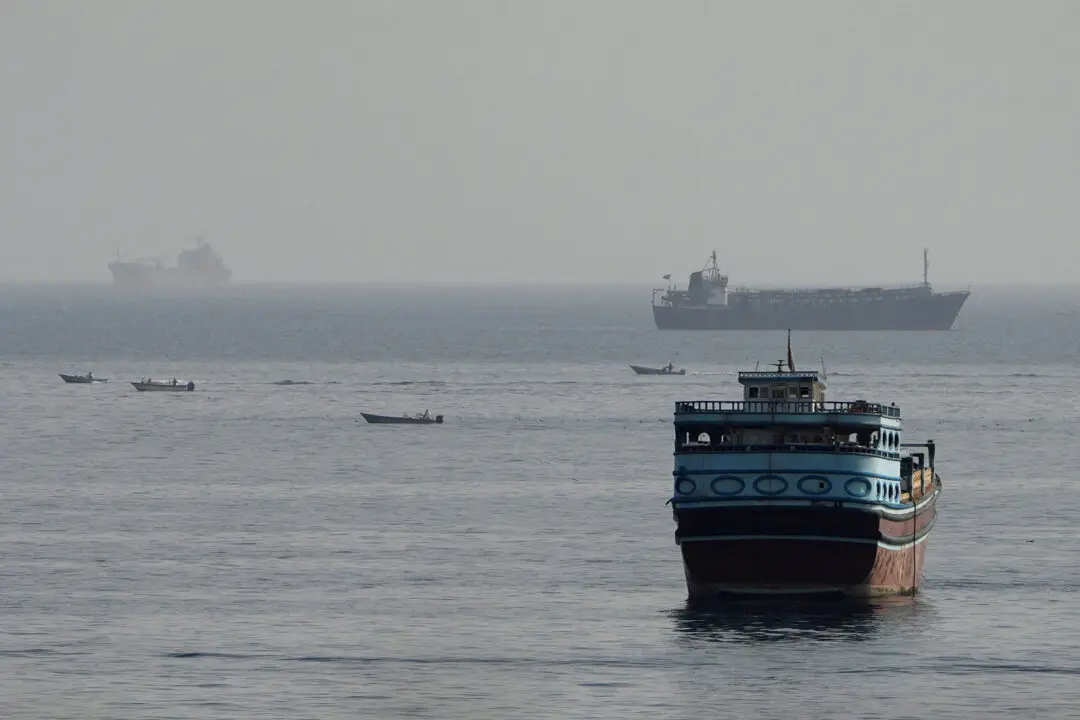
HOUSTON—U.S. Energy Secretary Chris Wright said the global economic shock fostered by Iran’s de facto closure of the Strait of Hormuz and attacks on neighboring Gulf state energy infrastructure is a temporary disruption that underscores the long-term strategic value in increasing energy production, especially oil and gas.
“Things are being done” now to stem skyrocketing fuel costs that will create a more resilient supply chain once the Iran war is resolved, Wright told S&P Global Vice Chairman Daniel Yergin on March 23 during an opening session of the 44th annual CERAWeek by S&P Global conference at the Americas Hilton-Houston.
“We’ve done some pragmatic solutions to take floating barrels that are waiting to unload in China and help them move into ports in other nations in Asia, to go into refineries,” Wright said, referring to the lifting of sanctions on Russian and Iranian crude on tankers at sea.
“These are millions” of barrels of oil being directed to resolve “a situation that’s temporary,” he said.
Global oil and gas prices are skyrocketing with Iran threatening to attack commercial shipping traffic through the 104-mile strait, where 20 percent of the world’s crude oil and liquefied natural gas leaves the Persian Gulf.
That loss of production has spurred dramatic increases in global market prices, especially for oil. Even nations that do not import petroleum from the Persian Gulf, such as the United States, are seeing spiking fuel costs because oil is traded internationally in a market often described as a bathtub with many spigots feeding into one drain.
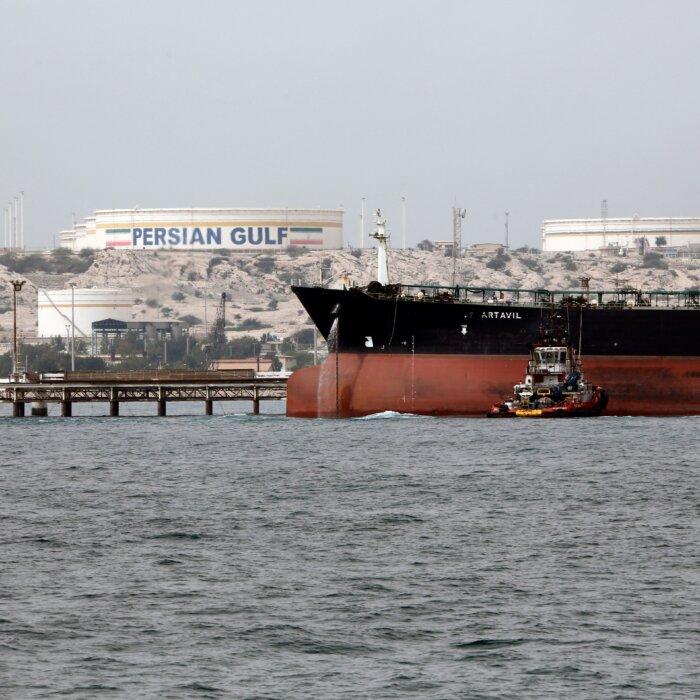
Wright said the Iran war has proven how critical it is for all of those spigots to be turned on when looking for alternate outlets to move oil to refineries rather than relying on potential chokeholds such as the Strait of Hormuz.
Until that production can increase and those workarounds are developed, it’s no surprise that fuel costs are up, he said, calling on producers, especially in the United States, to increase petroleum production.
“I mean, markets do markets,” Wright said. “Prices went up to send signals to everyone that could produce more, ‘Please, produce more.’”
He said fuel costs in the United States have not “risen high enough yet to drive meaningful demand destruction,” for domestic producers to invest in gearing up capacity, hiring more workers, and making other long-term commitments if the disruption is temporary, as the Trump administration assures.
But Wright said the demand for power, especially for the expanding electricity grid, will justify expansion, even after shipping traffic in the Strait of Hormuz is restored.
“Americans and energy entrepreneurs around the world are ingenious,” he said.
Wright said the Trump administration has taken short-term “pragmatic” actions to stymie skyrocketing fuel costs, including the release of a “million to a million-and-a-half barrels a day” from the nation’s Strategic Petroleum Reserve and “possibly close to 3 million barrels” a day soon.
That oil “started to flow ... on [March 20],” he said, noting that some had predicted it would take at least three weeks for Strategic Petroleum Reserve oil to hit the market.
And it’s a good deal for domestic producers and national security, Wright said.
“We’re actually engaging in swap contracts,” he said.
“For every barrel we release, we’re going to get back more than 1.2 barrels of oil that will go back into the reserve. ... So, at the end of this conflict, at the end of next year, we'll have meaningfully more oil in the [Strategic Petroleum Reserve] than we have today.”
Wright will participate in at least two other discussions during the five-day annual energy conference, attended by more than 10,000 industry experts, financial analysts, and innovators, including 1,620 corporate executives and 445 government officials from 89 countries.