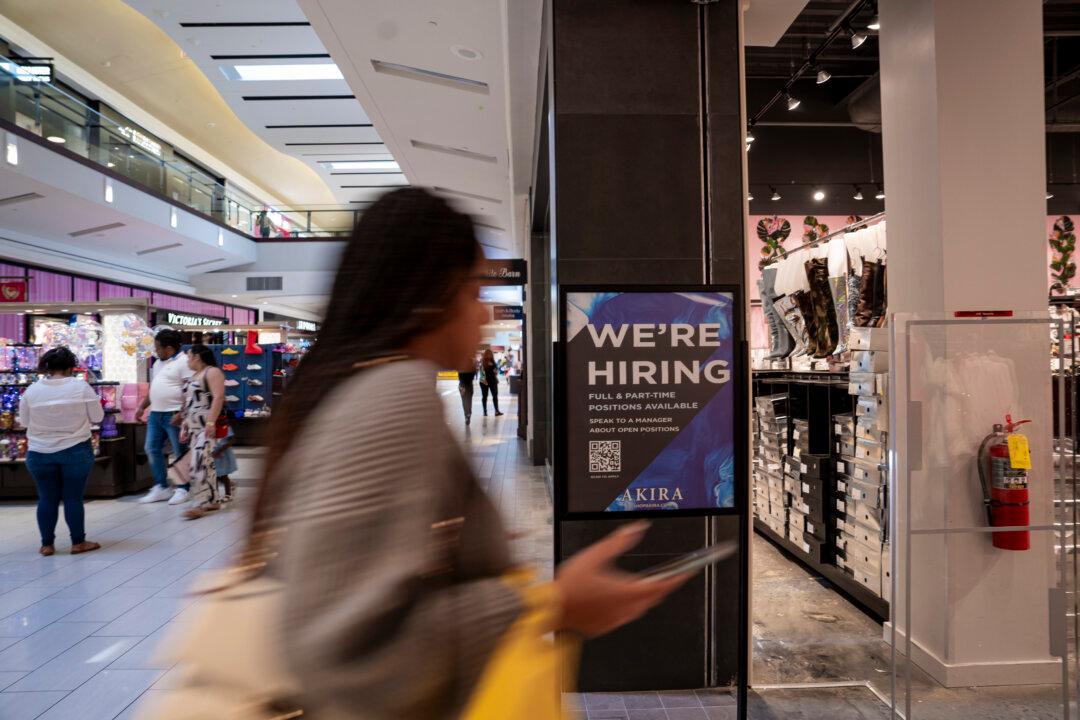
U.S. stocks rallied on June 6 to close out the trading week after a better-than-expected May jobs report.
The blue-chip Dow Jones Industrial Average surged by more than 500 points, or 1.2 percent. The Dow is now up by nearly 1 percent this year.
The tech-heavy Nasdaq Composite Index advanced by about 250 points, or 1.4 percent, and is up by more than 1 percent this year.
The broader S&P 500 climbed by nearly 70 points, or 1.15 percent, and topped 6,000. The index has risen by 2 percent this year.
Following the brutal April selloff, the leading benchmark averages are now in positive territory in 2025.
Investors cheered the latest employment data, signaling a robust labor market amid a volatile economic climate.
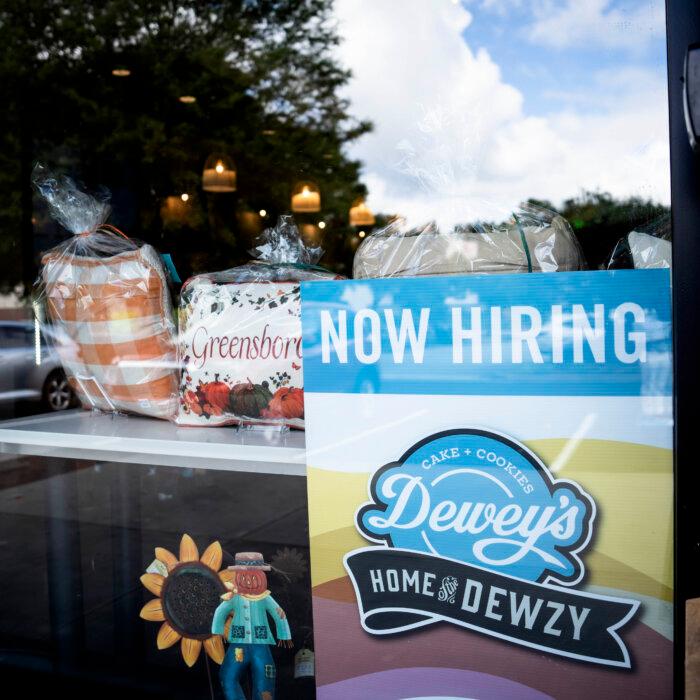
Economists had anticipated the country would add 130,000 positions last month.
“The all-important May jobs report came in reasonably decent,” Natalia Lojevsky, a managing director at CIFC Asset Management, said in a note emailed to The Epoch Times.
Revisions, which totaled 95,000 in March and April, signaled a slowing trend in the U.S. labor market, Lojevsky noted.
“However, the May report also showed that it is not happening quickly,” she said. “This is a relief to investors after a week full of mixed data.”
A rebound in Tesla Motors’ shares also supported Friday’s market move.
The U.S. Treasury market was also swimming in a sea of green ink, with the benchmark 10-year yield climbing to 4.48 percent. The 2-year yield topped 4 percent, and the 30-year reached 4.94 percent.
Next Stop: Federal Reserve
Despite the solid May jobs numbers, the president urged the Federal Reserve to cut interest rates by 1 percent.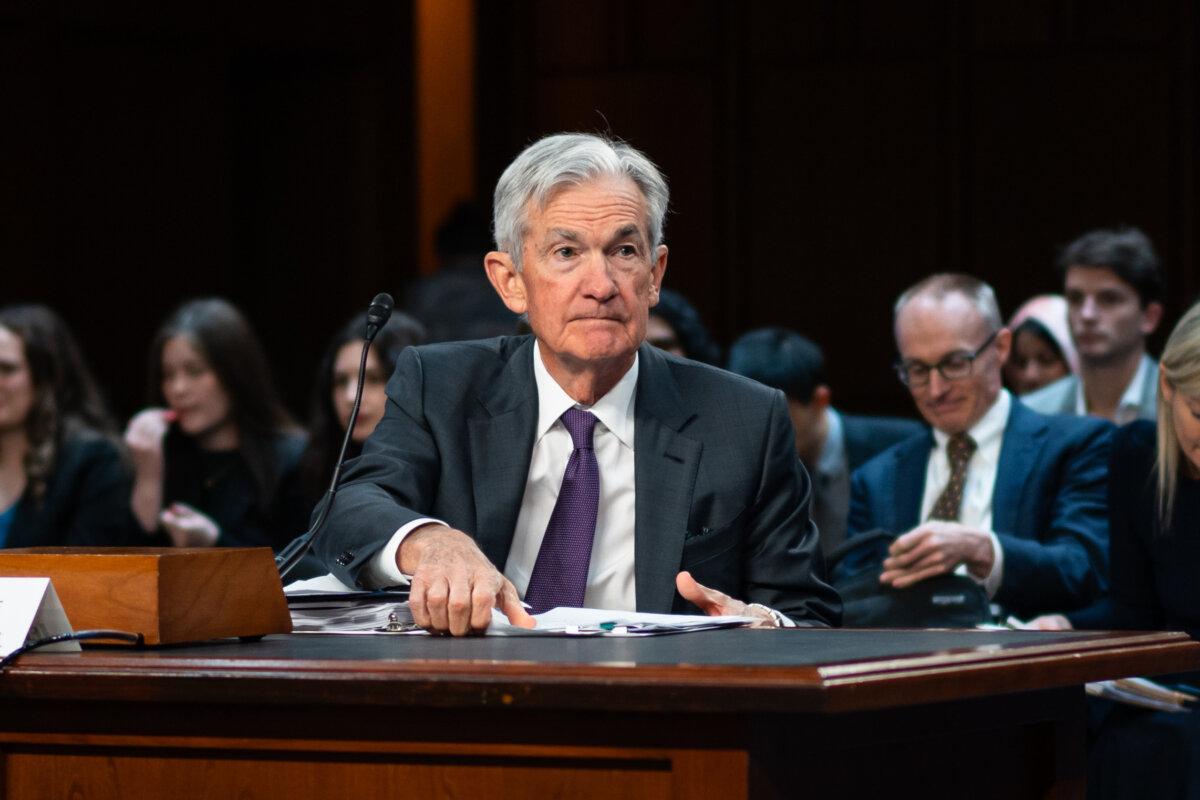
“There is virtually no inflation (anymore), but if it should come back, RAISE ‘RATE’ TO COUNTER,” Trump said. “ Very Simple!!! He is costing our Country a fortune. Borrowing costs should be MUCH LOWER!!!”
Jamie Cox, the managing partner for Harris Financial Group, believes the May jobs report will prompt the Fed to revert to “cutting mode in July.”
“The labor market is strong, but cooling,” Cox said in a note emailed to The Epoch Times. “Wages are stable, for now, but that is likely to change in the coming months.”
Because the president’s tariffs have yet to impact inflation numbers and the labor market has not deteriorated, the best decision for the Fed is to wait before cutting interest rates, says Chris Zaccarelli, the chief investment officer of Northlight Asset Management.
“As the Fed watches its dual mandate even more closely—keeping one eye on the job market, looking for any deterioration, and one eye on inflation, noting that it has come down, but progress appears stalled—it has to conclude that the right thing to do is sit on their hands,” Zaccarelli said in a note emailed to The Epoch Times.
Monetary policymakers have left the benchmark federal funds rate unchanged this year between 4.25 percent and 4.5 percent. Fed officials have stated that they can afford to be patient because economic activity remains solid and the labor market is still intact.
Incoming Data
Next week, inflation numbers for May will be released.May’s producer price index, which measures the prices paid for goods and services by businesses and points to pipeline inflation, is projected to rise by 0.2 percent.