Capital One declined by 6 percent, and American Express dropped by 4 percent. Shares of Visa and Mastercard fell by more than 2 percent.
The big banks slipped to kick off the trading week; Bank of America, Citigroup, JPMorgan Chase, and Wells Fargo slid by as much as 4 percent.
Buy-now-pay-later stocks also slumped. Shares of Affirm Holdings and Klarna declined by 4 percent and 2 percent, respectively.
“Please be informed that we will no longer let the American Public be ‘ripped off’ by Credit Card Companies that are charging Interest Rates of 20 to 30 [percent], and even more, which festered unimpeded during the Sleepy Joe Biden Administration,” Trump said.

Under the plan, credit card issuers would be subject to a 10 percent limit on the rates they can charge clients.
Trump stopped short of determining whether to use an executive order or rely on Congress to pass legislation.
Speaking to reporters aboard Air Force One on Jan. 11, the president said that if banks were to not limit their interest rates, they would be “in violation of the law.”
Tom Essaye, president and cofounder of the Sevens Research Report, warned that Trump’s announcement last week poses a risk to U.S. financial markets in the year ahead.
“Government policy chaos negatively impacts business investment or earnings,” Essaye said in a note emailed to The Epoch Times.
Although these types of declarations still need to become law, they do “influence corporate behavior, so we need to watch that closely, especially if government influence/involvement in the industry continues to rise,” he said.
Debating Rate Caps
Although the plan might squeeze credit card issuers, advocates say it would benefit average consumers.In 2025, Sens. Josh Hawley (R-Mo.) and Bernie Sanders (I-Vt.) introduced a bill to cap credit card interest rates at 10 percent for five years.
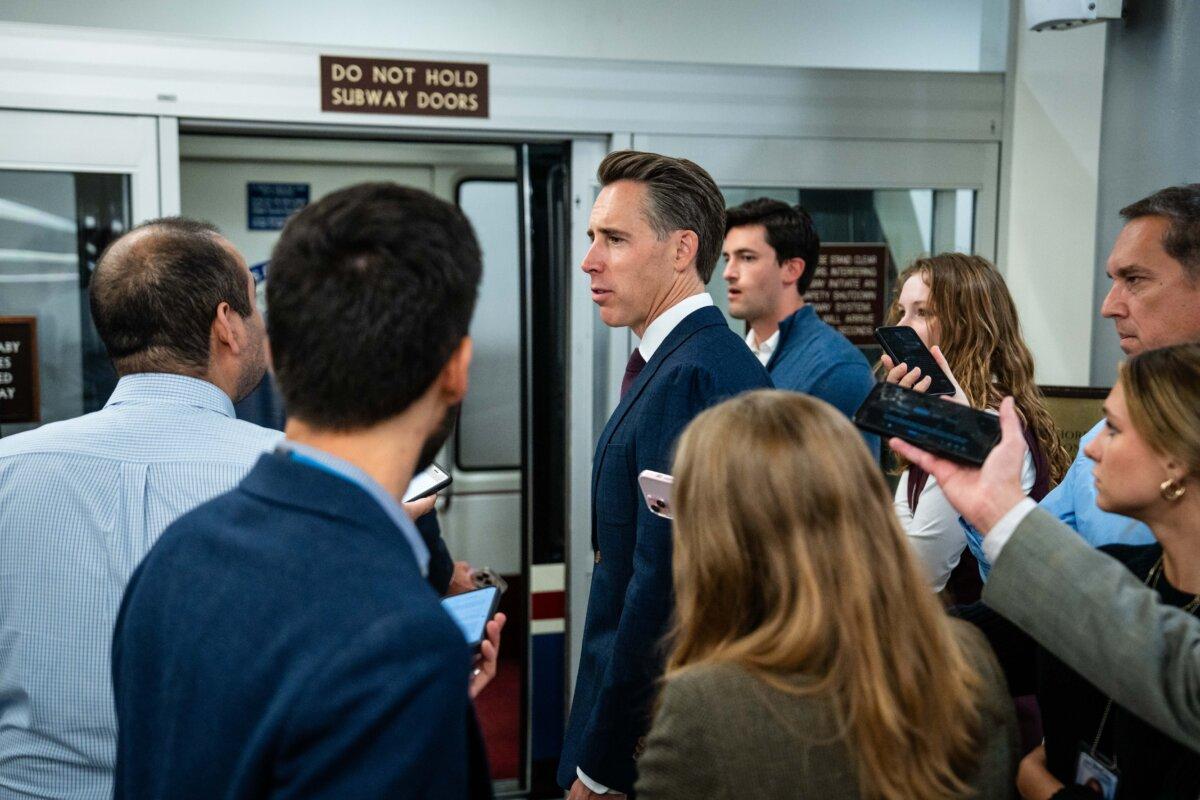
Similar legislation was introduced by Rep. Alexandria Ocasio-Cortez (D-N.Y.) in the lower chamber.
“Capping credit card interest rates at 10 [percent], just like President Trump campaigned on, is a simple way to provide meaningful relief to working people. Let’s do it.”
However, industry leaders pushed back against Trump’s measure, arguing it would have adverse effects on consumers and the broader U.S. economy.
“At the same time, evidence shows that a 10 [percent] interest rate cap would reduce credit availability and be devastating for millions of American families and small business owners who rely on and value their credit cards, the very consumers this proposal intends to help,” they said.
“If enacted, this cap would only drive consumers toward less regulated, more costly alternatives.”
Other research papers have found that, while caps may be popular, they generally lower the amount of credit extended, particularly for high-risk borrowers.
Several states across the country, including Arkansas, Illinois, and Oregon, have implemented variations of limits on credit card interest rates.
“The paper finds at least 76 countries around the world currently use some form of interest rate caps on loans—all with varying degrees of effects, including the withdrawal of financial institutions from the poor or from specific segments of the market, an increase in the total cost of the loan through additional fees and commissions, among others,” the World Bank Group said in a 2014 paper.